




This post may contain affiliate links. Please read our disclosure and privacy policy for more information.
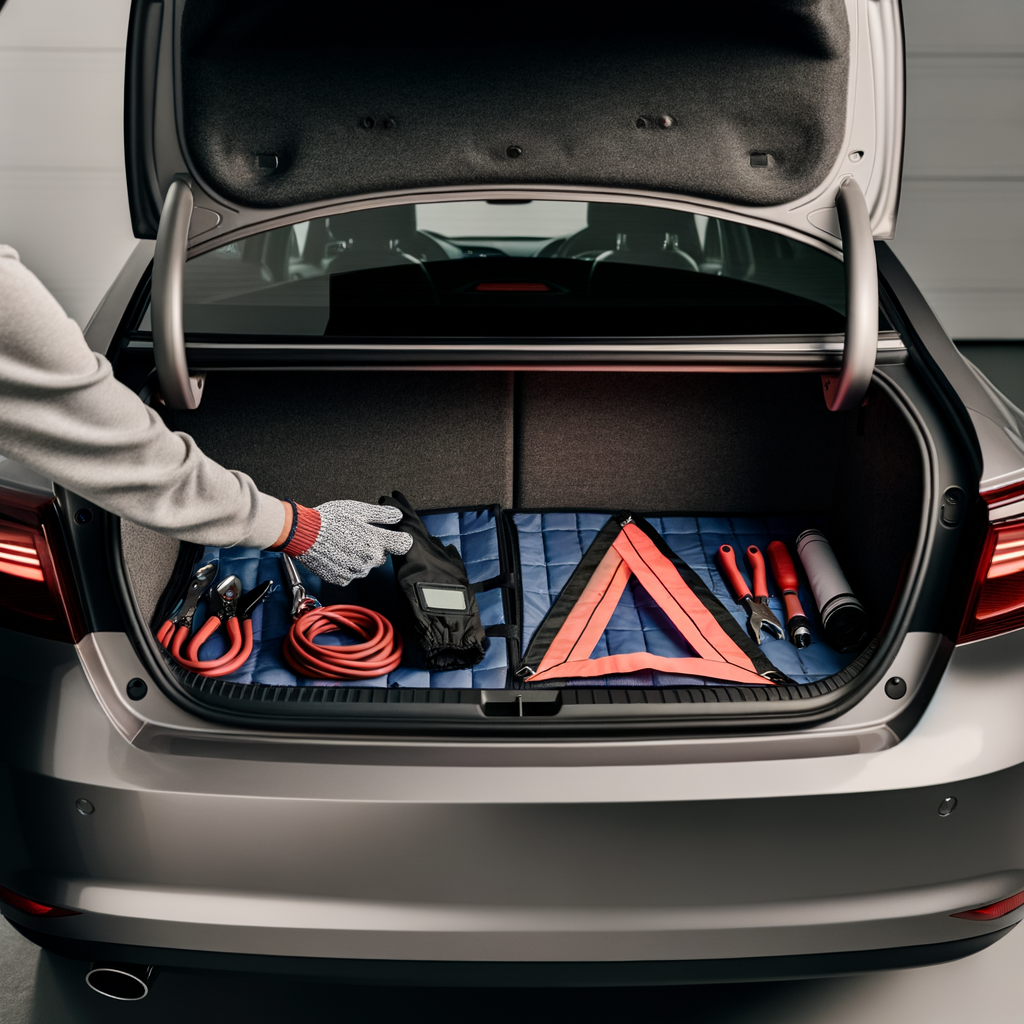
An emergency car kit is not about fancy gear. It is about simple items that help you stay safe, stay warm, and get moving again. The best part: You can set it up at home in one afternoon, even if you are new to car DIY.
This guide shows you what to buy, how to pack it, and where to keep it. You will end up with a kit you can actually find and use under stress.
Tools and items needed
Tools (for setup at home)
- Two small storage bags or pouches (zip pouches work well)
- One sturdy tote or small plastic bin with a lid
- Permanent marker and a few labels or masking tape
- Scissors
- Small flashlight for testing your lighting
Core emergency items
- Jumper cables or a jump starter pack
- Tire inflator (12V plug-in) and tire pressure gauge
- Tire plug kit (for simple tread punctures) and gloves
- Reflective triangles or road flares (LED flares are cleaner)
- High-visibility vest
- Flashlight or headlamp plus spare batteries
- First aid kit
- Mylar blanket or compact blanket
- Water (two small bottles) and a few sealed snacks
- Phone charging cable and a 12V car charger
- Multi-tool or basic tool kit (screwdriver, pliers, small wrench)
- Zip ties, duct tape, and a small roll of shop towels
- Rain poncho and a pair of warm gloves (seasonal)
Car-specific extras (optional but smart)
- Spare fuses that match your car
- Small bottle of windshield washer fluid (or concentrate)
- Spare interior bulb (if you know your type)
- Paper map (useful when your phone signal is weak)
- Pen and notepad
Safety or legal notes
Park on a flat surface when you build and test the kit. If you test a tire inflator or check tire pressure, do it with the car in Park and the parking brake on.
Know your local rules for flares. Some areas restrict certain flare types, and you do not want a surprise ticket. Also keep fuel, chemicals, and batteries out of direct heat. A closed car can get very hot.
Do not store loose heavy tools where they can fly forward in a crash. Put heavy items low and secured.
Numbered installation steps
1) Pick your storage setup
Use one main bin for the trunk. Then use two small pouches inside it:
- Pouch 1: Quick access (flashlight, vest, triangles, gloves)
- Pouch 2: Repair items (plug kit, tape, zip ties, tools)
This keeps you from dumping everything on the road at night.
2) Choose the best spot in your car
Most kits belong in the trunk or cargo area. Avoid the spare tire well if it is hard to reach. If your trunk is always full, keep the quick access pouch in a side pocket or under a seat.
Do a simple test: Sit in the driver seat and imagine a breakdown in the rain. Can you reach the vest and flashlight fast? If not, move them.
3) Build your “quick access” pouch first
This pouch is for the first two minutes after you stop. Pack these items at the top:
- High-visibility vest
- Flashlight or headlamp
- Reflective triangles or LED flares
- Work gloves
- Rain poncho
Label it “SAFETY.” With labels, a passenger can help without asking you questions.
4) Pack the “repair” pouch
Now pack the items that help you get moving again. Suggested order:
- Tire inflator and gauge
- Tire plug kit (keep the tool tips covered)
- Jumper cables or jump pack
- Small tool kit or multi-tool
- Duct tape, zip ties, shop towels
If you want to add basic electrical items, a few spare fuses can save a trip. If you have never done one, keep this guide bookmarked: DIY fuse replacement.
5) Add a “comfort and wait” mini-pack
This small group helps if you must wait for help.
- Water and sealed snacks
- Mylar blanket or compact blanket
- Small first aid kit
- Hand wipes
Keep food simple. Choose items that handle heat better and do not melt easily.
6) Add phone power and lighting backup
Put a 12V charger and a cable that fits your phone in the quick access pouch. If your cabin light is weak, fix that now. Good light matters when you are searching for tools at night. This simple upgrade helps: replace interior bulbs at home.
7) Check your tires and inflate plan
Your kit is better when your tire pressure is already correct. Check pressures at home when tires are cold. If you need a quick how-to, follow this: home tire pressure check.
Put a note in the kit with your normal tire pressure numbers. You can copy them from the driver door jamb label.
8) Test everything for 10 minutes
Do a quick test in your driveway:
- Turn on the flashlight. Check batteries.
- Plug in the tire inflator. Make sure the power cord reaches all tires.
- Open the first aid kit and confirm it has bandages and wipes.
- If you have a jump pack, check its charge level.
You are not trying to be perfect. You are making sure nothing is dead on day one.
9) Lock it down and keep it clean
Put the main bin against the back seat or a side wall so it does not slide. If your car has cargo hooks, use a strap. Keep liquids upright in a separate small bag.
10) Add one small “car care” add-on (optional)
A simple maintenance add-on can prevent small problems. A basic battery terminal cleaning kit is cheap and small. If your battery posts look crusty, this helps later: battery terminal cleaning for beginners.
Common mistakes
- Buying big items but forgetting basics: A vest and flashlight come first.
- Storing the kit under heavy cargo: You cannot reach it when you need it.
- Keeping loose tools in the cabin: They can become dangerous in a crash.
- Never testing the inflator: Some cords are too short for the rear tires.
- Letting food and water expire: Old snacks become crumbs and mess.
- Using one giant bag for everything: You will spill it on the roadside.
Maintenance tips
- Every 3 months: Check flashlight batteries and jump pack charge.
- Every 6 months: Replace water and snacks. Re-check first aid supplies.
- Before road trips: Confirm the tire inflator works and your vest is easy to grab.
- After using anything: Repack it the same day. Replace what you used.
- Season changes: Add warm gloves in winter. Add extra water in summer.
Is it worth it?
Yes, for most drivers. A basic kit costs less than one tow in many places, and it can turn a stressful breakdown into a short delay. It is also worth it because you build it once and then maintain it with quick checks.
If you drive very little and stay close to home, you can keep a smaller kit. But you still want the quick access pouch. Light, visibility, and phone power are the real lifesavers.
Conclusion
A DIY emergency car kit is simple: Safety items first, repair items second, comfort items last. Pack it in small pouches, label them, and keep the kit where you can reach it fast.
Set it up at home, test the key tools, and do a short check a few times a year. You will be ready for flats, dead batteries, and long waits without guessing or panic.


