


This post may contain affiliate links. Please read our disclosure and privacy policy for more information.
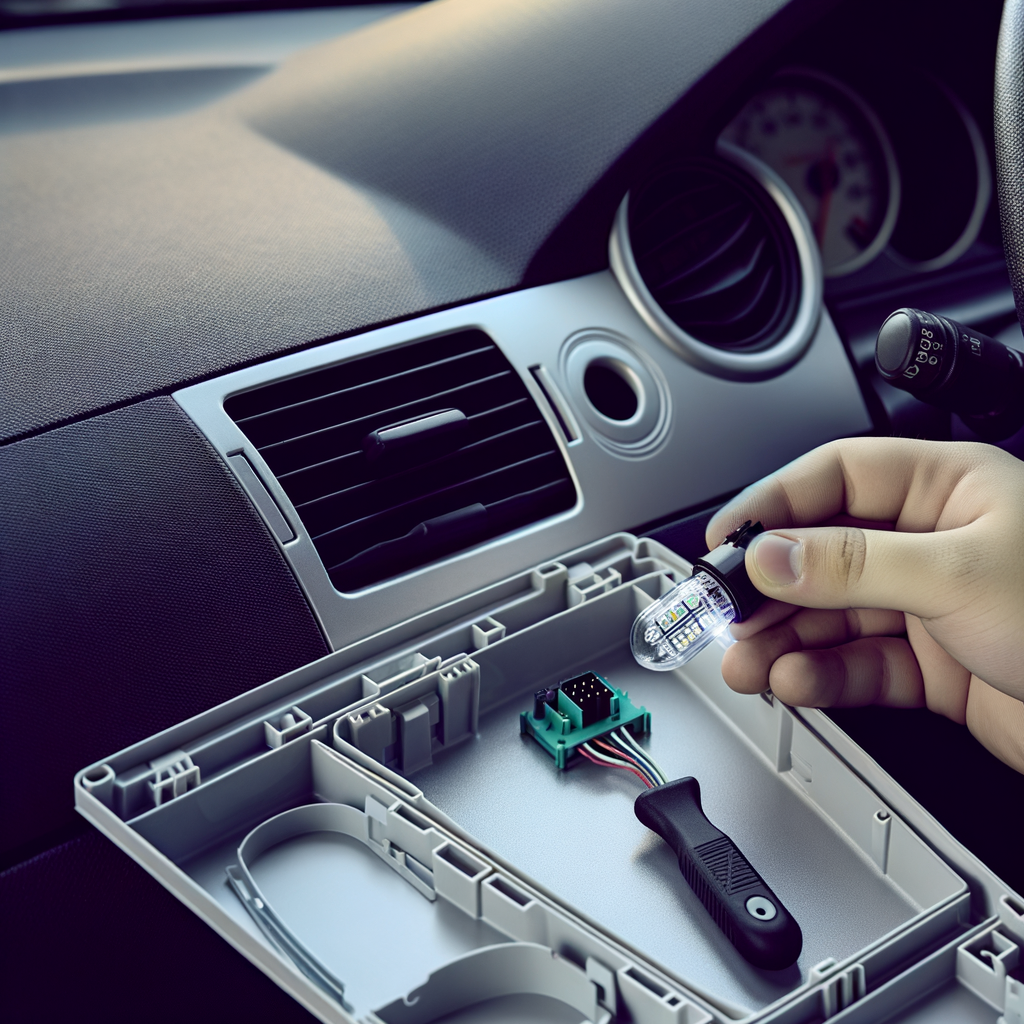
Dim interior lights make your car feel older than it is. A burned out dome light is also annoying at night. The good news: Replacing interior bulbs is one of the easiest DIY jobs you can do at home. Most cars use simple plug-in bulbs, and you only need a few basic tools.
Tools and items needed
- Replacement bulbs (correct type and size for your car)
- Plastic trim tool or a small plastic pry tool
- Small flat screwdriver (only if needed, and used carefully)
- Clean gloves or a clean microfiber cloth
- Flashlight or headlamp
- Dielectric grease (optional, tiny amount for contacts)
- Your owner’s manual (helpful for bulb type and fuse locations)
Tip: Interior bulbs can be halogen, incandescent, or LED. Many owners upgrade to LED for brighter light and less heat. If you do, buy bulbs made for interior use and the correct base type.
Safety or legal notes
- Turn the car off. Take the key out. Keep the doors closed until you are ready.
- Interior bulbs can get hot. Let the light cool before touching it.
- Disconnect the negative battery terminal if you are working near airbags (like some map light or overhead console areas). If you want a simple refresher, see battery terminal cleaning for beginners for safe battery handling habits.
- Use plastic tools when prying. Metal tools can crack lenses and scratch trim.
- Do not force anything. If a lens will not move, you may be prying on the wrong side.
Numbered installation steps
The basic steps are the same for dome lights, map lights, door lights, trunk lights, and glove box lights. The biggest difference is how the lens pops off.
1) Find the bulb type and buy the right replacements
Check your owner’s manual, the old bulb marking, or the label on the light housing if it has one. Common interior bulb types include festoon (tube style), wedge base (push-in), and small bayonet styles.
- Buy two bulbs if the car uses a matching pair (like left and right map lights).
- If you are going LED: Make sure the bulb is “CANbus” or “error-free” if your car is picky about bulb loads. Many cars are fine without it.
2) Set up the car so the lights do not keep turning on
Open the door, then switch the interior light setting to OFF or DOOR, depending on your car. Some cars have a dimmer wheel that turns interior lights on when rolled all the way up. Back it off slightly.
If you are working for a while, keep a door open only when needed so you do not drain the battery.
3) Remove the lens carefully
Most lenses have a small notch. That notch is the pry point.
- Use a plastic trim tool. Push it into the notch and gently twist.
- Support the lens with your other hand so it does not snap and fly off.
- If you must use a flat screwdriver: Wrap the tip with tape to reduce scratches.
If you have trim that feels loose or creaky while you work, you may also like Fix loose interior panels after the bulb job.
4) Remove the old bulb
How you remove it depends on the bulb style:
- Festoon (tube): Push the bulb toward one spring clip, then lift the other end out. Pull it out gently.
- Wedge base: Pull straight out. Wiggle slightly if it is stuck.
- Bayonet: Push in lightly and twist to release (less common for modern interiors).
Wear gloves or use a clean cloth. This is important for halogen bulbs. Skin oil can create hot spots and shorten bulb life.
5) Check the socket condition
Look for green corrosion, bent contacts, or a melted plastic holder. A little discoloration is normal on older cars. Heavy corrosion means the connection is poor.
- If contacts are dirty: Wipe gently with a dry cloth.
- If you use dielectric grease: Use a tiny smear on the metal contact area only.
6) Install the new bulb
Install the new bulb the same way the old one came out.
- Festoon: Set one end into a clip, compress slightly, then seat the other end.
- Wedge: Push straight in until fully seated.
If you are installing LEDs: Some are polarity-sensitive. That means they only work one way.
7) Test the light before snapping the lens back on
Turn the light on with the switch or open the door. Confirm it lights up.
- If it is an LED and does not turn on: Remove it, rotate it 180 degrees, and reinstall.
- If it still does not work: Try the old bulb again. This helps you figure out if the issue is the bulb or the car.
If multiple interior lights are out, you may have a blown fuse. This guide can help: DIY fuse replacement.
8) Reinstall the lens
Line up the tabs first. Then press gently until you hear or feel it click.
- Do not slam it with your palm. Slow pressure is better.
- If it will not click: One tab is probably not aligned.
9) Repeat for other interior bulbs
Common locations to check:
- Front map lights
- Center dome light
- Rear passenger dome light
- Door courtesy lights
- Footwell lights (if equipped)
- Glove box light
- Trunk or cargo area light
- Vanity mirror lights in sun visors
If you often use the visor mirror light, pairing this job with Sun visor accessories installation can be a nice quality-of-life upgrade.
Common mistakes
- Prying on the wrong side of the lens: Many lenses only release from the notch side.
- Using too much force: Lenses crack easily, and replacement housings can be pricey.
- Touching halogen glass with bare fingers: It can shorten bulb life.
- Installing the wrong bulb type: Even a similar-looking bulb may not fit or may overheat.
- Not testing before reassembly: You waste time popping the lens back off.
- Mixing colors and brightness: One cool-white LED and one warm bulb can look odd at night.
- Leaving doors open too long: You can drain the battery during a slow first-time DIY.
Maintenance tips
- Replace bulbs in pairs when possible, especially map lights. The color and brightness will match.
- Keep a spare interior bulb in the glove box. It is a small item that saves time later.
- If a bulb keeps failing: Check for a loose socket or vibration. A loose housing can cause flickering.
- After an LED swap, watch for faint glow when the car is off. Some cars send a tiny current through the circuit. If it bothers you, try a different LED brand or go back to standard bulbs.
Is it worth it?
Yes for most beginners. Interior bulb replacement is low risk, cheap, and quick. It also gives you confidence for other small projects. You do not need special skills, and you can do it in your driveway.
If you like simple upgrades that make the cabin feel cleaner, you may also enjoy DIY car floor mat replacement as another easy weekend job.
Conclusion
Replacing interior bulbs at home is a simple DIY task that makes night driving and daily use more comfortable. Work slowly, use plastic pry tools, and test the bulb before reinstalling the lens. Once you do one light, the rest feel easy.


