




This post may contain affiliate links. Please read our disclosure and privacy policy for more information.
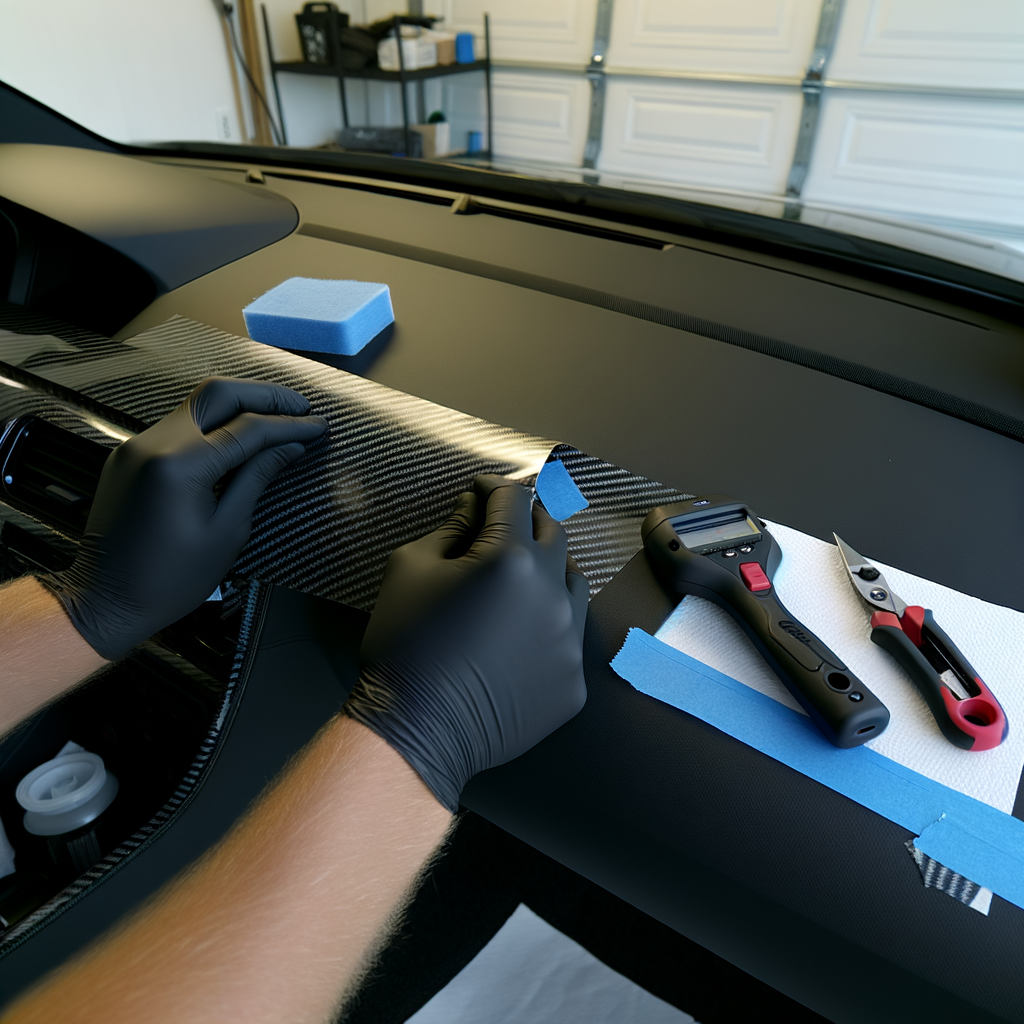
Carbon fiber interior trim looks sharp. Real carbon parts are expensive. A good wrap can give a similar look for a small budget. You can do it at home with basic tools. The key is patience, clean surfaces, and slow heat.
This guide is for wrapping common interior pieces like dash trim, door switch panels, center console trim, and shifter surrounds. You can wrap parts in the car, but removing them is usually easier and gives cleaner edges.
Tools And Items Needed
- Carbon fiber vinyl wrap (3D or 4D style). Buy a little extra for mistakes.
- Heat gun or hair dryer (a heat gun works faster)
- Plastic trim removal tools
- Microfiber towels
- Isopropyl alcohol (70% or higher) for cleaning
- Spray bottle with water (optional for cleaning only, not for install)
- Felt edge squeegee or a soft plastic card wrapped in microfiber
- Sharp hobby knife or snap-off blade knife
- Cutting mat or cardboard for cutting wrap
- Masking tape (for test fit lines and holding vinyl)
- Gloves (optional, helps avoid fingerprints on the adhesive)
- Primer 94 or edge-seal promoter (optional, helpful on tight corners)
Safety Or Legal Notes
Let the car cool down before you start. Hot trim pieces can burn you when you heat the vinyl. Work in a ventilated area because alcohol and adhesive smells can build up.
If you remove trim near airbags, be careful. Do not poke or cut wiring. If you are unsure, disconnect the negative battery terminal and wait a few minutes before working near airbag-related panels. If you want a simple guide for that kind of basic electrical safety, start with DIY battery terminal cleaning first.
Numbered Installation Steps
1. Pick The Right Pieces First
Start with simple shapes. Flat trim is the easiest. Avoid deep pockets and sharp recesses for your first try.
- Good beginner parts: Door switch trim, small dash strips, radio bezel trim
- Hard parts: Cup holder surrounds, complex shifter trim, pieces with deep holes
2. Remove The Trim (Recommended)
Use plastic trim tools. Pull slowly. If something does not move, look for hidden screws.
If your car already has panels that rattle or feel loose, fix that first. A wrap looks worse when the part does not sit tight. This quick guide helps: Fix loose interior panels.
3. Clean Like You Mean It
Most wrap failures are from dirty surfaces. Interior trim often has silicone-based dressings, hand oils, and dust.
- Wash the piece with mild soap and water if it is very dirty. Dry it fully.
- Wipe the surface with isopropyl alcohol using a clean microfiber towel.
- Pay extra attention to edges and corners where grime hides.
4. Inspect The Surface And Decide If You Need Prep
Vinyl shows texture. If the plastic has deep scratches, the wrap may reveal them. Light texture is fine and often helps grip. If the part is peeling, sticky, or rubbery, the wrap may not last.
- If the part has peeling soft-touch coating, remove that coating first.
- If there are deep gouges, consider a light sand and clean again.
5. Cut A Rough Piece Of Vinyl
Lay the trim on the backing paper and cut a piece that is larger than the part by about 1 to 2 inches on all sides. You need extra to grab, pull, and wrap around edges.
6. Position The Vinyl Without Stretching It
Peel a small section of backing and tack the vinyl in the center first. Then slowly peel more backing while smoothing outward.
- Do not pull hard yet.
- Keep the carbon pattern straight if it has a visible weave direction.
7. Squeegee From The Center Out
Use short strokes. Push air out toward the edges. If you get a bubble, lift the vinyl back up and lay it again. Interior trim is small, so you can usually rework it several times.
8. Use Heat For Curves And Edges
Heat makes vinyl soft. Soft vinyl can be formed over curves. Keep the heat moving and use low to medium heat. If the vinyl gets too hot, it can get shiny, thin, or distorted.
- Warm the vinyl until it feels flexible, not melting hot.
- Press it into curves with your thumb or felt squeegee.
- For tight corners, add a tiny bit of heat and work slowly.
9. Deal With Recesses And Holes The Right Way
For trim with holes (button cutouts, 12V socket holes, shifter openings), do not cut too early. Form the vinyl first, then cut.
- Heat and press the vinyl into the opening area to show the shape.
- Make a small X cut in the center, then fold the flaps inward.
- Trim excess after it is fully seated.
10. Wrap The Edges And Trim Cleanly
Once the top surface looks good, heat the edges lightly and fold the vinyl around the back side. Try to get at least 1/4 inch of wrap on the back so it holds.
- Cut relief slits on the backside only if the vinyl bunches up.
- Keep visible edges smooth and continuous.
11. Post-Heat To Lock The Shape
Post-heating helps the vinyl keep its new shape, especially if you stretched it around curves. Warm the edges and curved areas again, then press them down firmly.
12. Reinstall The Trim And Check Fit
Before snapping everything back, check for thick spots of vinyl that might block clips or make gaps. Trim extra material on the backside if needed.
If you are doing other small interior upgrades at the same time, pairing wrap work with DIY interior bulb replacement can be a nice weekend refresh because the trim is already coming off.
Common Mistakes
- Not cleaning enough: Interior dressings and hand oils cause peeling on edges.
- Overheating: Too much heat warps the pattern and makes the vinyl fragile.
- Stretching the pattern too far: The “weave” look can get thin and uneven.
- Cutting on the visible side: One slip with a blade can ruin the part.
- Wrapping sharp edges without post-heat: Edges lift a few days later.
- Trying hard parts first: Cup holders and deep recesses can frustrate beginners.
Maintenance Tips
Wrapped interior trim is easy to care for, but it is still vinyl.
- Clean with a damp microfiber towel and mild interior cleaner.
- Avoid harsh solvents and strong degreasers.
- Do not scrub the edges with a stiff brush.
- In hot summers, use a sunshade when parked if your dash gets direct sun for hours.
If you are also doing other budget changes and want ideas that match the same “small money, big difference” style, this list can help: Budget-friendly car mods.
Is It Worth It?
Yes, if you want a cleaner look without buying expensive trim parts. A basic roll of vinyl can cover several pieces. The best value is on parts that are scratched, faded, or mismatched.
It is also reversible. If you get tired of the look, you can peel it off later. The downside is time. Your first piece may take one to two hours. After a few tries, you can do simple parts much faster.
If your interior pieces get heavy wear like around window switches, consider using higher-quality wrap. Cheap vinyl can shrink or lift sooner, especially on tight corners.
Conclusion
A DIY carbon fiber interior wrap is one of the easiest ways to change your cabin on a budget. Clean the trim well, use gentle heat, and work from the center outward. Start with simple pieces, take your time on edges, and always post-heat curves. With a little practice, your interior can look more modern without spending much money.


