




This post may contain affiliate links. Please read our disclosure and privacy policy for more information.
A loose gas cap sounds minor, but it can trigger a check engine light, cause fuel smells, and waste fuel vapor. The good news is that it is usually simple to fix. The key is knowing what “loose” really means, what parts can fail, and how to check the whole fuel vapor system in a basic way.
What the modification or concept is
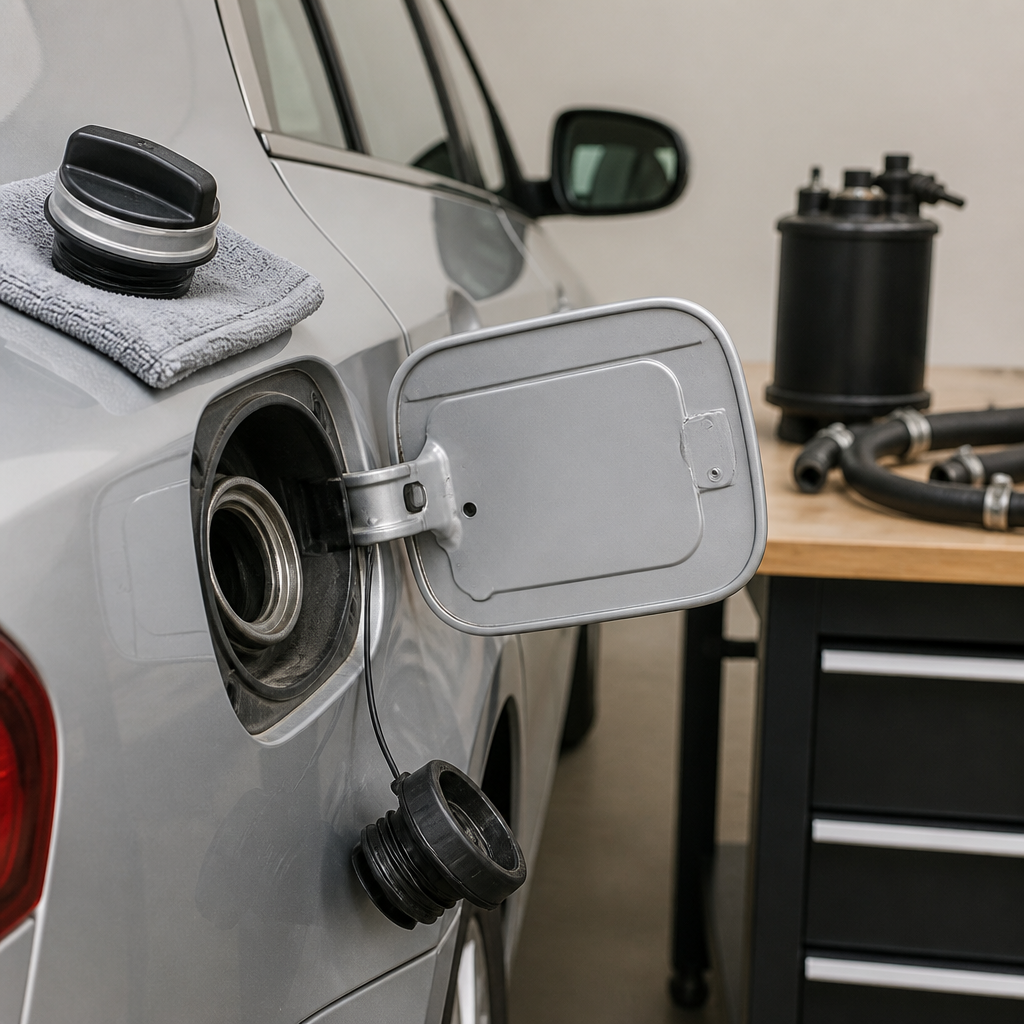
The gas cap seals your fuel tank filler neck. That seal keeps fuel vapors inside the tank and EVAP system. EVAP stands for evaporative emissions control. It stores and burns fuel vapors instead of letting them vent into the air.
A “loose gas cap issue” means the cap is not sealing the filler neck correctly. Sometimes the cap is not tight enough. Other times it is tight but still leaking because of a damaged seal, dirt on the sealing surface, or a filler neck problem. Many cars detect this leak and turn on the check engine light with codes like P0455 (large leak) or P0456 (small leak).
Why people do it
People do not “modify” a gas cap. They fix it because it affects daily driving and emissions checks.
- Turn off the check engine light: A gas cap leak is one of the most common causes.
- Stop fuel smells: Vapor leaks can make the car smell like gas, especially in a garage.
- Pass inspection: Many areas fail a car if the EVAP system is not ready or has a fault.
- Prevent repeat codes: A weak seal can cause the light to return after you clear it.
Things to know before starting
Before you touch anything, keep these points in mind:
- The check engine light may not turn off right away: Even after you fix the cap, the car may need a few drive cycles to retest the EVAP system.
- A tight cap can still leak: Cracked rubber, worn threads, or a rusty filler neck can stop a proper seal.
- Do not ignore gas smells: A small EVAP leak is common, but a strong fuel smell can also come from a fuel leak, which needs fast attention.
- Refueling habits matter: Topping off after the pump clicks can flood the EVAP charcoal canister on some cars and cause EVAP problems.
- Loose cap codes can overlap with other issues: Small EVAP leaks can come from hoses, purge valves, vent valves, or the canister, not just the cap. If your car also has driveability symptoms like stumbling or power drop, check other causes too, like Engine loses power causes.
Step-by-step explanation
1. Confirm the symptoms
Common signs of a loose gas cap or EVAP leak:
- Check engine light soon after refueling
- Message like “Check Fuel Cap” on the dash
- Gas smell near the rear of the car
- EVAP-related codes (P0440, P0442, P0455, P0456)
If you have a scan tool, record the codes and freeze frame data before clearing anything. If you do not, you can still do the physical checks below.
2. Remove the gas cap and inspect it closely
With the engine off, remove the cap and look for:
- Cracks or splits: Check the cap body and the rubber seal.
- Flattened seal: A seal that looks hard, shiny, or squashed may not seal well.
- Dirt and sand: Grit on the seal can create a leak path.
- Damaged threads: Cross-threading can prevent full tightening.
If the seal is loose, missing, or brittle, the cap is a strong suspect.
3. Inspect the filler neck sealing surface
Use a flashlight and inspect the metal or plastic rim where the cap seals.
- Wipe the rim with a clean rag.
- Look for rust, dents, paint chips, or stuck debris.
- Check for cracks if the filler neck is plastic.
Rust on the filler neck is a common reason the cap keeps “clicking” but still leaks.
4. Reinstall the cap the right way
Put the cap on straight and turn until it clicks. Many caps click one to three times. Do not stop early.
- Align the cap squarely with the filler neck.
- Turn clockwise until you feel resistance.
- Keep turning until you hear the clicks.
- Try gently turning again. If it spins freely without clicking, check threads and fit.
If your cap is the type that does not click, tighten it firmly by hand only. Do not use tools.
5. If the cap looks fine, do quick EVAP checks you can do at home
Some “loose cap” codes are really small EVAP leaks elsewhere. Basic checks:
- Look under the rear of the car: Check for hanging, cracked, or disconnected EVAP hoses near the tank and charcoal canister.
- Check the gas cap tether area: Sometimes the tether or housing keeps the cap from seating flat.
- Listen for hissing: A faint hiss right after shutting off can be normal, but loud, constant hissing near the filler area can point to a sealing issue.
If you find a cracked hose, do not tape it. Replace the hose with the correct EVAP-rated line.
6. Replace the cap if there is any doubt
A gas cap is a wear item. Replace it if:
- The seal is damaged or hardened
- The cap will not click consistently
- The threads are worn or cross-threaded
- The same EVAP code returns after proper tightening
Match the cap to your exact car. A “close enough” cap can fit but not seal to the right pressure spec.
7. Clear the code and complete drive cycles
If you have a scan tool, clear the codes after you fix the cause. Then drive normally for several days. The EVAP monitor often runs only when conditions are right, like:
- Fuel level not too low or too full (often around 1/4 to 3/4)
- Car sits overnight, then starts cold
- Steady cruise and light acceleration at normal speeds
If the light comes back with the same code, the leak may be elsewhere in the EVAP system.
Common mistakes to avoid
- Stopping at the first click: Some caps need more than one click to seal.
- Over-tightening: This can damage the seal or threads and make sealing worse.
- Clearing codes before you write them down: The code history helps diagnosis.
- Ignoring filler neck rust: A new cap may still leak if the sealing rim is rough.
- Topping off the tank: Overfilling can saturate the charcoal canister and cause recurring EVAP faults.
- Assuming it is always the gas cap: Purge and vent issues can mimic a cap leak. If you also notice odd underhood behavior like fan runs after shutoff, scan for all codes and address the full picture.
Safety and legal considerations
Fuel and fuel vapors are flammable. Use basic precautions:
- Turn the engine off while refueling and while checking the cap.
- Do not smoke or use open flames near the fuel door.
- If you see wet fuel, dripping, or a strong fuel smell that does not go away: Stop driving and get the car inspected.
- In many places, an EVAP fault can fail emissions testing. Driving with the check engine light on can also hide other new problems.
Final practical advice
If the light came on right after you filled up, start with the simple fix: Remove the cap, wipe the seal and filler rim, and tighten until it clicks fully. Then drive a few days and see if the light clears on its own.
If the code returns, replace the cap with the correct type for your car. If a new cap does not solve it, inspect EVAP hoses near the fuel tank and canister, and consider a smoke test at a shop to find small leaks fast.
As a good habit: Do not top off the tank after the pump stops, keep the filler neck rim clean, and replace the cap when the seal starts to harden. Small EVAP problems are easier to handle early, before they turn into repeated warning lights and inspection trouble.


