




This post may contain affiliate links. Please read our disclosure and privacy policy for more information.
Your car feels normal around town, but once you’re cruising at highway speed it starts to fall flat. You press the gas and it just does not respond like it should. This kind of power loss at higher speeds usually happens because the engine cannot get enough fuel, air, or spark when demand is highest. The key is to treat it as a load-related problem, not a random “engine is weak” problem.
What This Problem Feels Like
Most drivers describe it as a steady loss of pull once they reach about 55 to 75 mph. The car may feel like it “hits a wall” when you try to pass, or it may slowly lose speed on slight hills even with the pedal down.
Common things you might notice along with the power loss:
- It runs fine at low speeds, then struggles only at sustained higher speed.
- It improves if you back off the throttle, then fades again when you ask for more power.
- The transmission may downshift but the car still does not accelerate.
- You may feel a mild surge or hesitation under steady throttle.
- The check engine light may be on, off, or only comes on during the event.
The pattern matters. If the car only acts up when the engine is working hard, it points to a restriction or a weakness that only shows up under heavy demand.
Is It Safe to Drive?
Sometimes you can limp home safely. But power loss at highway speed can quickly become a safety issue because you may not be able to keep up with traffic or accelerate to avoid a problem.
Do not keep driving at highway speeds if:
- The car cannot hold speed on flat ground.
- It hesitates badly when you try to merge or pass.
- The check engine light is flashing.
- The engine is misfiring, shaking, or backfiring.
- You smell fuel, see smoke, or the temperature gauge climbs.
If you must drive it, stay in the right lane, avoid passing, keep extra distance, and pick a route with shoulders and lower speeds. If power drops suddenly or repeatedly, get it towed. It is not worth risking a dangerous merge or getting rear-ended.
Common Causes
These are the most common reasons an engine loses power only at highway speeds, listed from most likely to less likely.
Restricted fuel delivery (weak pump, clogged filter, or failing regulator)
At city speeds, the engine needs less fuel and a marginal system can keep up. At highway speed, fuel demand climbs and the pressure must stay steady. A weak fuel pump, a clogged fuel filter, or a failing pressure regulator can let pressure drop under load. The result is a lean condition and a noticeable loss of power.
This problem often feels like the car runs “fine until you ask for more,” especially on hills or during passing. In some cases, it will improve for a moment if you let off the gas and then roll back into it gently.
Dirty or restricted air intake (air filter, intake duct, or throttle body buildup)
The engine is an air pump. At highway speed it needs a lot of air. A clogged engine air filter, a collapsed intake hose, or heavy throttle body deposits can limit airflow. The car may still idle and drive around town normally, but it will feel strangled at higher speeds.
Some vehicles also have intake snorkels or resonators that can crack or deform. A duct that sucks flat under load can act like a temporary blockage.
Ignition breakdown under load (spark plugs, coils, or plug wires)
Ignition parts can be just strong enough for light driving but fail when cylinder pressure rises at higher speeds and heavier throttle. Worn spark plugs, weak coils, or aging plug wires can cause misfires that show up mainly on the highway.
This may feel like a hesitation, a flutter, or a repeated stumble when you maintain speed. Sometimes there is no dramatic shaking, just a steady lack of power.
Mass airflow (MAF) or manifold pressure (MAP) sensor problems
Modern engines rely on sensors to calculate how much fuel to add. If a MAF sensor is dirty or a MAP sensor is reading wrong, the engine computer can misjudge airflow and command the wrong fuel mixture, especially at higher airflow rates. That can cause weak acceleration, surging, or “flat” power at cruising speed.
A vacuum leak can also skew readings, but many vacuum leaks show up more at idle. A sensor issue is more likely when the symptom is strongest at steady highway load.
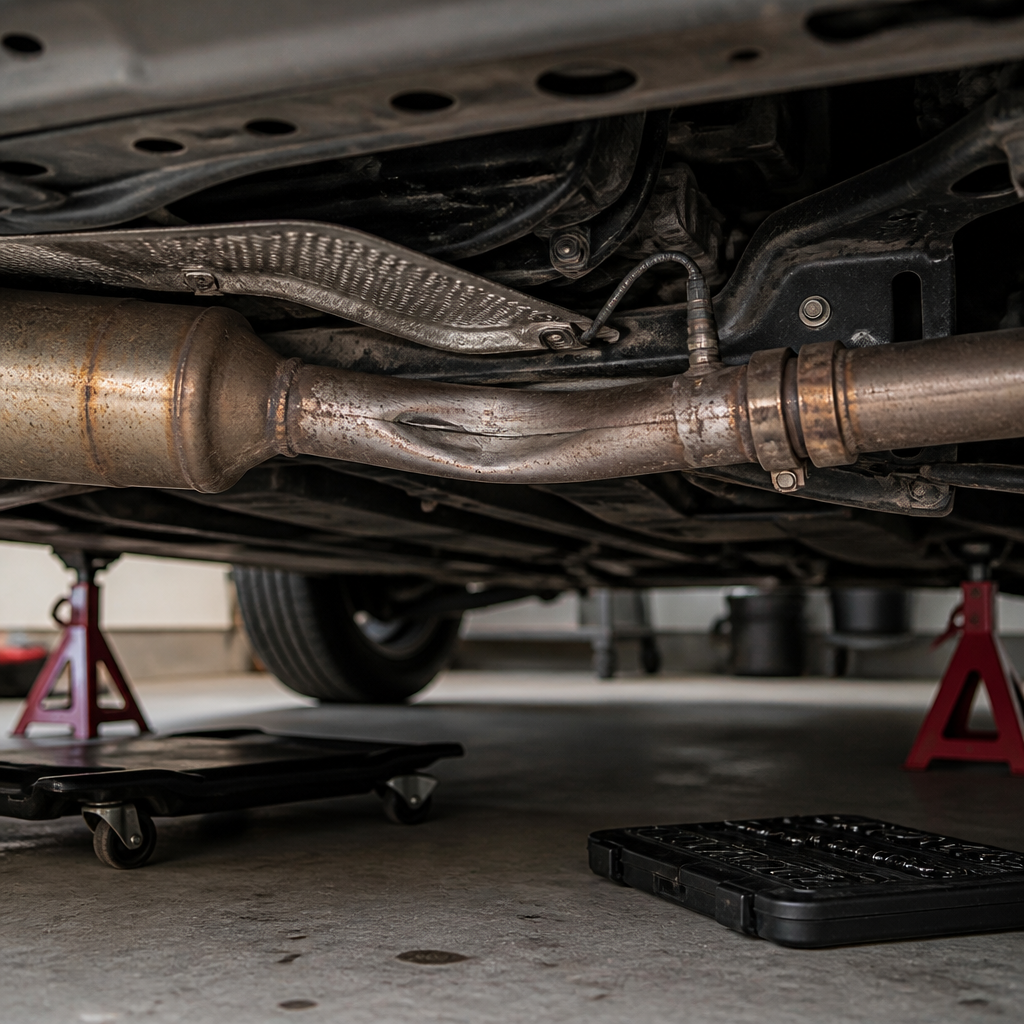
Exhaust restriction (partially clogged catalytic converter)
A restricted exhaust acts like a cork. At low engine output it may seem okay. At highway speed, exhaust flow increases and backpressure climbs, which kills power. This can build slowly over time.
Signs that make this more likely: the car feels worse the longer you drive, it struggles more on hills, and it may not rev freely even in neutral. Some vehicles will set catalyst efficiency or air-fuel related codes, but not always.
Turbo or boost control issues (turbocharged engines)
If your car is turbocharged, a boost leak, a sticking wastegate, or a failing boost control solenoid can limit boost pressure right when you need it. Around town it may feel mostly normal, but at highway speeds it can feel like the engine has lost a big chunk of its strength.
You may notice a change in turbo sound, a whoosh from a leak, or a sudden drop in power during acceleration.
Quick Checks You Can Do at Home
These checks are basic and safe. They can help you decide whether this is something simple or something that needs a shop visit soon. Do any checks with the engine off and cool when possible.
Check for a check engine light and scan for codes
If you have access to a basic scan tool, pull codes even if the light is off. History codes can point you toward misfire, fuel trim, airflow, or boost problems. Write down the codes and freeze-frame data if available.
Inspect the engine air filter and intake duct
Look at the air filter element. If it is packed with dirt or leaves, replace it. Also inspect the intake tube from the air box to the throttle body for cracks, loose clamps, or soft spots that could collapse. Make sure nothing is blocking the air box inlet.
Look for obvious ignition neglect
If you know the spark plugs are overdue, that is a real clue. Highway-only power loss can be an ignition weakness under load. If you have coil-on-plug boots that are oily or wet, that can also cause misfires when the engine is hot.
Listen for signs of fuel starvation
A fuel pump that is getting weak may sound louder than normal, especially with the rear seat folded down or near the fuel tank area. This is not a perfect test, but a sudden change in pump noise plus highway power loss is a useful clue.
Review recent work and fuel quality
If the problem started right after maintenance, re-check anything that might have been left loose: intake clamps, vacuum lines, electrical connectors at the air box area. If it started after a fill-up, avoid hard driving and consider that contaminated fuel can mimic a fuel delivery problem.
If you want a safe, simple maintenance item that can help overall driveability (but is not specific to highway power loss), DIY fuel injector cleaning can be a reasonable first step when the engine is otherwise healthy.
When This Becomes Serious
This problem becomes serious when the car cannot reliably maintain speed or when the engine starts misfiring. A misfire under load can overheat the catalytic converter and cause more damage. A lean condition from low fuel pressure can also raise combustion temperatures and stress the engine.
Get it checked right away if:
- The check engine light flashes during acceleration.
- The power drops so much that you cannot merge confidently.
- The car bucks, stumbles, or feels like it is cutting out.
- The issue is getting worse from trip to trip.
- You hear popping in the intake or exhaust during the power loss.
If you also notice overheating or cooling fan odd behavior, deal with that separately because it is a different risk. For reference, engine fan keeps running symptoms can point to cooling system or control issues that should not be ignored.
How a Mechanic Fixes It
A shop will usually confirm the problem on a road test and then diagnose it based on data, not guesses. Highway-speed power loss is one of those cases where live readings help a lot.
Common professional checks include:
- Scan tool data under load: Fuel trims, misfire counters, airflow readings, commanded versus actual boost (if turbo), and throttle operation.
- Fuel pressure and volume testing: Not just at idle, but while driving or under a loaded test, because that is when weak pumps show their weakness.
- Smoke testing the intake system: Finds leaks in hoses, intercooler piping, and intake boots.
- Ignition testing: Checking plug condition and gap, coil output, and signs of oil contamination in plug wells.
- Exhaust backpressure testing: Helps confirm a restricted catalytic converter or muffler.
The actual fix depends on what fails the test. Common repairs are replacing a restricted fuel filter, replacing a weak fuel pump, replacing worn spark plugs or a failing coil, repairing an intake leak, cleaning or replacing a faulty airflow sensor, or replacing a restricted catalytic converter. A good shop will also look for the root cause, like why a converter overheated or why fuel trims were pushed out of range.
Common Mistakes to Avoid
- Replacing parts based only on a guess: Highway-only symptoms can come from different systems that feel similar from the driver’s seat.
- Ignoring small misfires: A mild stumble at highway speed can turn into converter damage if it continues.
- Cleaning sensors aggressively: Spraying the wrong cleaner or touching a MAF element can ruin it.
- Assuming it is the transmission: A downshift with no acceleration often points to the engine not making power, not a transmission failure.
- Continuing long trips without testing: If the car cannot accelerate safely, that is a real road hazard.
Related Problems to Watch For
These are not the same problem, but they can show up around the same time and help with the bigger picture:
- A check engine light for misfire, fuel trim, or airflow sensor performance.
- Roughness under load that later starts happening at lower speeds too.
- A rising engine temperature on long climbs, especially in hot weather.
- Fuel economy that suddenly drops after the power loss begins.
- Coolant loss over time, which should be handled as its own issue, like when coolant level keeps dropping becomes a repeat pattern.
If your vehicle is an SUV used for long highway trips, staying ahead of maintenance helps prevent load-related problems from stacking up. Planning for wear items matters on long drives, especially for suvs for long trips that spend lots of time at steady speed.
Final Thoughts
Power loss only at highway speeds usually means the engine is running out of fuel, air, or spark when demand is highest. Start with the simple checks: Look at the air filter and intake tubing, check for stored codes, and be honest about overdue spark plugs. If the problem affects merging, causes misfires, or keeps getting worse, stop pushing the car at highway speed and book a diagnosis. A short, targeted test for fuel pressure, ignition breakdown, sensor readings, or exhaust restriction is the safest way to get the right fix without wasting parts.


