




This post may contain affiliate links. Please read our disclosure and privacy policy for more information.
Flood damage in a used car is one of the hardest problems to spot fast, and one of the most expensive to live with later. Water can get into carpets, wiring, modules, bearings, and fluids. The car may look clean on the outside but still have corrosion and electrical issues inside. Knowing the common signs helps you avoid a bad purchase and helps you ask the right questions before you pay.
What the concept is
Flood damage means the car was exposed to water high enough to enter places that should stay dry. This can happen from storms, hurricanes, flash floods, or a car sitting in deep water. “Flood” does not always mean the car was fully underwater. Even water that reaches the carpet can wick upward into wiring under the seats and into connectors.
Water damage can be:
- Freshwater damage: Often causes less immediate corrosion, but still ruins electronics over time.
- Saltwater damage: Corrosion happens faster and spreads deeper into metal and wiring.
- Standing water exposure: Mold and smell issues are common, even if the car still drives fine.
Flood damage is not a “modification,” but it is a condition that changes how the car works and how long it will last. Many problems show up weeks or months later.
Why people do it
Most buyers are not trying to buy a flood car. It happens because flood cars can be cleaned and listed like normal used cars. Some sellers may not know the full history, especially if the car changed owners after a disaster. Others may try to hide signs with deep cleaning, new carpet, or odor products.
Some people still buy flood-damaged cars on purpose because the price can be low. They may plan to use it as a short-term vehicle, a parts car, or a project. For a beginner buyer who wants a reliable daily driver, flood damage is usually a strong reason to walk away.
Things to know before starting
Before you inspect anything, understand two key points: Flood problems often hide, and paperwork does not always tell the full story. A clean title is not a guarantee that the car never saw water.
Bring a few simple tools:
- Flashlight
- Small mirror (helpful for tight spots)
- Paper towels
- OBD2 scanner if you have one (optional)
Also plan the inspection in daylight, and ask for a cold start. Many electrical and moisture problems show up more clearly when the car has been sitting.
It also helps to check for other hidden damage types at the same time, since cars can have more than one issue. A used car accident check can help you separate water issues from crash repairs.
Step-by-step explanation
1) Start with smell and air flow
Open the door and smell the cabin before you sit in the car. Flood cars often have a musty smell, mildew, or a strong perfume-like odor used to cover it up.
Turn the fan on and switch between:
- Fresh air vs recirculation
- Heat vs A/C
- Different fan speeds
If the vents smell damp or sour, it can be moisture in the HVAC box or wet insulation. Some cars just need cleaning, but combined with other signs it can point to past water. If the vents are dusty or smell bad, basic cabin cleanup helps, like DIY car AC vent cleaning, but it will not fix soaked wiring or corrosion.
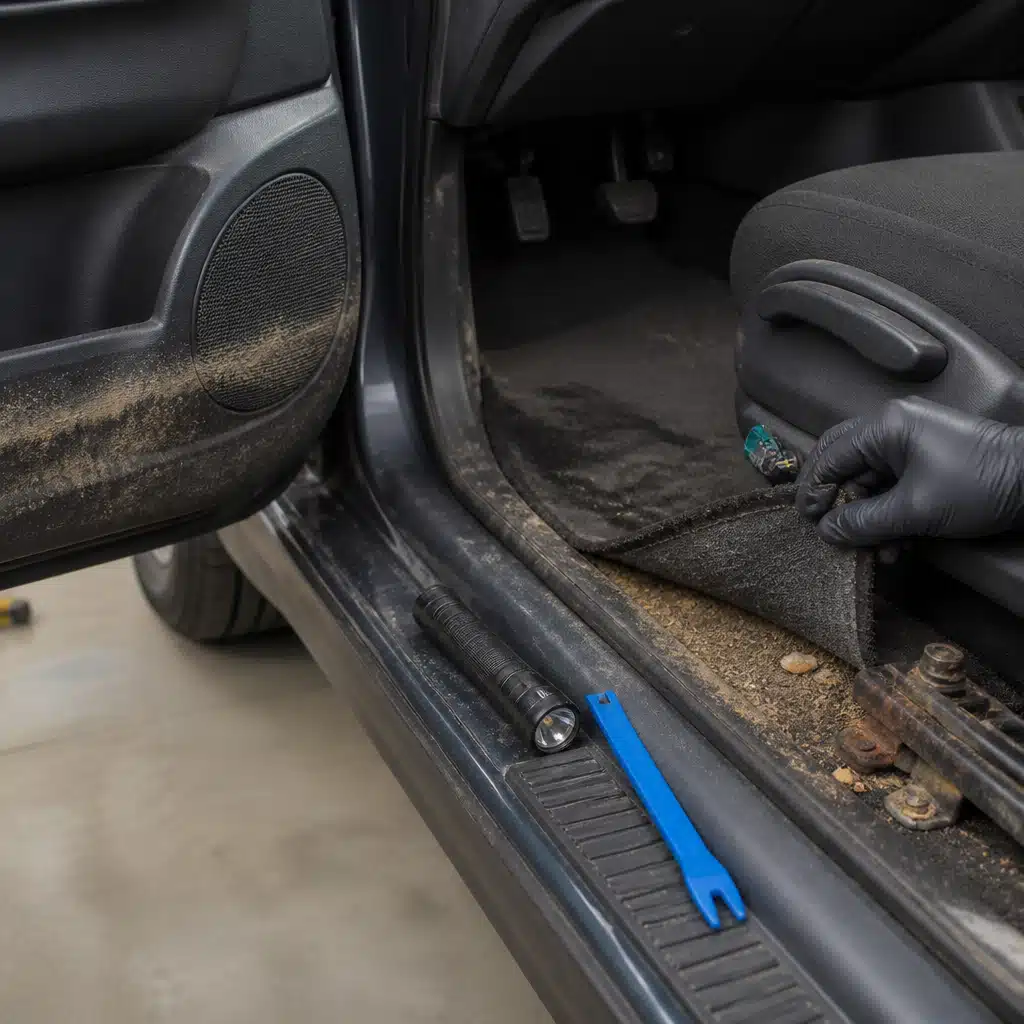
2) Check the carpet, padding, and seat rails
Feel the carpet with your hand in several places, not only near the door. Press down hard with your hand or foot. If it feels spongy, the padding may have been wet or replaced.
Look under the seats with a flashlight:
- Rust on seat rails and bolts
- White or green crust on connectors
- Stains or lines on metal brackets
A common flood sign is a “waterline” mark, like a light dirt line on metal parts under the seat.
3) Look for corrosion in hidden places
Normal older cars can have some rust underneath, but flood-related corrosion often shows up where rainwater usually does not reach.
Check:
- Under-dash metal braces
- Pedal mounts
- Seat belt lower mounts
- Spare tire well in the trunk
Open the trunk and lift the floor cover. If you see water stains, silt, or rust around the spare tire, treat it as a serious warning sign.
4) Inspect lights and lenses for trapped moisture
Look at headlights, tail lights, and interior dome lights. A little fogging can happen from temperature changes, but flood cars may show:
- Water droplets inside lenses
- A dirt line inside the lens
- Corrosion on bulb sockets
Also check exterior mirrors if they have turn signals built in.
5) Check door seals, hinges, and lower door areas
Open each door and look at the lower seam area. Flood water carries dirt and fine silt that can stick in tight gaps.
Signs to watch:
- Dirt packed in door weatherstrips
- Rust where the door harness enters the body
- Drain holes blocked with mud
6) Test electronics like you mean it
Flood damage often shows up as random electrical problems. Test more than the basics.
Try:
- All power windows and locks
- Wipers on all speeds
- Horn
- Radio and speakers (listen for crackle)
- Backup camera and parking sensors
- Heated seats if equipped
- All dashboard buttons
If the car shows warning lights, do not accept “It just needs a sensor” as an answer. Scan codes if possible. Even a simple warning can connect to a bigger wiring problem, like check engine light common causes.
7) Check the fluids for odd color and moisture
Fluids will not always show flood damage, but they can give clues.
- Engine oil: Milky oil can mean water contamination or coolant mixing.
- Transmission fluid: Look for cloudy fluid or foam on the dipstick if the car has one.
- Differential fluid: Often not easy to check, but service records matter.
Also look for water spots under the hood on the fuse box, relays, and metal surfaces.
8) Take a careful test drive
On the drive, look for odd behavior that can point to electrical or bearing issues:
- ABS or traction lights that appear after moving
- Power steering that suddenly feels heavy
- Intermittent gauge dropouts
- Grinding or humming from wheel bearings
If steering feels strange at low speeds, compare what you feel with common symptoms like power steering feels hard. Flood exposure can speed up bearing and electrical wear in steering systems.
Common mistakes to avoid
- Trusting only a quick interior look: Fresh carpet or heavy fragrance can hide the problem.
- Ignoring small rust inside: Rust on seat bolts or under-dash brackets is not normal on a clean, low-mile car.
- Testing only one window or one lock: Flood issues can be random, so test everything.
- Believing “It dried out”: Corrosion continues after the car dries, especially inside connectors.
- Skipping the trunk and spare tire well: It is one of the most telling areas for past standing water.
- Not asking for records: Even basic service history can show repeated electrical repairs.
Safety and legal considerations
Flood-damaged cars can have safety risks. Airbag modules, seat belt pretensioners, ABS modules, and brake electronics can fail without warning. If you see signs of water in the cabin, treat it as a safety decision, not only a comfort issue.
Legally, sellers in many areas must disclose known flood or salvage history, but rules vary and enforcement can be inconsistent. Titles can move between states or regions and lose clear labeling over time. If anything feels off, ask direct questions in writing, and walk away if answers are vague.
If you do buy any used car that might have hidden problems, think about when it is Safe to Keep Driving versus when it needs a professional inspection before regular use.
Final practical advice
Treat flood signs as a pattern, not a single clue. One small sign can be normal. Several signs together usually mean water exposure. Focus on hidden corrosion, damp padding, silt in seams, and electrical oddities.
If you suspect flood damage, the simplest beginner move is to stop and pick a different car. If you still want the car, get a pre-purchase inspection from a shop that will remove a few trim pieces, check for corrosion in connectors, and scan all modules. A clean smell and shiny carpet are not proof of a clean history. Only a careful check of the places water leaves behind tells the real story.


