




This post may contain affiliate links. Please read our disclosure and privacy policy for more information.
An engine that shuts off when you come to a stop or when you creep along in traffic is more than an annoyance. It can take away power steering and power brakes, and it can leave you stuck in a bad spot. The good news is: Many of the common causes are predictable, and a shop can usually diagnose it without guesswork.
What This Problem Feels Like
Most drivers notice the stall happens at low speed, not at highway speed. The engine may run fine while cruising, then suddenly quit as you brake for a stop sign, sit at a red light, or roll into a parking space.
Common things you may notice right before it dies include:
- RPM drops very low, then the engine shuts off
- The car shudders or feels like it is about to stall when you stop
- It restarts right away, or it takes a longer crank than normal
- Warning lights may come on after it stalls (often the battery light and oil light because the engine is not running)
- It happens more with the A/C on, with the headlights on, or when turning the steering wheel at low speed
This is different from an engine that dies only during hard acceleration or at high speeds. A low-speed stall usually points to an idle control or air/fuel management problem.
Is It Safe to Drive?
It depends on where and how often it happens.
If the engine shuts off while you are braking or turning, you can suddenly lose power assist. You can still steer and brake, but it takes much more effort. That is the main safety risk.
Driving is not a good idea if:
- It stalls more than once in a short drive
- It stalls when you are slowing for intersections or merging
- The steering gets heavy right when it happens
- You smell strong fuel, see smoke, or notice the engine running very rough before it dies
If it only happened once and the car now runs normally, you may be able to drive a short distance to a safe place or to a shop. Pick routes with fewer stops, stay out of fast traffic, and give yourself extra room to brake.
Common Causes
These are the most common reasons an engine stalls at stops or low speeds, listed from most likely to less likely.
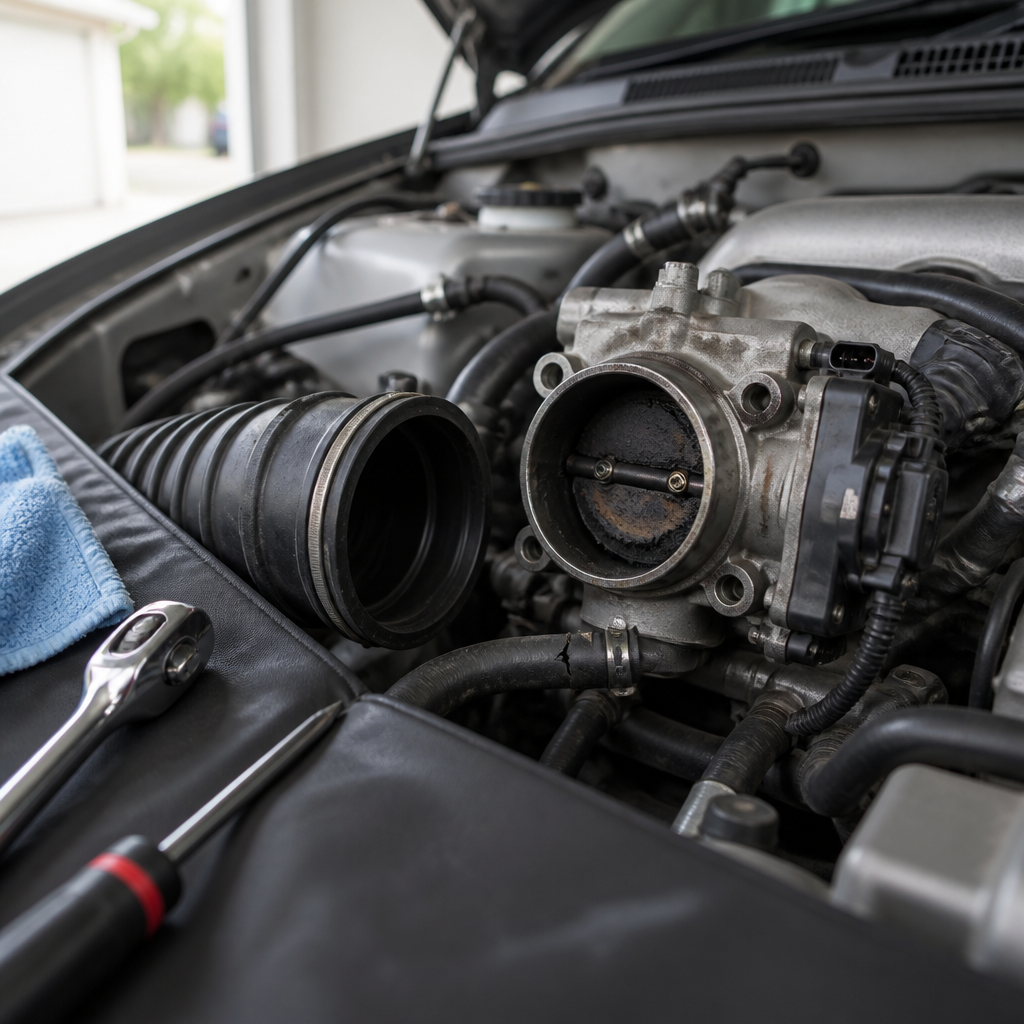
Dirty throttle body or throttle plate
At idle, the engine needs a very controlled amount of air. A throttle body that is coated with carbon can restrict airflow right when the throttle closes as you stop. The engine can drop below stable idle speed and stall.
This is very common on higher-mileage vehicles and on cars that do a lot of short trips.
Idle control problem (electronic idle control or related sensors)
Some vehicles use an idle air control valve. Many newer vehicles manage idle through the electronic throttle body. In both cases, the engine computer is trying to hold a steady idle speed.
If the idle system cannot respond fast enough, the RPM can dip and the engine can die, especially when extra load shows up like A/C compressor engagement or steering input at low speed.
Vacuum leak (unmetered air)
A vacuum leak lets air into the engine that the computer did not measure. At higher RPM, the engine may “hide” the problem. At idle, that extra air can upset the air/fuel mix enough to make the idle unstable and cause stalling.
Cracked vacuum hoses, intake duct leaks, and intake manifold gasket leaks are typical examples.
Weak fuel delivery at idle
An engine needs less fuel at idle, but it still needs steady pressure and steady injector flow. A weakening fuel pump, a restricted fuel filter (if serviceable), or a fuel pressure regulator issue can show up as stalling when you come to a stop.
Some drivers notice it is worse with a low fuel level or on hot days, but that is not always the case.
Torque converter clutch not releasing (automatic transmissions)
In an automatic, the torque converter should “unlock” as you slow down. If it stays locked, the engine can be dragged down like a manual transmission car stopping without pushing the clutch. The stall often happens right as the vehicle speed drops near zero.
This tends to feel like the car is trying to keep moving while you are stopped, right before it shuts off.
Electrical power or charging issue at idle
If battery voltage drops too low at idle, engine control modules and sensors can act up. A weak battery, poor cable connections, or a charging issue can contribute.
This is less common as a main cause by itself, but it can make a borderline idle problem turn into stalling, especially with lights, blower motor, or rear defogger on.
Software or relearn issue after a battery disconnect or repair
Some vehicles need an idle relearn after battery power is lost or after the throttle body is cleaned or replaced. Until it relearns, the idle may be unstable and may stall at stops.
If the check engine light is on, it can point the diagnostic in the right direction. You can get familiar with what that light can mean here: check engine light explained.
Quick Checks You Can Do at Home
These checks are meant to be safe and basic. They will not fix the root cause in many cases, but they can help you avoid an unnecessary tow or give a mechanic better information.
Look for obvious air intake issues
With the engine off and cool, open the hood and check the air intake tube between the air filter box and the engine. Look for:
- Loose clamps
- Cracks or splits in the rubber tube
- A disconnected small hose on or near the intake tube
A loose intake connection can create a vacuum leak and destabilize idle.
Check battery terminals for looseness or corrosion
Loose or corroded battery terminals can cause voltage dips. With the engine off, gently try to rotate each terminal by hand. It should not move. If you see heavy corrosion, that is a clue.
Do not short the terminals with a tool. If you are not comfortable, leave it for a shop.
Pay attention to patterns
These details matter:
- Does it stall only with A/C on?
- Does it stall more when turning into a parking space?
- Does it stall only after the engine is fully warm?
- Does it only happen after refueling?
Write down what you notice. A consistent pattern can narrow the cause quickly.
Scan for trouble codes if you have a simple scanner
If you have access to an OBD2 scanner, pull the codes and note them. Do not clear them yet. Even if the car runs fine after restarting, stored codes and freeze-frame data can help find why the stall happened.
Do not ignore low oil level
Low oil level usually does not directly cause stalling at stops, but it can add risk if the engine is already struggling or if the oil warning comes on. Check the dipstick on level ground with the engine off, and top up only if needed and if you know the correct oil type.
If you frequently find the oil low, that is a separate issue to address. This can help you understand the signs: Oil loss between changes.
When This Becomes Serious
A low-speed stall can turn from annoying to dangerous when it is frequent or unpredictable.
Take it seriously right away if:
- The stall happens in the middle of a turn or in stop-and-go traffic
- The engine runs very rough right before it dies
- You have to keep your foot on the gas at stops to keep it running
- Restarting becomes harder over time
- You smell fuel or hear backfiring
If the engine also misfires under load, that is a different symptom that can overlap but needs its own diagnosis. If you are noticing that too, see: Engine misfires during acceleration.
How a Mechanic Fixes It
A good shop will focus on why idle drops too low or why the engine cannot recover when load changes. The repair depends on what testing shows.
Common professional steps include:
- Scan for codes and review freeze-frame data from the stall event
- Watch live data at idle (RPM control, throttle angle, fuel trims, load, and sensor readings)
- Inspect for vacuum leaks and smoke-test the intake if needed
- Inspect and clean the throttle body correctly, then perform an idle relearn if the vehicle requires it
- Check fuel pressure and fuel delivery under the conditions where the stall happens
- For automatics, test torque converter clutch operation and related controls
- Load-test the battery and verify alternator output at idle with accessories on
After repairs, a mechanic should confirm the fix by recreating the original conditions: Warm engine, A/C on, turning at low speed, and repeated stops.
Common Mistakes to Avoid
-
Clearing codes before recording them: That can erase the best clues.
-
Replacing parts based on guesses: Throttle bodies, sensors, and fuel parts can be expensive and still not solve it if the root cause is a leak or a relearn issue.
-
Ignoring the problem because it restarts: A stall that happens once often happens again, and the next time might be in traffic.
-
Using the wrong cleaning products on the throttle body: Some coatings and electronic throttles can be damaged. If you are not sure, let a shop handle it.
-
Driving with two feet to “catch” the idle: Holding the gas at stops can mask the issue and create unsafe habits.
Related Problems to Watch For
These do not mean you have a different failure, but they often show up alongside low-speed stalling:
- Idle surging or hunting (RPM goes up and down at a stop)
- Long cranking after a stall
- Stalling right after starting, then running fine
- Check engine light that comes and goes
- Oil spots under the car that point to maintenance issues that should not be ignored: Engine oil leaking under car
Final Thoughts
If your engine shuts off at stops or low speeds, treat it as a safety problem, not just a drivability annoyance. If it happens more than once, avoid busy traffic and get it checked soon. Bring notes about when it stalls, whether A/C or steering input makes it worse, and whether it restarts right away. With that information, a mechanic can usually pinpoint the cause and stop the stalling before it leaves you stranded.


