




This post may contain affiliate links. Please read our disclosure and privacy policy for more information.
An engine that misfires when you accelerate can feel scary and frustrating. The good news is that many causes are common and fixable. The key is to take it seriously early: A misfire under load can damage parts like the catalytic converter and can leave you stuck if it gets worse.
What This Problem Feels Like
Most drivers notice the problem right when they press the gas pedal. The car may feel fine at idle or light cruise, then stumble during acceleration.
Common signs include:
- A sharp hesitation or “jerk” when speeding up
- Shaking or vibration that gets worse the more you press the pedal
- Weak power like the engine is not pulling its normal weight
- Popping sounds from the exhaust on acceleration
- The check engine light flashing, or coming on soon after the misfire starts
Some cars misfire only at certain speeds, like when merging onto a highway. If you are also dealing with power dropping at higher speeds, it may feel similar, but a true misfire usually comes with a clear stutter or shake under load. If that sounds familiar, Engine power loss highway speeds can help you compare symptoms.
Is It Safe to Drive?
It depends on how bad the misfire is and when it happens.
Do not keep driving if:
- The check engine light is flashing
- The car shakes hard under acceleration
- The engine feels like it is cutting in and out
- You smell raw fuel (a strong gasoline smell)
- The car cannot maintain speed safely in traffic
A flashing check engine light often means an active misfire that can overheat and damage the catalytic converter. That can turn a smaller repair into a much bigger one.
If the misfire is mild: You can usually drive a short distance to a safe place or a repair shop, but avoid hard acceleration, towing, steep hills, and high speeds. If the problem suddenly gets worse, pull over when it is safe.
Common Causes
A misfire during acceleration usually means the engine is struggling to ignite the air-fuel mix when the demand goes up. That can happen from weak spark, not enough fuel, too much air, or incorrect sensor inputs. Here are the most common causes, starting with the ones seen most often.
Worn spark plugs
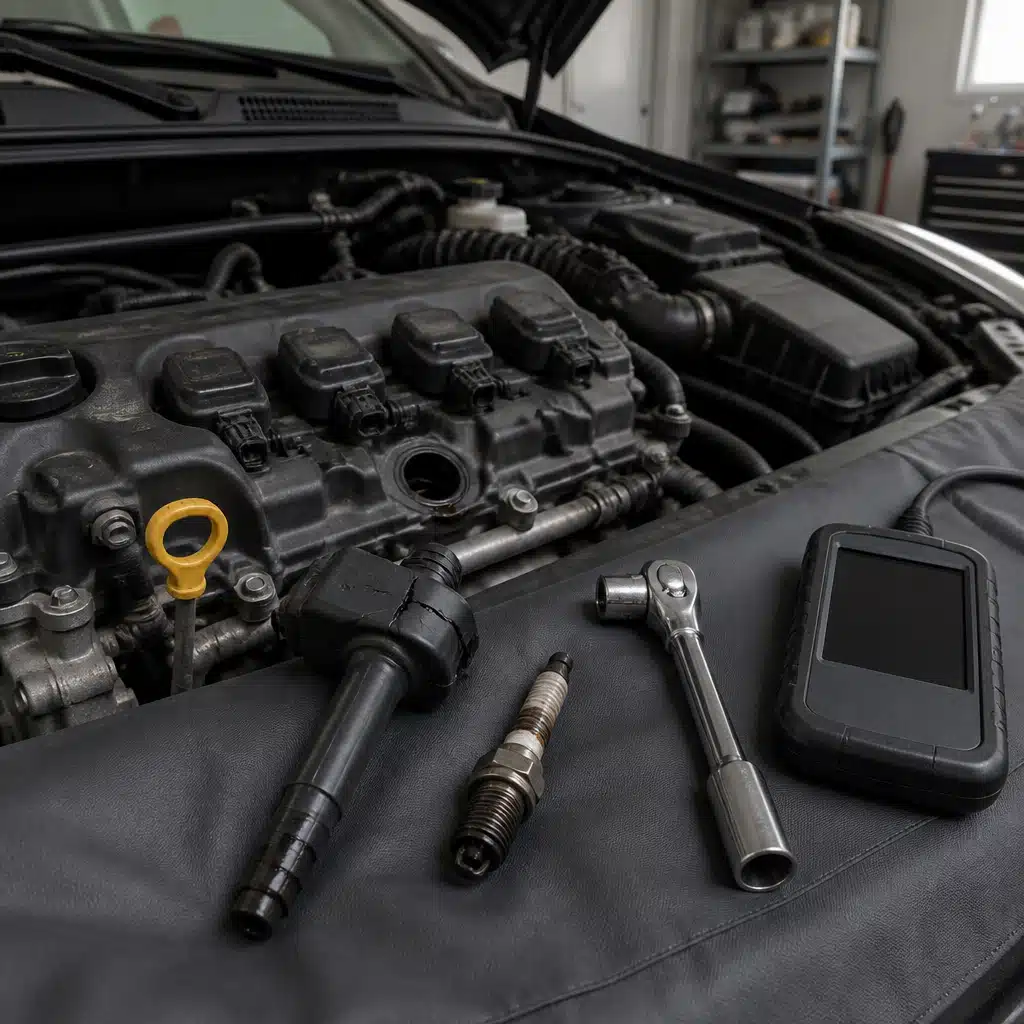
Spark plugs wear out gradually. Under light load, they may still fire well enough. Under acceleration, cylinder pressure rises and the spark must jump the gap more reliably. A worn plug can misfire only when you press the gas.
Why it happens: Normal wear, wrong plug type, or plugs left in too long.
Ignition coil or coil pack problems
Modern engines use individual coils on each cylinder or coil packs. A weak coil can act up most when you accelerate. Heat can make the problem worse, so the car may run better cold and misfire more once warmed up.
Why it happens: Coil aging, internal cracks, moisture intrusion, or worn boots.
Bad plug wires (older systems) or coil boots
On engines with plug wires, insulation can break down, allowing the spark to leak before it reaches the plug. On coil-on-plug systems, the rubber boot can split or carbon-track, causing the same issue.
Why it happens: Age, oil contamination, or long-term heat exposure.
Fuel injector issues
If an injector is clogged or not working correctly, that cylinder runs lean under acceleration and misfires. Some injectors stick or have weak spray patterns that show up mainly when more fuel is needed.
Why it happens: Dirty fuel deposits, long intervals between fuel system service, or an injector electrical fault. If you are curious about what’s involved when injectors are cleaned, DIY fuel injector cleaning explains the general idea without getting into repairs that may not be safe for every driveway.
Low fuel pressure (pump, filter, or regulator)
Acceleration demands more fuel. If the pump is weak or the filter is restricted, fuel pressure can drop during load. That can cause a stumble or repeated misfires as you try to speed up.
Why it happens: Aging fuel pump, restricted fuel filter (if serviceable), failing pressure regulator, or electrical supply issues to the pump.
Vacuum leak or unmetered air
A vacuum leak lets extra air into the engine that the computer did not measure. That can lean out the mixture and cause misfires, often worst during tip-in (the moment you press the gas) and part-throttle acceleration.
Why it happens: Cracked vacuum hoses, intake boot splits, intake manifold gasket leaks, or a loose PCV line.
Mass airflow sensor (MAF) or manifold pressure sensor (MAP) problems
These sensors tell the computer how much air the engine is taking in. If the readings are wrong, fuel delivery can be off, and misfires can show up when airflow changes quickly during acceleration.
Why it happens: Sensor contamination, wiring issues, or a failing sensor.
Engine timing problems (less common, more serious)
If valve timing is off due to a stretched timing chain, a worn tensioner, or timing belt issues, the engine may misfire under load and feel weak. This is less common than ignition or fuel causes, but it is important if other signs point that way.
Why it happens: Wear over time, skipped timing, or related hardware failure.
Quick Checks You Can Do at Home
You can do a few basic checks without taking things apart or guessing at repairs. If anything feels unsafe, stop and arrange a professional inspection.
Watch the check engine light and note when it happens
- If the light is flashing during acceleration, treat it as urgent.
- Notice if the misfire is only under heavy throttle, only uphill, or also at steady cruise.
Check for obvious loose connections and damage under the hood
With the engine off and cooled down, look for:
- Disconnected vacuum hoses or cracked rubber lines
- Loose intake tubing between the air box and throttle body
- Oil in spark plug wells (if you can see down around the coils)
- Wiring connectors that are not fully seated on coils or sensors
Listen for air leaks
A hissing sound near the intake area can point to a vacuum leak. You may hear it more at idle, even if the misfire shows up mainly on acceleration.
Check your fuel level and fuel quality situation
If the misfire started right after you refueled, bad fuel is possible. If you are very low on fuel often, the pump can run hotter and wear faster over time.
Use a basic scan tool if you have one
You do not need advanced tools to get useful information. Trouble codes like P0300 (random misfire) or P0301 to P0308 (specific cylinder misfire) can narrow down the direction. Fuel trim codes can also hint at a vacuum leak or fuel delivery issue.
If you also have an EVAP-related code and a loose fuel cap, fix that first because it can trigger a check engine light, even though it usually does not cause a true acceleration misfire. If you want a quick reference for that specific issue, here is Loose gas cap causes.
When This Becomes Serious
An occasional stumble can turn into a constant misfire faster than you might expect. Take it seriously if any of these show up.
- Flashing check engine light: Often means active misfire severe enough to harm the catalytic converter.
- Misfire gets worse as the engine warms up: Can point to coils, sensors, or heat-related electrical faults.
- Strong fuel smell or black smoke: Can mean a cylinder is not burning fuel properly.
- Loss of power that makes merging unsafe: You cannot depend on the car to respond when you need it.
- Bucking or violent shaking: Stop driving and have it towed if needed.
Driving for long periods with a misfire can also overheat engine components and can cause internal damage in severe cases.
How a Mechanic Fixes It
A professional diagnosis focuses on finding which cylinder is misfiring and why, instead of replacing parts at random.
Common professional steps include:
- Scan for codes and look at live data under load to confirm when the misfire happens
- Identify the misfiring cylinder(s) and check ignition performance (plugs, coils, boots, wires)
- Check fuel delivery by measuring fuel pressure and fuel pressure behavior during acceleration
- Test injectors electrically and, if needed, with more detailed flow testing
- Check for vacuum leaks with smoke testing or other approved methods
- Verify sensor readings (MAF/MAP, oxygen sensors behavior, throttle input) to see if fueling is being calculated correctly
- If needed, perform a mechanical health check (compression or leak-down testing) to rule out valve or timing problems
Once the root cause is confirmed, the fix may be as simple as replacing spark plugs, replacing a failing coil, repairing an air leak, servicing an injector issue, or correcting a fuel pressure problem. After the repair, most shops will confirm the fix with a test drive and data check to verify the misfire is gone.
Common Mistakes to Avoid
- Ignoring a flashing check engine light: This is one of the fastest ways to damage the catalytic converter.
- Replacing random parts without testing: Misfires are common, but the cause is not always the same. Guessing gets expensive and wastes time.
- Using the wrong spark plugs: The wrong type or incorrect gap can create new misfires.
- Overlooking simple air leaks: A split intake hose or disconnected vacuum line can mimic bigger problems.
- Continuing hard acceleration to “push through it”: That can worsen the misfire and increase the chance of damage.
Related Problems to Watch For
These problems can show up along with an acceleration misfire or can be mistaken for it. They are not the same issue, but they are worth noting.
- Rough idle: If the car starts idling rough later, the problem may be progressing.
- Hard starting: Can happen if the mixture is off or spark is weak.
- Engine loses power at steady speed: This can overlap with misfire symptoms in some cases, especially on the highway.
- Cooling system issues: If the engine is overheating at the same time, do not ignore it. Overheating can create new drivability problems and engine damage. If you are adding coolant often, coolant level keeps dropping is a useful comparison point.
Final Thoughts
If your engine misfires when you accelerate, treat it as a real fault, not a quirk. Start by limiting driving, especially hard acceleration. If the check engine light is flashing or the shaking is strong, stop driving and arrange service.
Your best next move is to note when it happens, check for obvious loose hoses or intake leaks with the engine off, and get the codes scanned. With that information, a mechanic can pinpoint whether it is spark, fuel delivery, or unmetered air and fix the real cause without guessing.


