




This post may contain affiliate links. Please read our disclosure and privacy policy for more information.
- What You Are Really Upgrading
- How Pads, Rotors, and Big Brake Kits Change Performance
- What the Research Shows About Fade and Why People Misdiagnose It
- The Upgrade Path: What to Do First (And Why)
- Pads vs Rotors vs Big Brake Kits: Quick Comparison
- Safety Considerations and System Risks
- Common Misconceptions
- Things to Consider Before Making Changes
- Practical Guidance: Picking the Right Upgrade for Your Goal
Most brake “upgrades” are really changes to one part of a system: The pad friction material, the rotor’s ability to absorb and shed heat, or the hardware that applies clamping force. The smartest path depends on how you drive and what problem you are trying to solve: Better pedal feel, less fade on mountain roads, less brake dust, or repeated high-speed stops.
A good way to think about upgrades is in layers. Pads change the friction behavior the most. Rotors mainly change heat handling and consistency. Big brake kits change the system’s thermal headroom and torque capacity, but often cost more and can introduce fitment and street-use trade-offs.
What You Are Really Upgrading
Your brakes convert vehicle speed into heat. The tires provide the final grip. The brakes cannot shorten a stop below what the tires and road surface allow, but they can:
- Create the needed brake torque with less pedal effort (feel and response).
- Stay consistent as temperatures rise (fade resistance).
- Manage wear, noise, and dust (daily drivability).
In real driving, many people confuse “stronger brakes” with “shorter stopping distance.” On a single emergency stop, modern OEM brakes are usually tire-limited. Upgrades show their value more in repeated hard stops, heavy loads, steep grades, track use, or when your current parts are low quality or mismatched.
How Pads, Rotors, and Big Brake Kits Change Performance
Pads: The Friction Couple Is the Main Performance Lever
Research finding: SAE J866 friction classification (the common “edge code” system) tracks pad friction behavior at both lower and higher temperatures. This supports a key reality: Pad material is the biggest single factor in brake “bite,” pedal effort, noise tendencies, fade behavior, and wear patterns.
What it means: Swapping pads can make the brakes feel more responsive, or more progressive, without changing calipers or rotor size. Pads also decide how the brakes behave when hot, because friction materials can change character as temperature climbs.
Why it matters: If your complaint is “mushy feel,” “weak bite,” “too much dust,” or “fade on downhill roads,” pads are often the first and most cost-effective change.
Practical implications: A pad that feels great cold may fade sooner when hot, and a pad that is stable at high temperature may squeal or feel dull at cold city speeds. Matching the pad type to your use case matters more than buying the most aggressive compound.
Rotors: Mostly Heat Capacity, Heat Flow, and Consistency
Research finding: SAE thermal modeling work on disc brakes shows two key relationships: Increasing rotor effective radius increases braking torque roughly in proportion to that radius, and increasing rotor mass increases thermal capacity. More surface area also helps shed heat faster.
What it means: A larger rotor can make the same caliper generate more torque at the wheel, and it can handle repeated stops better because it stores more heat before temperatures climb into fade territory.
Why it matters: If your brakes do fine around town but struggle after multiple hard stops, you are often fighting heat, not a lack of “stopping power.” Rotors influence how quickly heat builds and how quickly it leaves.
Practical implications: Many “rotor upgrades” on stock calipers are really about better-quality rotors (metallurgy, ventilation, correct machining) rather than drilled or slotted surfaces. For street driving, rotor design choices can also change noise, pad wear, and crack risk when abused.
Big Brake Kits: More Thermal Headroom and Hardware Changes
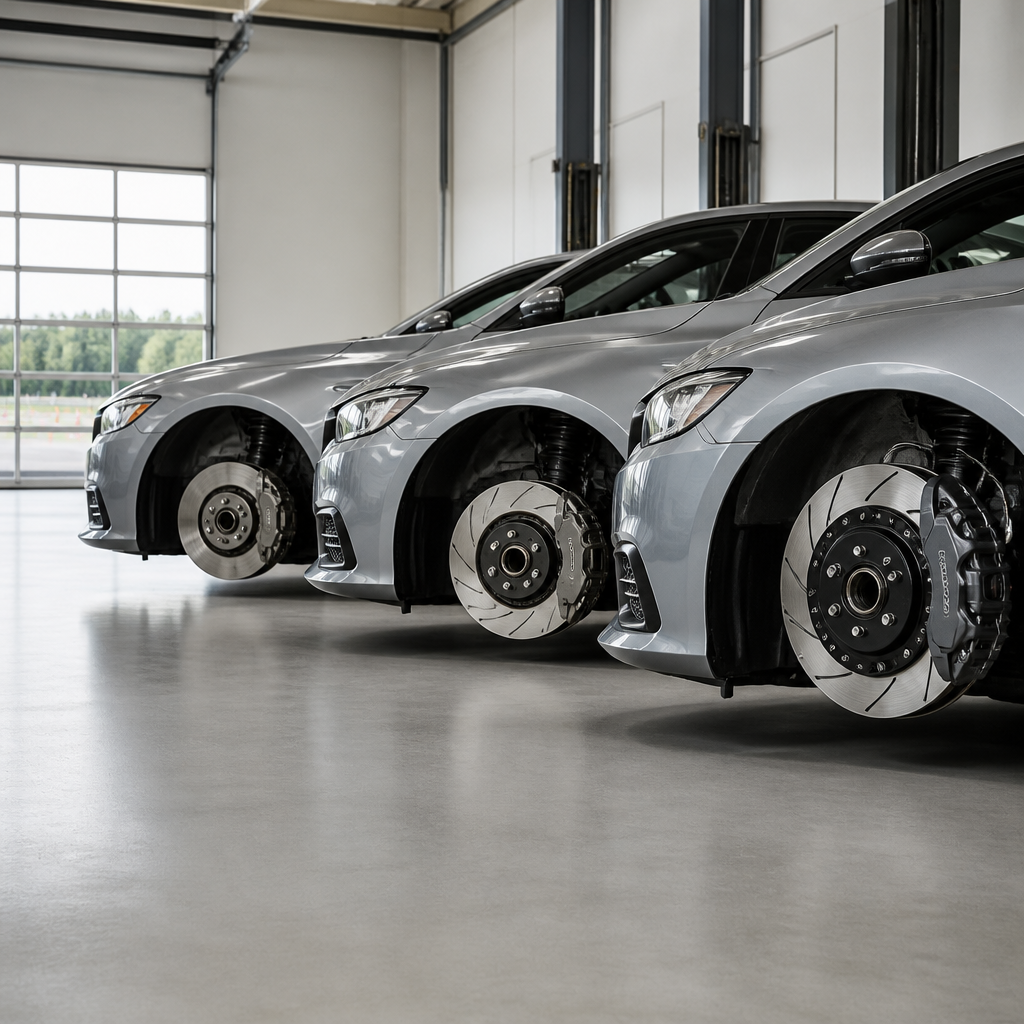
A big brake kit (BBK) usually includes larger rotors, different calipers (often multi-piston), brackets, and pads. The goal is to raise the whole system’s ability to handle heat and deliver consistent torque with fewer compromises.
What it changes most:
- More thermal mass and surface area for repeated hard stops.
- Potentially better caliper stiffness for firmer pedal feel.
- Potentially better pad shape and volume for heat tolerance and wear.
What it does not automatically do: Guarantee shorter one-time stopping distances on street tires. In many cases, the tire still limits the maximum deceleration.
What the Research Shows About Fade and Why People Misdiagnose It
Research finding: U.S. safety testing protocols (FMVSS 135) include fade and recovery requirements that demonstrate a core concept: performance drop during repeated braking is mainly driven by friction material behavior at temperature and the brake system’s ability to manage heat.
What it means: “Brake fade” is not one single problem. It usually shows up as one of these:
- Friction fade: Pad friction drops as the compound overheats.
- Fluid fade: Brake fluid boils and creates compressible vapor, causing a long or sinking pedal.
- Green fade: New pads outgas during early heat cycles (break-in period) and feel weak temporarily.
Why it matters: If you install bigger rotors but keep a street pad that loses friction when hot, you may still experience fade. If your pedal gets long because of boiling fluid, changing rotors alone will not fix it.
Practical implications: For many drivers, the best “fade upgrade” is a pad with a higher stable temperature range, fresh high-quality brake fluid, and properly maintained sliding hardware. A BBK becomes more sensible when you repeatedly exceed what the stock system can shed, even with the right pad and fluid.
The Upgrade Path: What to Do First (And Why)
Step 1: Match the Pad to Your Driving
If you want a noticeable change with the least complexity, start with pads. This is where SAE’s friction classification concept matters most: different compounds create different friction behavior cold and hot.
Common pad directions:
- Daily comfort focus: Lower dust and noise, smooth engagement, good cold performance.
- Sport street focus: Stronger initial bite, better heat tolerance, usually more dust and possible noise.
- Track-capable focus: Stable at high temperatures, often poor cold bite and more noise. Not ideal for commuting.
Also keep expectations realistic. Pads can change “feel” a lot, but they cannot fix a spongy pedal caused by air in the system, worn hoses, or old fluid.
Step 2: Use Quality Rotors for Your Use Case
If your rotors are worn, warped (often thickness variation), or low quality, replacing them with good OE-style vented rotors can improve smoothness and consistency. For many street cars, this is the best rotor “upgrade” because it restores proper thermal behavior and even pad contact.
Slotted and drilled rotors are often misunderstood:
- Slots: Can help clean the pad surface and maintain bite in some conditions, but may increase pad wear and noise.
- Drilled holes: Can reduce mass and can raise crack risk when repeatedly overheated. Some OEM drilled rotors are engineered well, but many aftermarket drilled rotors are more cosmetic than functional.
Step 3: Add Thermal Support Before Jumping to a BBK
If you drive hard in the mountains, tow, or do repeated high-speed braking, heat management becomes the real issue. Before committing to big hardware, consider the system factors that typically fail first:
- Brake fluid condition and boiling point: Old fluid absorbs moisture over time, which lowers boiling resistance. A long pedal after heavy braking often points here.
- Pad temperature range: A street pad can feel great until it crosses its comfort zone.
- Cooling airflow: Some cars simply do not move enough air to the front brakes under heavy use.
Even though a BBK can add thermal capacity, many drivers discover their main issue was pad fade or fluid fade, not rotor diameter.
Step 4: Move to a Big Brake Kit When the Use Case Demands It
A BBK makes the most sense when you consistently overheat the stock setup even after choosing appropriate pads, rotors, and fluid. Typical real-world triggers include:
- Regular track days or autocross with high-speed braking zones.
- Heavy vehicle weight, high power, or repeated high-speed stops.
- Long downhill driving where brakes stay hot for extended periods.
It is also valid to choose a BBK for pedal feel and consistency, as long as you understand the trade-offs and verify wheel clearance and brake balance.
Pads vs Rotors vs Big Brake Kits: Quick Comparison
| Upgrade option | What changes most | Best for | Common trade-offs |
|---|---|---|---|
| Pads | Friction behavior (bite, fade character, dust/noise) | Fixing weak bite, reducing fade with better compound, tuning feel | Dust, noise, rotor wear, cold performance depending on compound |
| Quality OE-style rotors | Smoothness, consistent contact, baseline heat handling | Worn/uneven rotors, vibration issues, restoring stock performance | Limited gains if pads/fluid are the real limitation |
| Larger rotors (same caliper) | More torque from radius, more thermal capacity | Repeated hard stops when stock rotors saturate with heat | Wheel fitment limits, added unsprung mass, cost |
| Big brake kit | Thermal headroom plus caliper stiffness and pad volume | Track use, heavy-duty repeated braking, high heat loads | Cost, wheel clearance, brake balance risk, pad choices can be noisier |
Safety Considerations and System Risks
Brake balance and ABS behavior
Cars are tuned around a front-to-rear brake torque balance. A front BBK that adds a lot of torque without a matching rear change can shift bias forward. That can increase front ABS intervention and lengthen real-world stops on uneven surfaces. It can also raise front pad and tire workload.
Pedal feel changes can hide problems
A firmer pedal after upgrades can feel “better,” but it does not mean the system is safer. If the fluid is old, the caliper slides are sticking, or the pads are mismatched to your driving, the brakes can still fade or pull under hard stops.
Wheel and tire limits still apply
The tire is the final link. If you want shorter stopping distances, tire grip often makes a larger difference than hardware. If you are also changing wheels or tires for performance, it helps to understand the trade-offs covered in grip with wider tires.
Common Misconceptions
“Big rotors always stop shorter.”
Larger rotors can increase brake torque and reduce heat buildup, but a single stop from highway speed is often limited by tire traction and ABS calibration. The big win is consistency when hot.
“Drilled rotors are always better because they run cooler.”
Holes reduce mass, which can reduce thermal capacity. In severe use, some drilled rotors crack. Cooling depends on airflow, vane design, and surface area, not just holes.
“More pistons mean more stopping power.”
Multi-piston calipers can improve pad pressure distribution and stiffness, but braking torque mainly depends on line pressure, piston area, effective radius, and pad friction. More pistons often improves feel and wear more than raw torque.
“If brakes fade, I need a BBK.”
Fade frequently comes from pad compound limits or fluid boiling. FMVSS-style fade concepts highlight that heat and friction behavior are central. Many street cars get a meaningful improvement from the right pads and fresh fluid long before hardware changes are needed.
Things to Consider Before Making Changes
Your real driving cycle
Be honest about how the car is used most days. A pad that works well at track temperatures can be annoying and less predictable at cold city speeds.
Noise, dust, and wheel cleaning
More aggressive pads often make more dust. If you care about keeping wheels clean, you may already be familiar with protective options like ceramic spray coating at home, but remember that dust output starts with pad choice.
Unsprung mass and ride
Bigger rotors and calipers can add weight at the wheel. That can slightly affect ride quality and steering response. It is not always dramatic, but it is a real trade-off.
Wheel clearance and fitment
BBKs often require larger wheels or specific spoke shapes. This cost can be easy to overlook when budgeting.
Quality and compatibility
Mixing random performance parts can create issues: uneven pad deposits, vibration, inconsistent bite, or poor ABS behavior. A coherent setup built around your use case typically works better than a single “hero” part.
Practical Guidance: Picking the Right Upgrade for Your Goal
If your brakes feel dull or overly sensitive: Start with pads. Pad friction behavior is the largest knob you can turn, which aligns with the SAE J866 concept that friction material classification matters for both cold and hot performance.
If you feel steering shake or pulsing under braking: Look at rotor condition and quality first. Many “warped rotor” complaints are really uneven pad deposits or rotor thickness variation. A healthy rotor and a pad that matches your driving can restore smooth braking.
If you lose braking after repeated stops on hills: Think heat. Use pads with a higher stable temperature range, keep brake fluid fresh, and confirm the system is sliding freely. This matches what fade testing principles in FMVSS-type procedures are trying to reveal: Heat and friction transition drive the problem.
If you do repeated high-speed braking (track days, heavy loads, steep grades): A BBK becomes more reasonable because larger effective radius and more thermal mass can delay overheating, which is supported by disc brake thermal behavior research. Still verify wheel clearance, keep brake balance in mind, and choose pads that match how the car is actually driven on and off track.
For most street cars, the best upgrade path is simple: Choose the right pads first, use quality rotors, keep the fluid fresh, and only step into big hardware when your driving repeatedly overwhelms the stock system.


