




This post may contain affiliate links. Please read our disclosure and privacy policy for more information.
A transmission that slips while you are driving is more than just annoying. It is a sign the transmission is not holding the gear it should. The sooner you take it seriously, the better your odds of avoiding bigger damage.
What This Problem Feels Like
Transmission slip usually feels like the car momentarily “falls out of gear” and then catches again. The engine revs up, but the car does not pick up speed like it should.
Common ways drivers describe it:
- The RPM jumps when you press the gas, but the car barely accelerates.
- The car shifts, then immediately feels like it is in neutral for a second.
- It struggles more going uphill or when merging onto the highway.
- It gets worse as the transmission warms up.
- It happens at a specific speed, like 35 to 45 mph, then settles down.
Some cars will also show a warning such as “Transmission,” “Service,” or a check engine light. That does not always happen, so the driving feel matters.
Is It Safe to Drive?
Sometimes you can limp the car a short distance, but transmission slip is not something to ignore. When a transmission cannot hold a gear, it creates heat fast. Heat breaks down the fluid and can burn internal parts.
Driving may be unsafe if:
- The slipping is frequent or getting worse during the same drive.
- You cannot maintain speed, especially in traffic.
- The car hesitates badly when pulling into an intersection.
- You smell something burning.
- The transmission temperature warning comes on, or the car goes into limp mode.
If you are not sure whether you should keep going, use a cautious, safety-first approach like the Keep Driving Safety Guide. If the car feels unpredictable, have it towed. A tow is cheaper than a burned transmission, and it is safer than losing power in traffic.
Common Causes
These are the most common reasons an automatic transmission slips, starting with the ones seen most often.
Low or degraded transmission fluid
Automatic transmissions rely on fluid pressure to apply clutches and bands. If fluid is low, aerated, or worn out, the transmission cannot clamp down hard enough. That leads to a slip under load.
Why it happens: A slow leak, overheating, missed fluid service, or the wrong fluid type. Even a small leak can drop the level enough to cause slipping during turns or acceleration.
Fluid contamination or overheating
When transmission fluid overheats, it loses its ability to lubricate and hold pressure. It can also leave varnish on valves inside the valve body. That can cause delayed engagement and slipping that gets worse after the car warms up.
Why it happens: Heavy towing, stop-and-go driving in hot weather, a blocked cooler line, or an internal problem creating extra heat.
Worn clutch packs or bands (internal wear)
Many automatic transmissions use clutch packs to hold different gears. Over time, friction material wears out. When the clutches are worn, they cannot grab firmly, so the gear slips.
Why it happens: High mileage, overheating, aggressive driving, or long periods of driving with low fluid.
Valve body or solenoid problems
Modern transmissions use shift solenoids to route fluid pressure. If a solenoid sticks, fails electrically, or a valve body passage is worn, the transmission may not apply the clutch fully. That can feel exactly like slipping.
Why it happens: Dirty fluid, electrical issues, internal valve body wear, or a failing solenoid.
Incorrect fluid or incorrect fill level after service
Some transmissions are very picky about fluid type and fill procedure. Wrong fluid or an underfill can cause flare-ups between shifts and slipping under throttle.
Why it happens: A quick service that used a universal fluid, the wrong procedure, or temperature not being checked correctly during fill.
Torque converter problems (less common, but possible)
The torque converter transfers power from the engine to the transmission. If the lockup clutch inside the converter slips, you may feel a shudder or a flare at steady cruising speeds.
Why it happens: Wear inside the converter, fluid breakdown, or control issues. This is less common than basic fluid and clutch wear, but it does happen.
Quick Checks You Can Do at Home
These checks can help you describe the problem clearly and sometimes catch an obvious issue early. Keep safety first. Work on a level surface, set the parking brake, and keep loose clothing away from any moving parts.
Check for warning lights and messages
If the check engine light is on, it may store codes related to shift solenoids, gear ratio errors, or converter slip. Even if the car drives “okay” sometimes, codes can point a shop in the right direction. If you want a simple overview of what that light can mean, see check engine light explained.
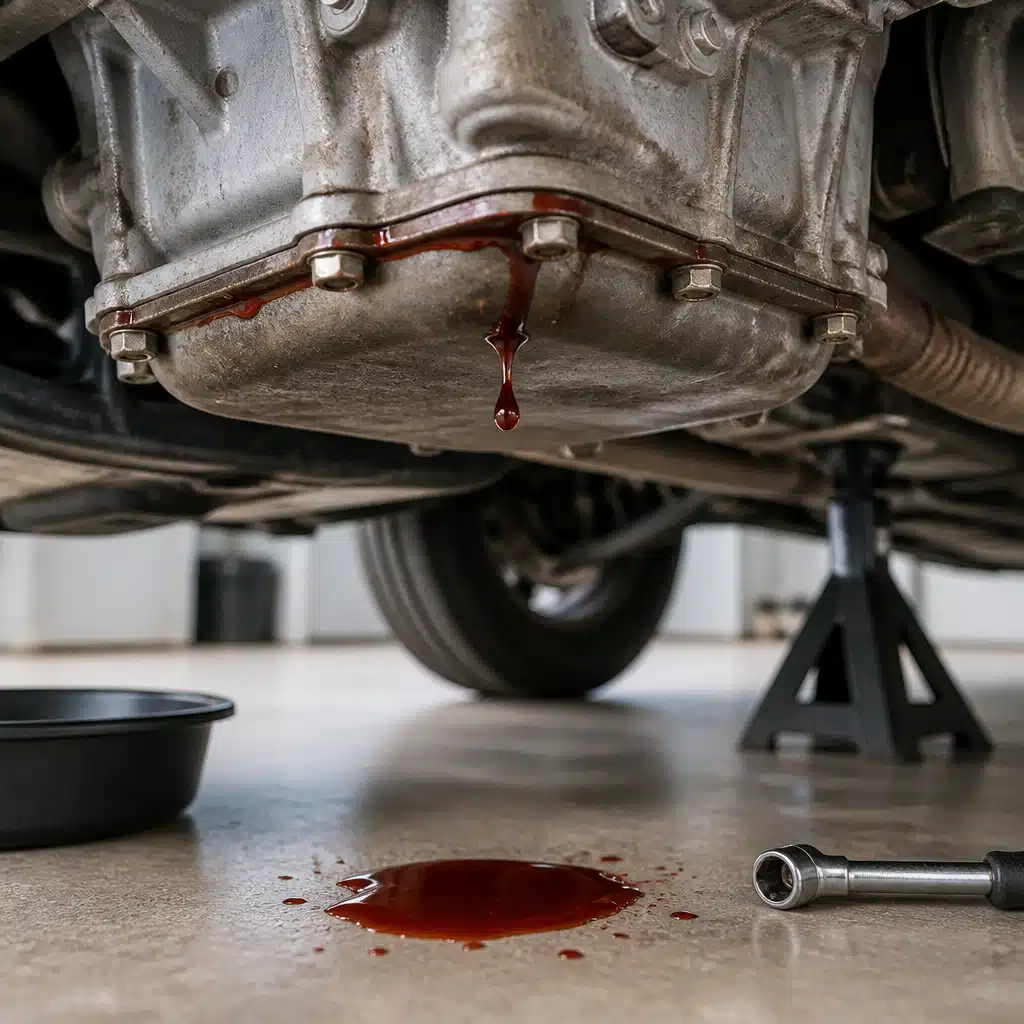
Look under the car for fresh leaks
Transmission fluid leaks are often red, but many fluids are darker now and can look brown. Check the driveway and the lower edges of the transmission case. Also look around the radiator area where cooler lines run.
If you also see oil leaking, do not assume it is all the same leak. Engine oil and transmission fluid are different systems. (If needed later, here is a separate reference on Oil leak after parking overnight.)
Check the transmission fluid level and condition (only if your car has a dipstick)
Many newer cars do not have a dipstick, and the level check requires a specific procedure. If your car does have one, follow the owner’s manual for the correct method. Some require the engine running in Park, others are different.
What to look for:
- Low level: Often linked to slipping, especially on hills or turns.
- Dark brown fluid: Suggests overheating or old fluid.
- Burnt smell: A serious warning sign of clutch damage or overheating.
- Foamy fluid: Can mean overfill, aeration, or suction issues.
If the level is low, do not just top it off repeatedly without finding the leak. Low fluid is usually a symptom of a leak, not the root cause.
Pay attention to when it slips
Make a simple note of the pattern:
- Only when cold, or only after warm?
- Only under hard acceleration, or even with light throttle?
- Only on one shift (like 2-3), or in multiple gears?
- Does it happen more when climbing hills or carrying passengers?
This helps a mechanic narrow it down between fluid pressure control issues, internal clutch wear, or an electrical control problem.
Do not “test” it by power braking
Some people try to confirm slipping by holding the brake and revving the engine in Drive. That can overheat the transmission quickly and cause extra damage. If it is already slipping, that test can push it over the edge.
When This Becomes Serious
Transmission slip is already a serious symptom, but some signs mean you should stop driving and get professional help right away.
- Burning smell or smoke: The transmission may be overheating and cooking the fluid.
- Slip becomes constant: The car can suddenly lose drive in traffic.
- Delayed engagement: You shift into Drive or Reverse and it takes several seconds to move.
- Limp mode: The car is stuck in one gear to protect the transmission.
- Grinding noises: Not common with simple slipping, and can mean hard part damage.
Also treat it as urgent if the slipping started right after a transmission service. That points to incorrect fluid, incorrect level, or a problem that was triggered by disturbed debris in old fluid.
How a Mechanic Fixes It
A professional repair starts with confirming the symptom and figuring out if the issue is fluid-related, control-related, or internal wear. The fix depends on what the transmission is doing and why.
Scan for transmission-related codes and data
A shop will scan for codes and look at live data like gear commanded vs gear achieved, slip speed, transmission temperature, and solenoid commands. This helps separate an electrical control problem from worn clutches.
Check fluid level correctly and inspect fluid condition
For sealed units, the level check may require a scan tool to confirm temperature and a specific fill plug procedure. The technician will also look for signs of burnt fluid, clutch material, or metal debris.
Fix leaks and correct the fill level
If the transmission is simply low due to a leak, the shop will locate the leak source and repair it, then fill with the correct fluid and verify operation.
Address solenoids, wiring, or valve body concerns
If diagnostics point to pressure control or shift issues, the repair may involve replacing a failed solenoid, repairing wiring, or servicing the valve body. This is common when slipping happens in a specific shift or only under certain conditions.
Internal repair or rebuild when clutches are worn
If the fluid is burnt and the transmission continues to slip, the friction materials may be worn out. At that point, the professional fix is internal repair, rebuild, or replacement. That also includes correcting the root cause of overheating so the problem does not return.
Common Mistakes to Avoid
- Driving it hard to “see if it clears up”: Slipping creates heat and wear fast.
- Adding the wrong transmission fluid: Wrong fluid can change friction behavior and pressure control.
- Overfilling: Too much fluid can foam and cause pressure problems that feel like slipping.
- Using miracle additives as a main fix: Some additives can mask symptoms briefly but do not repair worn clutches or a failing solenoid.
- Ignoring small leaks: A small leak can become a big slip at the worst time.
Related Problems to Watch For
These do not change the main diagnosis, but they often show up alongside transmission slip:
- Rough or delayed shifting: Can happen with low fluid or pressure control problems.
- Shudder at steady cruise: Can point toward torque converter lockup issues.
- Overheating warning: Heat can be both a cause and a result of slipping.
- Engine RPM flare between shifts: The classic sign of a slipping clutch pack.
If the engine actually turns off while moving, that is a different problem than transmission slip and needs a different approach. See engine shuts off while driving.
Final Thoughts
If your transmission slips while driving, treat it as a time-sensitive problem. Start with safe checks: Look for leaks, check fluid level and condition if your car allows it, and note exactly when the slip happens. If the slipping is frequent, if you smell burning, or if the car feels unreliable in traffic: Park it and arrange a tow.
The best next step is a proper diagnostic with a scan for transmission codes and a correct fluid level check. Catching a fluid or pressure-control issue early can prevent the kind of internal wear that ends with a rebuild or replacement.


