


This post may contain affiliate links. Please read our disclosure and privacy policy for more information.
- The Origins
- Early Development: Racing, Engineering, and the Shape of Speed
- Between the Wars: Practical Elegance Becomes a Design Language
- Postwar Modernization: The Family Sedan as a Designed Product
- Design Evolution: Pininfarina, Proportions, and International Taste
- Technology Evolution: Diesel, Aerodynamics, and the Quiet Work of Efficiency
- Major Turning Points: The 205 and the Modern Small Car Template
- From the 1990s to the 2000s: Safety, Packaging, and the Rise of the Family Hatch
- i-Cockpit and Interior Design: Rethinking the Driver’s View
- Challenges and Competition: Holding Identity in a Crowded Market
- Influence on the Industry: What Peugeot Helped Normalize
- Modern Evolution: Lighting Signatures, Aerodynamics, and Electrification
- Legacy and Lasting Influence
Peugeot is often described as a long-running European carmaker, but its deeper story is about design: How a brand kept adapting shape, packaging, and user experience to match new technology, new roads, and new expectations. From early mass production thinking to modern aerodynamics and cockpit layouts, Peugeot repeatedly treated design as a practical tool, not decoration. That mindset helped shape what everyday cars look like and how they feel to use.
The Origins
Peugeot began as an industrial family business in the 1800s, producing items such as tools and bicycles before moving into motor vehicles. That background mattered. Unlike some early car builders who approached cars like handcrafted coaches, Peugeot carried an industrial mindset into the car era: Standard parts, repeatable processes, and designs that could be built in volume.
In the earliest years of motoring, the “design problem” was simple but difficult: Make a machine that could run reliably on rough roads, while being light enough to move and strong enough to survive. Early Peugeots, like other cars of the 1890s and early 1900s, were upright and carriage-like because that was the known solution for packaging passengers and mechanical parts. Even then, Peugeot’s approach leaned toward rational layout and manufacturability, building a foundation for the brand’s later influence on mainstream car design.
Early Development: Racing, Engineering, and the Shape of Speed
Before “car design” meant styling studios, it often meant engineering priorities made visible. Peugeot’s pre-World War I racing efforts are important here. The company’s successful Grand Prix cars of the 1910s, including the 1912 Peugeot L76, used advanced ideas such as dual overhead camshafts and four valves per cylinder. Those were not styling features, but they changed what cars could do, and that eventually changes what cars look like.
Why did this matter to design? More efficient engines delivered more power from smaller displacement, which helped reduce the need for oversized chassis and excessive weight. When performance improves without simply making everything bigger, designers and engineers gain freedom. Over time, that freedom supports lower front profiles, tighter engine bays, and evolving proportions.
Motorsport also pushed cooling, braking, and stability demands, forcing clearer thinking about airflow to radiators, suspension geometry, and weight distribution. Even if road cars did not immediately copy race cars, the logic of aerodynamic efficiency and packaging discipline began to seep into mainstream expectations across Europe.
Between the Wars: Practical Elegance Becomes a Design Language
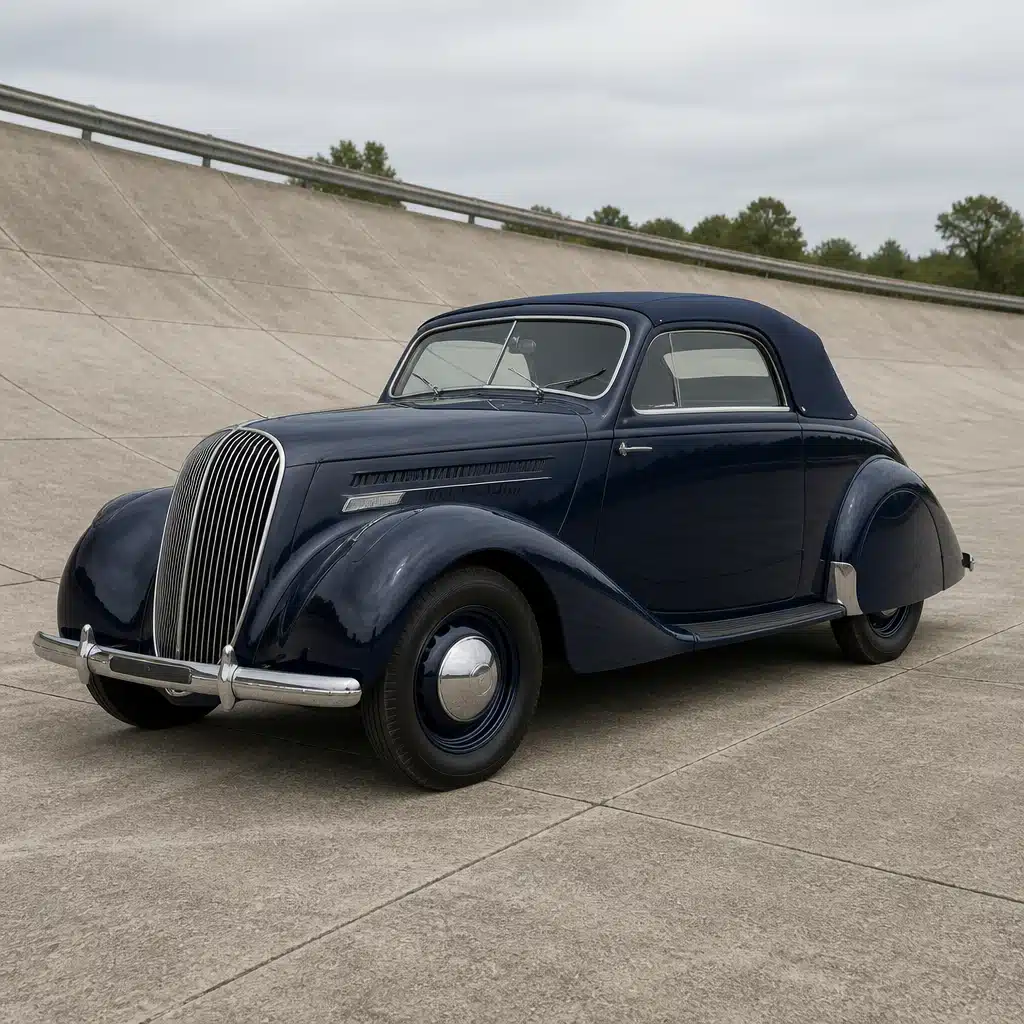
In the 1920s and 1930s, many manufacturers tried to make cars look modern while still dealing with separate fenders, tall grilles, and exposed running boards. Peugeot’s interwar models followed the broad industry path, but the brand became known for restrained, practical shapes rather than extreme styling. This restraint was not a lack of imagination. It was partly a response to market reality: Buyers wanted durability and value during unstable economic times, and conservative design reduced risk.
The bigger change was cultural and industrial. European roads improved slowly, traffic increased, and the car started shifting from a luxury object toward a family necessity. Design was beginning to serve new priorities: Ease of entry, visibility, luggage space, and repairability. Peugeot’s steady development during this period positioned it to respond effectively once post-war demand exploded.
Postwar Modernization: The Family Sedan as a Designed Product
After World War II, European automakers faced a shared problem: Build modern transport for rebuilding societies with limited resources. Peugeot’s 203, introduced in 1948, arrived in a France that needed durable, efficient family cars. The 203 was not just a new model. It represented a shift toward integrated planning of body, chassis, and production. The styling still reflected its era, but the broader idea was modern: Produce one well-rounded car in meaningful volume, refine it continuously, and make ownership manageable.
This period helped establish a template that would dominate European car design for decades: A rational, mid-size sedan that balanced comfort, economy, and practicality. Consumers responded because these cars fit daily life, and competitors across Europe pursued similar formulas. The battle was not only about engines. It was about usable space, visibility, ride quality, and easy servicing.
Design also started to reflect safety thinking, even before strict regulations. Better lighting, improved seating, and clearer instrument layouts were early steps toward the driver-focused cabins that would evolve later. Peugeot was moving, like many brands, from “a vehicle with a body” to “a complete product” where design served function with fewer compromises.
Design Evolution: Pininfarina, Proportions, and International Taste
From the 1950s onward, Peugeot’s design identity was shaped by a long relationship with Italian styling house Pininfarina. The partnership mattered because it aligned Peugeot with clean proportions and understated elegance rather than heavy ornament. Models such as the Peugeot 404 (introduced in 1960) and 504 (introduced in 1968) became widely recognized for their clarity: Straightforward lines, balanced glass areas, and a shape that looked purposeful without being aggressive.
Why did that approach succeed? Market conditions favored it. As cars became more common, buyers increasingly wanted something that aged well. Understated design held resale appeal and was less likely to look dated quickly, a factor that became more important as ownership costs tightened and vehicle replacement cycles became more predictable. If you have ever compared how different brands managed lasting visual appeal, a useful reference point is car depreciation explained, because design stability often supports long-term value in subtle ways.
These Peugeots also demonstrated a packaging philosophy that influenced the broader industry: High usability without looking like a utility vehicle. Large doors, generous trunk space, and sensible interiors helped normalize the idea that a car could be elegant and practical at the same time. Many competitors responded with similar clean-lined sedans, especially as European cars expanded into export markets where durability and easy service mattered at least as much as style.
Technology Evolution: Diesel, Aerodynamics, and the Quiet Work of Efficiency
Peugeot’s influence on modern design is also tied to how it treated efficiency as a design requirement. One clear example was the expanded acceptance of diesel power in passenger cars across Europe, particularly from the 1970s onward. Diesel engines were not new, but making them widely acceptable in family cars required steady refinement: Better drivability, improved noise control, and packaging that did not punish cabin comfort.
Design and engineering had to cooperate. Diesel powertrains could be heavier and noisier, so body structures, engine mounts, insulation, and gearing choices needed careful integration. As fuel prices rose and consumers demanded lower running costs, diesels gained traction, and more brands adapted. Peugeot helped normalize the idea that an economical car did not have to feel crude, which influenced how manufacturers tuned and designed mainstream models thereafter.
At the same time, the industry’s relationship with aerodynamics changed. As speeds increased on improved highways, reducing drag became a practical goal for fuel economy and noise. This evolution pushed car shapes toward smoother noses, cleaner rooflines, and tighter panel transitions. Peugeot’s production cars followed the era’s aerodynamic learning curve, contributing to the industry-wide shift away from upright, squared-off bodies toward more integrated forms.
Major Turning Points: The 205 and the Modern Small Car Template
Few Peugeot models mattered more to design history than the Peugeot 205, launched in 1983. The early 1980s were a tense time for many European manufacturers. Economic uncertainty, intense competition in the supermini class, and changing consumer expectations forced brands to rethink what a small car should be.
The problem to solve was not simply making a smaller car. It was delivering a complete car experience in a compact footprint: Stable handling, real comfort, efficient packaging, and styling that felt modern rather than cheap. The 205 achieved that balance with clean, well-proportioned design and a cabin that felt more grown-up than many small cars of the time.
Consumers responded strongly. The 205 quickly became a defining European hatchback, and competitors took notice. Across the industry, small cars increasingly adopted more sophisticated proportions, better driving dynamics, and higher quality interiors, because the market proved people would pay for refinement even in entry-level segments.
Motorsport played a role in the 205 legend, especially in rallying during the Group B era with the 205 T16. That success did more than boost image. It validated engineering choices around chassis tuning and compact performance packaging, and it reinforced a modern design idea that continues today: A practical hatchback can also be a serious driver’s car without changing its basic shape.
From the 1990s to the 2000s: Safety, Packaging, and the Rise of the Family Hatch
By the 1990s, safety regulations and crash testing had become major design drivers. Stronger structures, side-impact protection, and airbag integration affected pillars, dashboards, and seating positions. At the same time, consumers wanted more space without jumping to full-size sedans. Peugeot, like other European manufacturers, leaned into hatchbacks and wagons as the default family solution.
Cars such as the 306 (introduced in 1993) and 307 (introduced in 2001) reflected this shift. Higher rooflines and more upright seating improved real-world comfort and made entry easier. This was not a styling accident. It was a response to everyday life: Child seats, urban parking, and longer commutes made usability a selling point.
Competitors responded in kind, and the European C-segment hatchback became one of the most tightly contested classes in the world. Design differentiation increasingly came from details like lighting signatures, interior architecture, and perceived quality, because the basic package had converged on similar proportions that worked.
i-Cockpit and Interior Design: Rethinking the Driver’s View
As the 2010s approached, the industry faced a new design challenge: Cars were gaining more technology, but complex dashboards could distract drivers. Touchscreens, connectivity features, and driver assistance systems demanded new interior layouts, and brands searched for ways to keep the driving experience intuitive.
Peugeot’s i-Cockpit concept, which grew into a recognizable interior theme during the 2010s, was an attempt to solve that problem with architecture: A small steering wheel, higher-set instruments, and a simplified center stack. Not every driver preferred the sightline and feel, and reviews often treated it as a love-it-or-not approach. Still, it mattered that a mainstream brand was willing to challenge established ergonomic norms in the compact and mid-size classes.
The long-term impact is visible across the market. Even when other manufacturers did not copy Peugeot’s layout directly, the industry moved toward clearer instrument positioning, reduced button clutter, and more deliberate human-machine interface design. Interior design stopped being a secondary consideration and became a key point of brand identity.
Cabin technology also increased the importance of electrical systems and reliability. As more functions became power-dependent, owners faced newer kinds of problems when components aged. Even basic maintenance awareness changed, and modern drivers often learn checks like a test car battery with multimeter simply because vehicles rely so heavily on stable power for screens, sensors, and control modules.
Challenges and Competition: Holding Identity in a Crowded Market
Peugeot’s design path has never existed in a vacuum. It has been shaped by strong competition inside Europe and by shifting alliances and ownership structures in the wider industry. The brand has frequently had to defend a middle ground: Not a pure premium maker, not a bargain label, but an accessible manufacturer with a distinctive French sensibility in ride comfort and styling.
That positioning created design pressure. Go too conservative, and cars blend into the crowd. Go too bold, and mainstream buyers hesitate. Peugeot’s answer often came through disciplined surfaces and proportion, then bolder details at the edges such as grilles, lights, and interior themes. This approach reflects a broader industry truth: As engineering solutions converge, brand identity is increasingly expressed through design language and user experience rather than unique mechanical layouts.
Comparing different national approaches helps clarify why Peugeot’s choices stood out. Swedish brands, for example, often built their identity around safety-led design choices, which is part of the broader story told in Volvo safety innovations. Peugeot’s identity has typically leaned more toward packaging intelligence, ride comfort, and visual restraint mixed with occasional bursts of daring.
Influence on the Industry: What Peugeot Helped Normalize
Peugeot did not invent the modern car alone, but the company repeatedly helped normalize ideas that later became industry standard. Several themes show up again and again across its history.
- Design as usability: From postwar sedans to modern hatchbacks, Peugeot treated space, comfort, and visibility as core design goals, not afterthoughts.
- Elegant practicality: Especially in the 1960s and 1970s, Peugeot showed that family cars could look clean and dignified without heavy ornament.
- Mainstream acceptance of efficiency: As fuel economy and emissions became central concerns, Peugeot’s work on economical powertrains supported the broader shift toward efficiency as a selling point.
- Interior identity: The i-Cockpit era pushed the idea that cockpit layout could be a brand signature, influencing how competitors thought about instrument placement and control logic.
These contributions mattered because they targeted real problems. Growing traffic and long-distance travel demanded comfort and stability. Fuel costs and taxation pressures rewarded efficiency. Safety regulation forced stronger structures and better restraint systems. Digital technology demanded new ways to present information. At each stage, design evolved because the world around the car changed.
Modern Evolution: Lighting Signatures, Aerodynamics, and Electrification
In the late 2010s and 2020s, Peugeot’s design language became more assertive, with distinctive lighting elements and stronger front-end graphics. This shift did not happen just to stand out in showrooms. It was also a response to platform sharing and global competition. When many cars share underlying architectures, exterior and interior design carry more of the brand recognition load.
Electrification has added another layer. Electric and hybrid drivetrains change packaging needs, cooling requirements, and weight distribution. They also change what customers expect from a cabin: Quiet operation highlights squeaks and rattles, and instant torque shifts how people judge responsiveness. As cars become heavier due to batteries and added safety equipment, suspension tuning and tire choice become even more important to maintain comfort and control.
For everyday owners, modern complexity can also mean new diagnostic habits when performance feels off. Drivers might describe symptoms like Post-refuel car power loss or other intermittent issues that would have been less common in simpler decades, because modern fuel systems and emissions controls are more sensitive and more integrated.
Legacy and Lasting Influence
Peugeot’s lasting impact on modern car design is not about one dramatic invention. It is about consistency: Treating design as problem-solving across generations of ordinary cars. The brand helped codify what a good family sedan looks like, what a capable small hatchback should feel like, and how interior design can shape a driver’s relationship with technology.
That influence remains relevant because the industry is again in a period of transition. As regulations tighten and drivetrains change, designers face familiar questions in new forms: How do you fit everything people want into a compact footprint? How do you keep cars comfortable as they gain weight? How do you present information without distraction? Peugeot’s history shows that the best answers usually come from connecting engineering realities with human needs, then letting design express that connection clearly.


