


This post may contain affiliate links. Please read our disclosure and privacy policy for more information.
You open your car door in a parking lot and it taps the car next to you. A fresh scratch. A paint chip. It happens in a second and it is frustrating every single time.
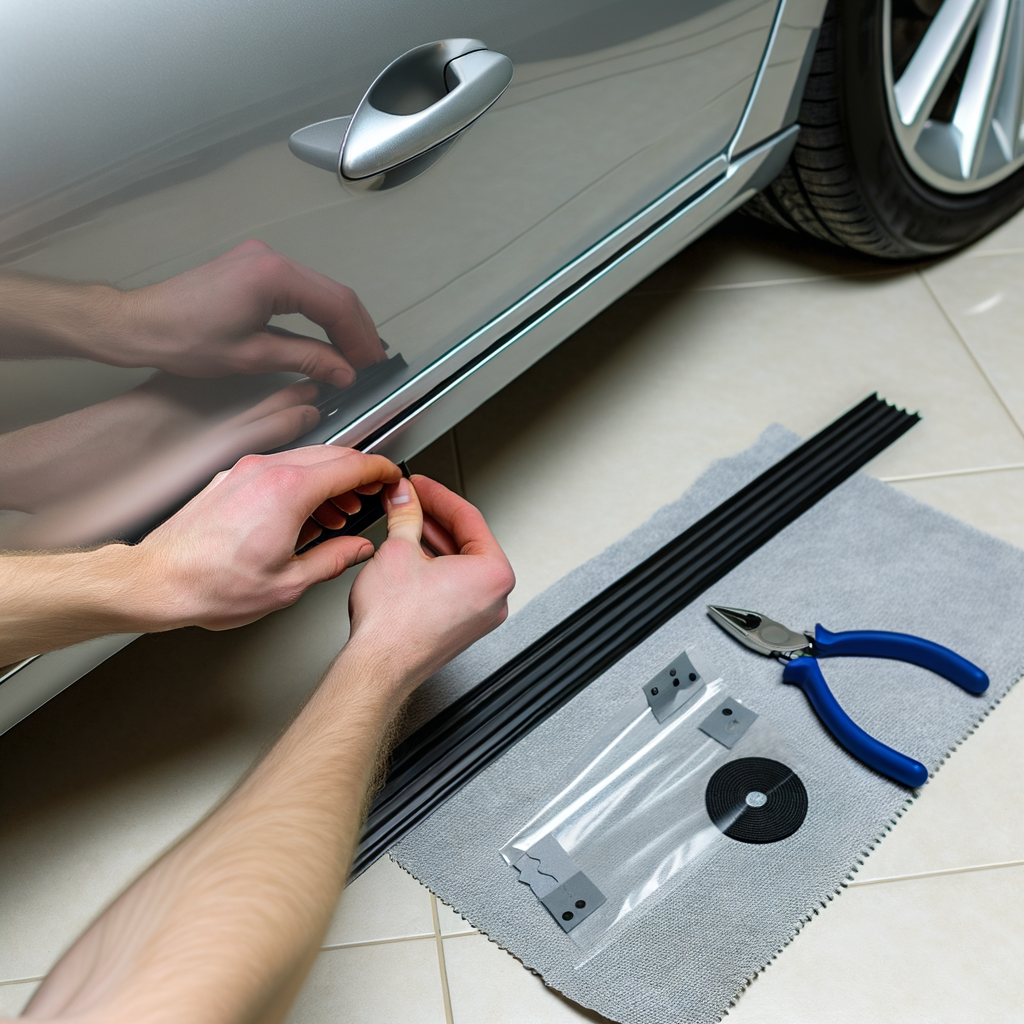
Door edge guards fix this exact problem.These small protective strips sit on the outside edge of your doors and act as a buffer between your paint and everything around it. Cheap, simple, and takes under thirty minutes to install at home with no special tools needed.
This guide shows you exactly how to do it.
Tools and Items Needed
- Door edge guards (U-channel trim or stick-on style)
- Rubbing alcohol (isopropyl alcohol) and clean microfiber towels
- Car wash soap and water (or rinseless wash)
- Masking tape (optional, for alignment)
- Plastic trim tool or an old credit card (for pressing tape-on guards)
- Scissors or a sharp utility knife (only if your kit needs trimming)
- Measuring tape (optional)
- Hair dryer or heat gun on low (optional, if it is cold)

Safety or Legal Notes
This job is low risk, but a few points matter.
- Work in a ventilated area when using rubbing alcohol.
- If you use a utility knife, cut away from your body and away from the paint.
- Do not block door latches, hinges, drain holes, or weather seals.
- Some guards add a small thickness to the door edge. Check door close feel after install. If the door needs extra force, remove and reposition the guard.
Numbered Installation Steps
1. Pick the Right Guard Style
There are two common types.
| Feature | U-Channel Edge Trim |
Tape-On Edge Guards |
|---|---|---|
| Installation Type | Push-on design with built-in metal clips. No glue needed. | Adhesive-backed strip that sticks directly onto the door edge. |
| Best For | Drivers who want stronger impact protection and a secure fit. | Drivers who want a cleaner, nearly invisible look. |
| Key Features | Flexible rubber material, fade-resistant finish, metal clips stay secure during washes, fits most sedans, SUVs, and trucks. | Transparent PVC material, waterproof adhesive, anti-scratch surface, removable without damaging paint. |
| Things to Know | Works best on standard door edges. Very thick door seams may not fit properly. | Needs clean paint and firm pressure for the adhesive to bond properly. |
2. Wash the Door Edges First
Clean the outer door and the door jamb area. Dirt hides right on the edge, and you do not want to trap grit under the guard.
- Open the door.
- Wash the edge and the first 2 to 3 inches of the inside lip.
- Rinse and dry fully.
3. Degrease With Rubbing Alcohol
This step is the difference between a guard that stays on and one that peels off.
- Wet a clean towel with rubbing alcohol.
- Wipe the full door edge. If you use tape-on guards, wipe the flat area where the tape will sit too.
- Let it air dry for a minute.
If you do other small DIY jobs, clean surfaces are also key for trim parts and accessories. The same habit helps on simple interior work like Fix loose interior panels.
4. Test Fit and Mark the Start Point
Hold the guard up to the door edge before you stick or press anything.
- Most people start at the top rear corner of the door, then work down.
- Avoid starting right at the very bottom where water and dirt build up.
- If your kit is a roll, measure the edge and cut slightly long. You can trim the final bit after it is seated.
You can use two small pieces of masking tape as guide marks. This helps keep both front doors at the same height if you care about symmetry.
5. Install U-Channel Edge Trim (Push-On Type)
If you have U-channel edge guards, do not stretch them. Just press them on evenly.
- Start at your chosen point.
- Push the channel onto the edge with your thumb.
- Work in small sections, about 4 to 6 inches at a time.
- Press firmly along the full length. Use steady pressure, not sharp hits.
When you reach a curve, go slower and press more often. For sharp corners, some trims have a flexible spine. If yours feels stiff, warm it slightly with a hair dryer so it bends without lifting.
6. Install Tape-On Edge Guards (Stick-On Type)
Tape-on guards need clean paint, good temperature, and good pressure.
- Peel a short section of backing, not the whole length.
- Set the first inch in position. Then press it down.
- Continue peeling the backing a little at a time while you align the strip.
- Press the full length using a plastic trim tool or an old card wrapped in a towel.
After it is on, press again with your fingers along the full strip. Most adhesive tapes bond better after a few hours.
7. Trim and Finish the Ends
Clean end cuts look best and they help stop peeling.
- For roll trim: Cut the end square and tight to the edge.
- For tape-on: Cut with light pressure. Do not drag a blade across paint.
- Press the last inch again.
If your kit includes small end caps, install them now. If not, a clean square cut is fine.
8. Repeat on the Other Doors
Do one door at a time. Try to match the start and end points side to side. After each door, close it gently and check for rubbing. The door should close normally.
9. Let the Adhesive Set
If you used tape-on guards, avoid washing the car for 24 hours. Try not to drive in heavy rain right away. If you used U-channel trim, you can drive right away, but it still helps to let the trim settle in place for a few hours before a wash.
Common Mistakes
- Skipping the alcohol wipe: Wax and road film stop tape from bonding.
- Installing in cold weather: Adhesive gets stiff. Warm the area or wait for a warmer day.
- Covering the wrong area: Do not cover weather seals or anything that needs to move.
- Stretching the trim: Stretched trim can shrink later and leave a gap.
- Starting too low: The bottom area takes more water and grit, which can lift edges over time.
- Not pressing firmly enough: Tape needs pressure to bond well.
Maintenance Tips
Door edge guards are mostly set-and-forget, but quick checks help them last.
- Wash them like normal trim. Use car soap and a soft mitt.
- Do not blast the edges with a pressure washer nozzle from close range.
- Every few weeks, run your finger along the guard. If you feel a lifted spot, press it back down.
- If a tape-on edge starts to peel, remove it and replace it. Do not stick it back with random glue.
If you like small protection upgrades, simple add-ons can make daily driving feel nicer too. Another quick one is DIY car seat gap fillers for stopping dropped keys and coins.
Is It Worth It?
For most drivers, yes. Door edge guards are cheap, fast to install, and they can save you from paint chips that lead to rust later. They are also a good first DIY because you practice cleaning, careful alignment, and working slowly.
If you want a very clean look, pick a color-matched guard or a clear style. If you care more about protection than looks, a thicker U-channel guard usually takes more hits.
This kind of small change sits in the “visual and practical” category. If you are also learning what types of mods make sense, Mods explained for beginners can help you sort what is worth doing first.
Conclusion
Installing door edge guards at home is simple. Clean the surface, test fit, and take your time with alignment. Press everything down well, especially with tape-on guards. After that, you get daily protection in parking lots with almost no maintenance. It is a small job that makes a real difference.


