


This post may contain affiliate links. Please read our disclosure and privacy policy for more information.
Water spots on car paint look small, but they can turn into a real problem. Some are only mineral deposits sitting on top of the clear coat. Others can bite into the paint if they stay too long. The good news is you can remove most water spots at home with simple tools and a careful process.
Tools and Items Needed
- Car wash soap (pH balanced) and a wash mitt
- Two buckets (one for soapy water, one for rinse water)
- Microfiber drying towels (at least 2)
- Detail spray or clean water in a spray bottle
- White distilled vinegar
- Spray bottle for vinegar mix
- Soft microfiber towels (several)
- Clay bar or clay mitt and clay lubricant
- Light polish and applicator pad (hand polishing is fine)
- Optional: Dual action polisher (only if you already know how to use one)
- Paint sealant or wax for protection
- Good lighting (sunlight, garage light, or a bright flashlight)
Safety or Legal Notes
Work on cool paint in the shade. Hot panels dry fast and make spotting worse. Do not mix chemicals. Use only vinegar and water for the vinegar step. Keep any cleaner away from your eyes. If you use a polish, avoid plastic trim and rubber seals because some products can stain them. If your car has matte paint or a matte wrap: Stop. Most spot removers and polishes can damage matte finishes.
Numbered Removal Steps
1. Check What Kind of Spots You Have
Spray a little clean water on the spot and wipe with a microfiber towel.
- If the spot disappears but comes back when dry: It is probably minerals on the surface.
- If the spot stays and you can see an outline in the clear coat: It may be etched.
- If you can feel roughness with a clean fingertip inside a plastic bag: You may have bonded contamination too.
2. Wash the Car First
Do not try to remove spots on a dirty car. Dirt can scratch the paint.
- Rinse the car well.
- Wash using the two-bucket method.
- Rinse again.
- Dry right away with microfiber drying towels.
Water spots often form during drying, so take your time here. If you want to keep the whole car clean inside while you work on the outside later, it helps to do small jobs like Remove pet hair car seats on a different day, not during paint work.
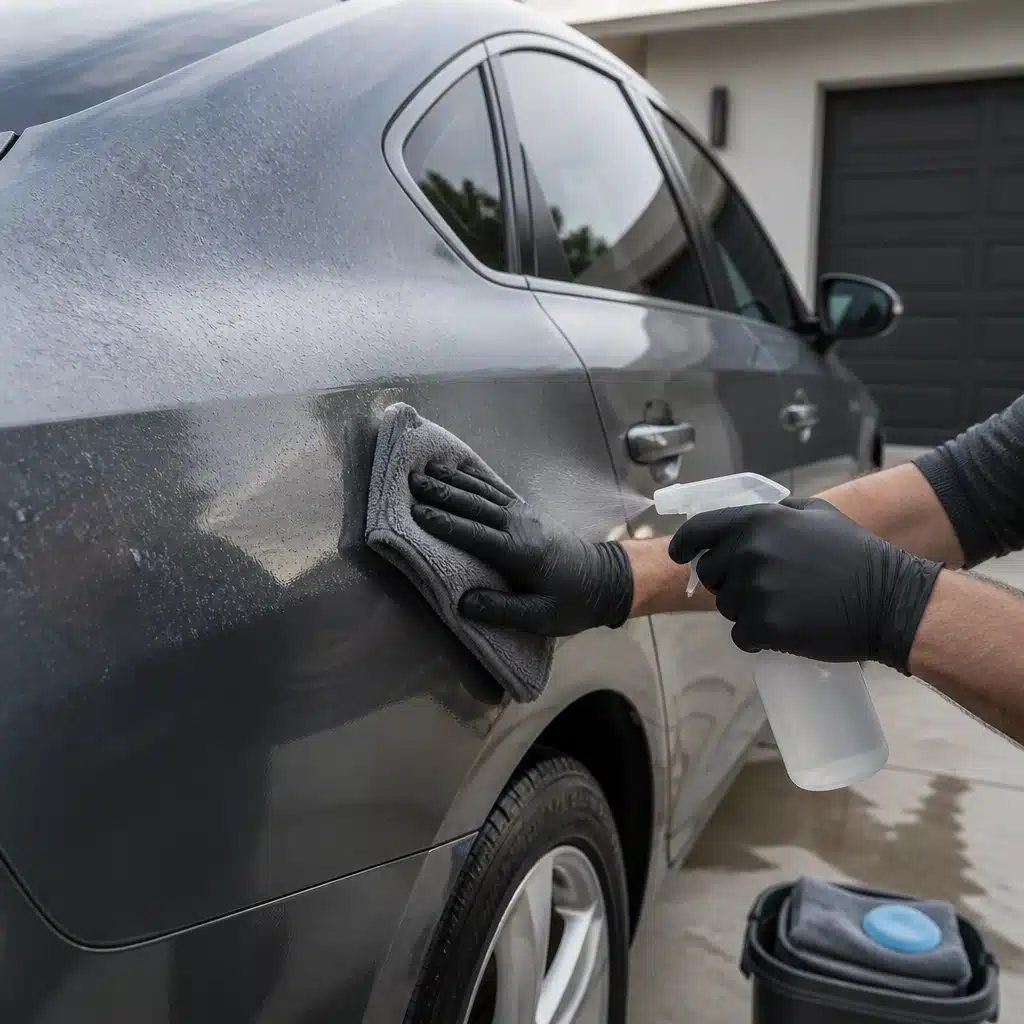
3. Try the Mild Vinegar Mix (For Fresh Mineral Spots)
Mix 50% white distilled vinegar and 50% water in a spray bottle. This is mild, but it can still strip wax. That is normal.
- Spray the mix onto a microfiber towel, not directly onto the paint.
- Gently wipe one small area, about 1 to 2 square feet.
- Let it sit for 10 to 20 seconds if the spots are stubborn. Do not let it dry.
- Wipe again with a clean microfiber towel.
- Rinse the area with clean water or wipe with a towel dampened with clean water.
- Dry the panel.
Look at the paint from different angles. If the spots are gone: Great. Move on and protect the paint later. If they are still there: Go to the next step.
4. Clay the Area (If You Feel Roughness)
Clay removes bonded stuff that regular washing leaves behind. It will not fix etching, but it helps if deposits are stuck to the surface.
- Spray clay lubricant on the paint.
- Glide the clay bar or clay mitt lightly. Do not press hard.
- Keep the surface wet with lubricant.
- Wipe clean and dry.
If you drop a clay bar on the ground, throw it away. Dirt trapped in clay can scratch your paint fast.
5. Use a Light Polish for Etched Water Spots
If the spot outline is still visible after vinegar and clay, it is likely etched into the clear coat. A light polish is the next safe step.
- Work in the shade on cool paint.
- Apply a small amount of light polish to a foam applicator pad.
- Work a small area using short, overlapping passes.
- Use moderate pressure for 30 to 60 seconds, then lighten pressure for a few final passes.
- Wipe off with a clean microfiber towel.
- Check your results in good light.
You can repeat once or twice if needed. Stop if you see hazing or if the clear coat looks stressed. Deep etching can be too deep for DIY polishing. In that case, a detailer may need to compound and refine the finish.
6. Re-wash or Wipe Down the Panel
After polishing, wipe the area with a damp microfiber towel or do a quick gentle wash. This removes leftover polish oils and residue, so you can see the true finish.
7. Protect the Paint
Water spots come back faster on unprotected paint. Apply a wax or paint sealant to the cleaned area, or to the whole car if you have time.
- Follow the product directions.
- Apply thin and even.
- Buff off with a clean microfiber towel.
If you also have faded exterior plastics, doing a separate job like restore faded plastic trim can improve the whole look. Just keep trim products off fresh wax until it cures.
Common Mistakes
- Working in direct sun: Cleaners dry too fast and can leave marks.
- Using dish soap: It can strip protection and dry out rubber and trim.
- Scrubbing hard with a towel: This can create swirl marks.
- Spraying vinegar directly into cracks: It can get into badges and seams. Spray it on the towel instead.
- Jumping straight to heavy compound: Start mild. You can always step up, but you cannot put clear coat back.
- Not drying the car fully: If you leave water to air dry, you invite new spots.
Many DIY issues come from rushing. That is true for paint care, and it is also true for other upkeep. If you want a quick reality check on habits that cause repeat problems, Common car maintenance mistakes is a useful guide.
Maintenance Tips
- Dry the car right away: Use a clean microfiber drying towel. Do not let it drip dry.
- Avoid hard water when possible: If your tap water is very hard, consider rinsing with filtered water for the final rinse.
- Keep a quick detail spray in the garage: It helps remove fresh spots before they bake in.
- Reapply protection: Wax or sealant helps water bead and makes drying easier.
- Do not park under sprinklers: Sprinkler water is often full of minerals.
Water spots are not the only annoyance that shows up over time. If you like keeping your interior fresh too, DIY car odor removal can help your car feel clean after you fix the paint.
Is It Worth It?
Yes, for most cars and most water spots. Vinegar, clay, and a light polish can fix a lot at home for low cost. It also helps protect your clear coat from long-term damage. If the spots are deep and etched, DIY results may be limited. In that case, paying for professional paint correction can be worth it, especially on dark paint where marks show more.
Conclusion
Start with the least aggressive method. Wash and dry first. Use a mild vinegar mix for surface minerals. Clay the paint if it feels rough. Step up to light polish only if the spots are etched. Finish with wax or sealant to slow down new water spots. With a careful process, most beginners can get clean, glossy paint again at home.


