


This post may contain affiliate links. Please read our disclosure and privacy policy for more information.
Faded black plastic trim can make a clean car look old. Sun and heat dry it out. Car wash soap can also strip it over time. The good news: You can bring most trim back at home with simple tools. This guide uses a trim restorer, not paint. It is fast, cheap, and beginner friendly.
Tools and Items Needed
- Car wash soap and water
- Microfiber towels (at least 3)
- Soft detailing brush or old toothbrush
- All-purpose cleaner or plastic-safe degreaser
- Isopropyl alcohol (about 50% to 70%) or a panel wipe
- Masking tape (blue painter’s tape works well)
- Foam or microfiber applicator pad
- Trim restorer gel or trim coating made for exterior plastic
- Nitrile gloves
If your trim is covered in wax residue, add a dedicated wax remover or a stronger APC. If you are already working on other cleaning jobs, you can pair this with engine bay cleaning for beginners on the same day.
Safety or Legal Notes
- Work in shade on cool trim. Hot plastic can flash-dry products and cause streaks.
- Wear gloves. Trim products can stain your skin and some have strong solvents.
- Do not get trim restorer on brake rotors, pedals, tires’ tread, or steering wheel surfaces. It can be slippery.
- Use alcohol with care around fresh paint repairs. Avoid soaking edges where paint is thin.
- Dispose of used towels properly. Some coating-type products can harden in fabric.
DIY: Restore Faded Plastic Trim At Home in 5 Steps
1) Wash the area and dry it fully
Start with a normal wash. You want all dust and loose dirt gone. Plastic trim holds grime in texture, so take your time.
- Wash the trim with car soap and a soft wash mitt.
- Rinse well so no soap stays in seams.
- Dry the trim completely with a microfiber towel.
Dry trim matters. If water is trapped in pores or seams, the product may not bond evenly.
2) Deep clean the plastic and remove old residue
This step is what makes the result last. Most failures come from product going on top of wax, oily film, or old dressing.
- Spray all-purpose cleaner on the trim. Do not soak nearby paint.
- Agitate with a soft brush. Focus on textured spots and edges.
- Wipe off the dirty cleaner with a microfiber towel.
- Repeat until the towel no longer turns gray or brown.
If you see white chalky marks, that is often dried wax. Keep cleaning until it fades. If your car has other “small but annoying” issues, it helps to separate them into quick jobs like this and things like power window causes and fixes.
3) Prep the surface with alcohol and tape off paint
Now remove the last invisible film so the restorer sticks.
- Lightly dampen a towel with isopropyl alcohol.
- Wipe the trim in straight lines. Use a clean side often.
- Let it air dry for 2 to 5 minutes.
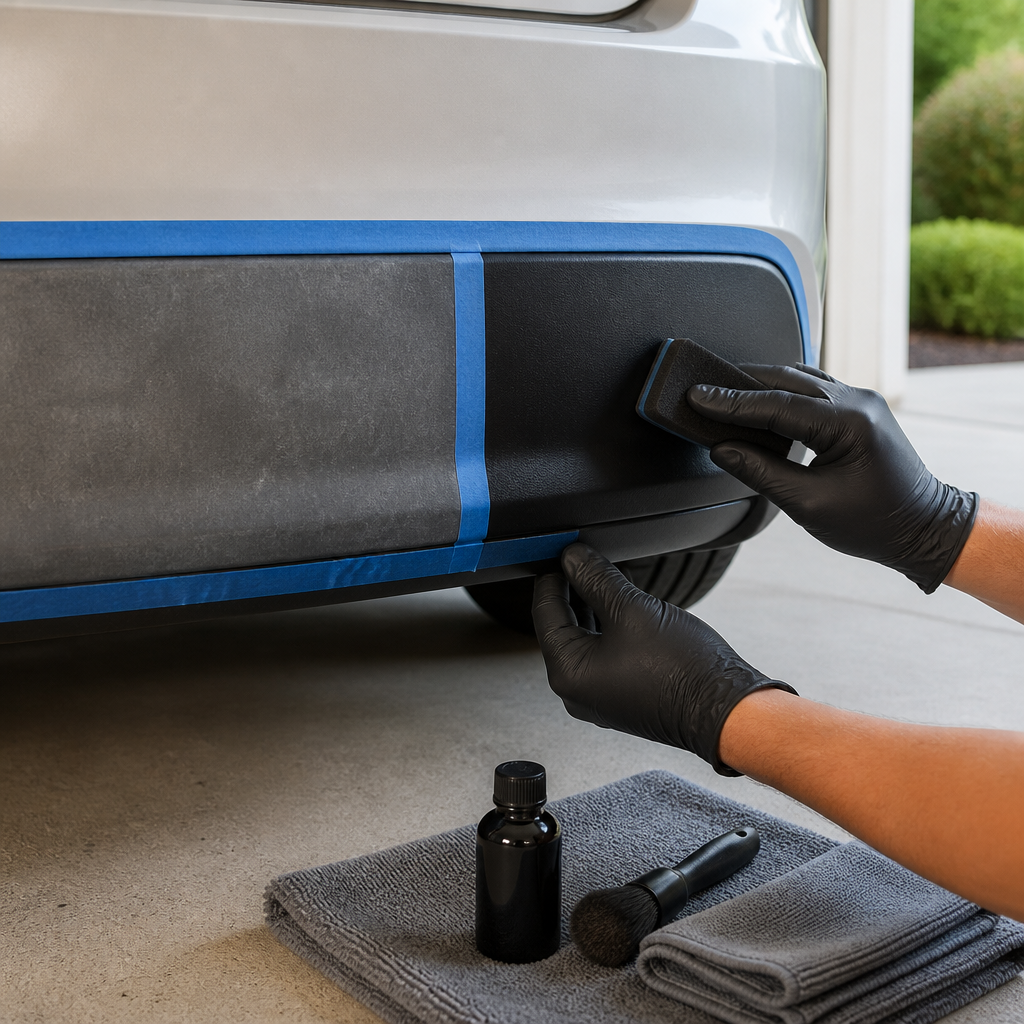
Next, use masking tape to protect paint and glass right next to the trim. This saves cleanup time and helps you apply a neat, even coat.
4) Apply trim restorer in thin, even layers
Shake the product if the label says to. Put a small amount on your applicator pad. A little goes a long way.
- Work one small section at a time, about 1 to 2 feet long.
- Spread the product evenly. Use light pressure.
- Keep an eye on edges and corners. They often need a second pass.
- After 1 to 3 minutes, lightly buff with a clean microfiber if the product calls for it.
For very faded trim, do a second thin coat after the first one sets. Do not load it on thick. Thick coats tend to smear and attract dust.
5) Let it cure and do a final wipe
Trim restorers need time to set up. Some are “wipe on, wipe off.” Others are more like coatings and need cure time.
- Keep the car dry for at least 6 to 12 hours, or follow the label.
- Avoid washing for 24 to 48 hours if the product is a coating type.
- After it cures, do a gentle final wipe to remove any high spots or streaks.
If you drive right away, avoid heavy rain if possible. Water spotting can happen on fresh product.
Common Mistakes
- Skipping the deep cleaning: The trim may look good for a day, then fade again fast.
- Applying product in direct sun: It can dry uneven and leave shiny patches.
- Using tire shine on trim: Many tire dressings are oily. They sling, attract dust, and do not last.
- Getting restorer on paint and leaving it: Some products stain clear coat edges. Tape helps, but wipe mistakes fast.
- Using too much product: Thick layers can look blotchy and feel greasy.
- Forgetting the texture: If trim is heavily textured, use a pad that can press into the grain, or work it in with a soft brush.
Maintenance Tips
Once trim is restored, it is easy to keep it looking good.
- Wash trim with normal car soap. Avoid harsh degreasers unless needed.
- After washing, dry trim. Letting water air dry can leave mineral spots.
- Use a mild trim-safe detail spray if you want a quick boost between washes.
- Park in shade when you can. UV is the main cause of fading.
Also, try to avoid wiping dust off dry trim with a dry towel. That can scratch and dull the finish. If your interior needs attention too, this pairs well with clean cloth car seats so the whole car looks fresher.
Is It Worth It?
Yes, for most cars. Restoring trim is one of the highest impact DIY details you can do in under an hour. It makes bumpers, mirror bases, cowl panels, and door trims look newer right away.
It is especially worth it if you are trying to improve the look before selling. A buyer may read faded trim as “not cared for.” Looks are not everything, but small signals matter. If you are comparing overall value topics, car depreciation and resale value is a helpful reference for what affects price long term.
When is it not worth it? If the trim is physically damaged. Deep scratches, gouges, or plastic that has turned gray and rough from age may need sanding and dye, or full replacement. Also, if a trim piece is peeling or flaking, a restorer will not fix that.
Conclusion
Restoring faded plastic trim at home is simple: Clean it well, prep it, apply a thin coat, and let it cure. Most bad results come from rushing the cleaning step or using too much product. Take your time, work in the shade, and your trim can stay darker for months.


