


This post may contain affiliate links. Please read our disclosure and privacy policy for more information.
Buying a used car can save money, but it also comes with risks. One of the biggest risks is buying a stolen car without knowing it. That can lead to the car being taken away later, plus legal trouble and lost money. The good news is you can spot many warning signs with a careful check and the right paperwork.
What the concept is
A stolen used car is a vehicle taken without the owner’s permission and sold to someone else. Sometimes thieves use fake documents. In other cases, the car is stolen, then quickly sold online or through a “too easy” private sale.
There is also a related problem called title fraud. That is when someone changes or fakes vehicle ownership documents to make a car look legitimate. This can happen with stolen cars, but it can also happen with damaged cars. If you are still learning how titles work, it helps to understand Salvage vs Clean Title so you know what paperwork should look like and what questions to ask.
Why people do it
Stolen cars get sold because thieves want fast money. A private sale can look simple, and some buyers skip basic checks to “lock in a deal.”
Stolen cars are also used in scams like:
- Fake low price: The seller pushes urgency so you do not verify anything.
- Deposit scam: They ask for money to “hold” the car, then disappear.
- Paperwork delay: They claim the title is coming later, which is a major problem.
- VIN switching: They move VIN plates or use parts from another car to hide identity.
Things to know before starting
Before you meet any seller, know what a normal, safe sale looks like. A real owner can show clear ID, a matching title, and a car that matches the paperwork.
Keep these basics in mind:
- Never buy without a title in hand unless your local laws clearly allow another safe method through a licensed dealer.
- The VIN must match everywhere. A car can have the VIN in multiple places, and they must all match the title.
- Meet in a safe place. A police station parking lot or a busy public area is better than a remote spot.
- Bring a friend. Two people notice more details, and it is safer.
- Plan your payment. Use a method that creates a record. Cash makes scams easier.
Also, be careful not to confuse theft risk with mechanical risk. A car can be legal but still have problems. If you want a simple baseline for checking basic performance, topics like Slow acceleration checks can help you notice signs the car was abused or poorly maintained.
Step-by-step explanation
1) Pre-screen the seller before you meet
Ask a few direct questions by message or phone:
- Are you the owner listed on the title?
- Is the title in your name and ready to sign today?
- Any liens or loans on the car?
- Can you meet at the bank or DMV office?
If the seller avoids these questions, gets angry, or pushes you to hurry, treat it as a warning sign.
2) Check the VIN in more than one place
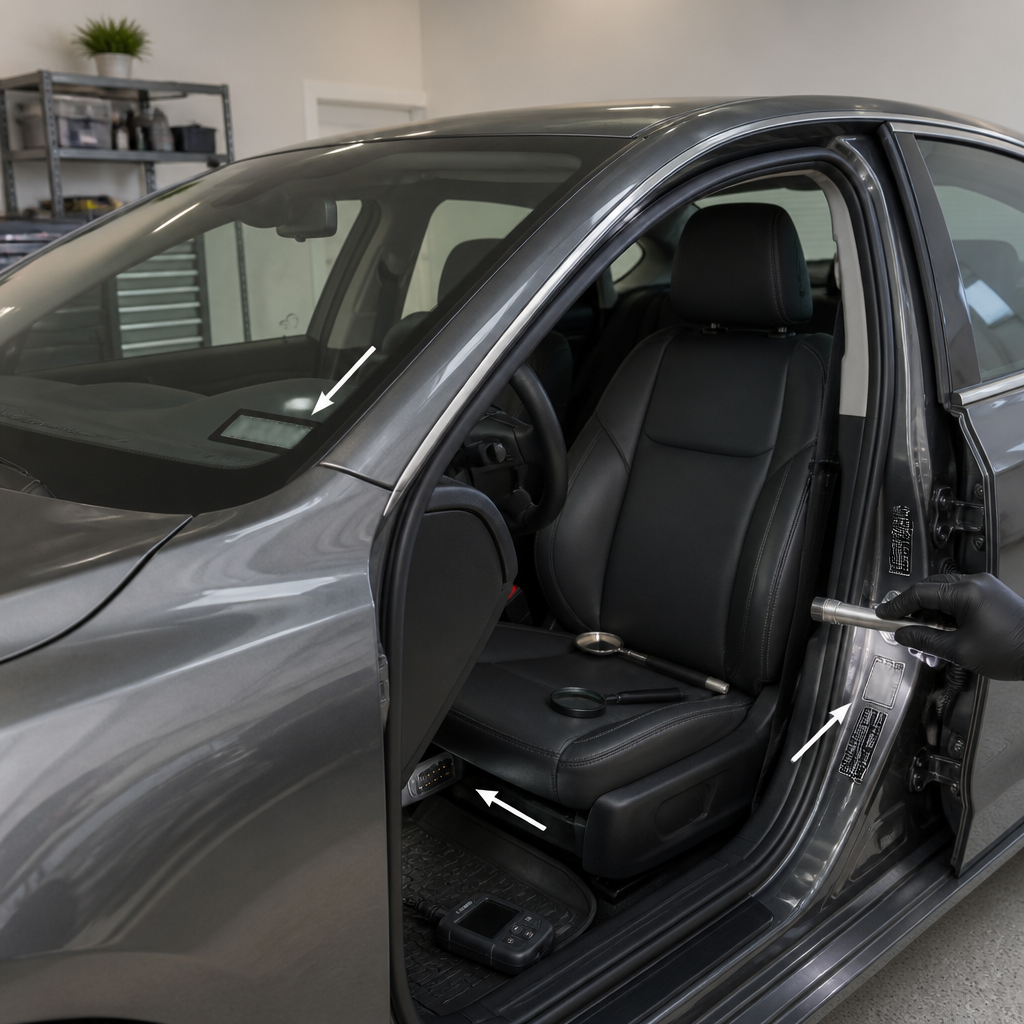
The Vehicle Identification Number (VIN) is the car’s identity. You should find it on the car and compare it to the title.
Common VIN locations:
- Dashboard near the windshield (driver side)
- Driver door jamb sticker
- Title document
- Sometimes under the hood or on the engine bay label
Look closely at the VIN plate and stickers. Red flags include scratches around bolts, mismatched rivets, peeling labels, crooked printing, or signs the area was removed and reattached.
3) Inspect the title like it is part of the car
A clean-looking car can still have bad paperwork. Take your time with the title.
- Check the seller name matches their ID.
- Check the VIN on the title matches the car VIN exactly.
- Look for erasures, smudges, missing watermarks, or any “corrected” writing.
- Check for lienholder information. If there is a lien, the seller may not legally own it yet.
If the seller says, “I can sign it later,” walk away. Ownership transfer is not something to delay.
4) Verify the seller’s identity and ownership connection
Ask to see a driver’s license or official ID. You are not buying the ID, but you are confirming the person matches the name on the title.
Also look for signs they actually use the car:
- Matching name on service receipts (not required, but helpful)
- Insurance card with the same name (if they are willing to show it)
- A consistent story about how long they owned it
If the seller says they are “selling it for a friend” and the title is not in their name, that is a common stolen car pattern.
5) Run a vehicle history report using the VIN
A history report can show theft records, title problems, and major changes. It is not perfect, but it is a strong filter. Compare the report details to the car in front of you, including color, trim, and location history.
If the report shows strange jumps across states, recent ownership changes with no explanation, or a theft record, stop the deal.
6) Watch for “rush sale” behavior during the meeting
Many stolen car sales follow a script. The seller wants speed and confusion.
- They refuse a test drive or limit it to a short loop.
- They refuse a pre-purchase inspection.
- They insist on cash only.
- They want to meet at night or in a remote area.
- They push you to pay before you see the title.
A normal seller may be busy, but they should still support a basic inspection and proper paperwork.
7) Get a pre-purchase inspection if anything feels off
A trusted mechanic can spot tampered VIN stickers, broken steering column covers, odd wiring, or signs of forced entry. They can also find accident repairs that do not match paperwork.
During the inspection, it also helps to check basic electrical health. If the seller claims the car “just needs a battery,” you can later confirm with test car battery with multimeter steps before you start spending money on parts.
8) Complete the sale the right way
When you are ready to buy, slow down and do the paperwork correctly:
- Fill out a bill of sale with full names, addresses, date, price, and VIN.
- Take a photo of the signed title and bill of sale for your records.
- Only pay after the title is signed correctly.
- If possible, complete the transfer at the DMV or similar office.
Common mistakes to avoid
- Buying without a title: “I lost it” is not your problem to solve.
- Trusting a photo of the title: You need the real document.
- Not matching the VIN: One digit off is not “close enough.”
- Falling for urgency: A real deal can wait for basic checks.
- Meeting in unsafe places: Safety matters, and scams often use isolation.
- Skipping a history report: It can reveal issues you cannot see.
- Paying a deposit to “hold” the car: This often ends in loss.
Safety and legal considerations
If you buy a stolen car, police can take it even if you paid in good faith. You may also spend time proving what happened. That is why identity checks and paperwork checks matter.
For personal safety:
- Meet in daylight in a public area.
- Tell someone where you are going.
- Do not carry large amounts of cash.
- If the seller acts aggressive or changes the deal terms, leave.
For legal safety:
- Follow your local rules for title signing, emissions, and registration.
- Do not accept “open titles” where the seller is not the listed owner.
- Do not buy cars with removed VIN labels or damaged VIN plates.
Final practical advice
Use a simple rule: No clear title, no matching VIN, no sale. Most stolen car deals fall apart when you ask for normal proof of ownership and take your time.
Bring a checklist on your phone, take photos of the VIN and title, and do not be afraid to walk away. Another used car will always show up, but fixing a stolen-car problem can take a long time and cost far more than you planned.


