




This post may contain affiliate links. Please read our disclosure and privacy policy for more information.
The first-generation Ford Mustang is one of the easiest classic cars to recognize. Even if you are new to car history, it helps to understand where it came from, why it was built, and what made it different from other cars of its time. This background also helps if you plan to buy, restore, or modify an early Mustang.
What the modification or concept is
“First-generation Mustang” usually means the original Mustang models built from 1964½ through 1973. Some people also use “first gen” to mean the early body style before the bigger 1971–1973 facelift, but the full first generation includes all 1965–1973 cars.
The key concept is simple: Ford created a sporty-looking, affordable coupe based on regular compact-car parts. It was not a purpose-built race car. It was a practical car with a long hood, short rear deck, and lots of options that let buyers build a Mustang that matched their taste.
Many first-gen Mustangs share major parts with other Ford vehicles of the time, especially the Falcon. That parts-sharing is a big reason the Mustang could be built quickly and sold at a price normal buyers could reach.
Why people do it
People care about the first-generation Mustang’s origins for a few practical reasons:
- Buying smarter: Knowing the year changes helps you avoid confusion between similar-looking models.
- Planning a build: Early Mustangs have common upgrade paths, but the right parts depend on the year, engine, and suspension type.
- Restoration accuracy: Small details like body trim, interior layout, and engine options changed often.
- Understanding the culture: The Mustang helped create the “pony car” category, which shaped many later sporty coupes.
It also helps set expectations. A stock 1960s Mustang will not feel like a modern car. Brakes, handling, and safety features reflect the era. If you want modern driving feel, you will likely do upgrades, and it helps to know what the factory started with.
Things to know before starting
Before digging into first-gen Mustang history, keep these basics in mind:
- 1964½ vs 1965: Early 1965 models built in 1964 are often called “1964½.” Ford titled them as 1965, but they can have unique parts.
- Body styles expanded over time: Coupe came first, then convertible, then fastback for 1965. The “fastback” is the sloped roof style many people picture.
- Engines ranged from basic to high performance: Some cars had small inline-6 engines. Others had V8s, including special performance versions.
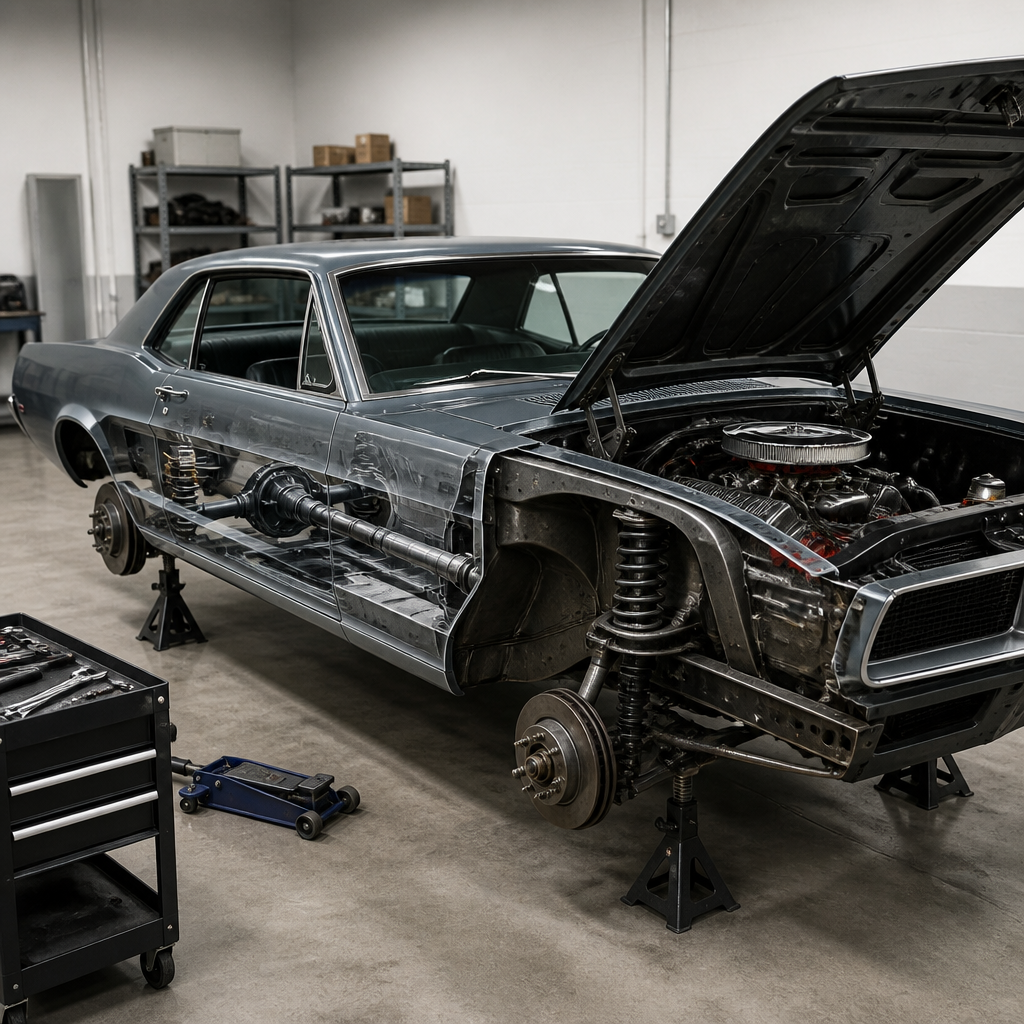
- Suspension is simple by modern standards: Front: Coil springs with control arms. Rear: Solid axle with leaf springs. If you are learning chassis basics, it helps to review Car suspension basics.
- Wheels and fitment can be tricky: Classic wheel wells and older brake setups affect wheel choice. If you plan wheel changes, understanding Offset and Backspacing Basics can prevent rubbing and poor steering feel.
Also, “Mustang” does not automatically mean “V8.” Many first-gen cars were sold with smaller engines because buyers wanted the style more than the performance.
Step-by-step explanation
Use these steps to understand how the first-generation Mustang began and how it changed through the years.
1) Understand the market Ford was aiming for
In the early 1960s, U.S. buyers wanted cars that felt youthful, sporty, and personal. Big cars were common, but many people wanted something smaller and easier to own. Ford saw an opening for a compact-based car with sporty looks and a long options list.
Ford’s goal was not just speed. It was broad appeal: A car that could be a daily driver, a stylish cruiser, or a weekend fun car depending on how it was ordered.
2) Know the basic recipe: Compact bones, sporty skin
The Mustang used proven parts to keep development time and complexity down. Much of the structure and mechanical layout came from Ford’s compact cars. This gave Ford a reliable starting point for:
- Steering and front suspension layout
- Rear axle and leaf springs
- Many engine and transmission choices already in production
Then Ford wrapped it in a new body shape that looked more expensive and exciting than the cars underneath it.
3) Learn what made it “a Mustang” visually
Even on the earliest cars, a few design cues helped the Mustang stand out:
- Long hood and short rear deck proportions
- Distinct front grille with the pony emblem
- Sporty side profile with simple lines
- Interior options that could feel basic or upscale depending on trim
This mix of simple engineering and strong styling is a big part of why the Mustang became so recognizable.
4) Track the important year-to-year changes
First-gen Mustang changes can look small, but they matter for parts and value. Here are the big checkpoints:
- 1964½ to 1966 (early cars): The classic original shape. Fastback joins the lineup in 1965. Many models use simpler brakes and steering than later years.
- 1967 to 1968 (bigger body update): The car grows. Engine bay space increases, which supports larger engines. Styling becomes more aggressive, and several safety-related items start to appear across the industry.
- 1969 to 1970 (wider look): The body gets longer and wider. More performance trims appear, and the front end styling changes noticeably.
- 1971 to 1973 (largest first-gen cars): These are the heaviest and biggest first-gen Mustangs. They feel more like a grand touring car than the smallest early models.
If your goal is a lighter, more basic classic feel, many people start with 1965–1966. If you want more room for big engines and a tougher look, 1969–1970 often comes up. If you want first-gen styling with a larger cabin, 1971–1973 may fit better.
5) Understand “pony car” as a category
The Mustang helped define what many call a pony car: A sporty coupe with long-hood styling, a wide range of trims, and an affordable base model. After the Mustang’s success, competitors built similar cars. That competition helped shape late 1960s performance culture.
6) Connect the origins to modern modification choices
Because the Mustang started with simple suspension and a solid rear axle, common modern upgrades often target:
- Brakes: Front disc conversions are common on earlier years.
- Handling: Better shocks, sway bars, bushings, and alignment settings.
- Wheels and tires: Modern tire sizes can help grip, but fitment must be planned.
Some owners also add wheel spacers to adjust stance, but it is important to understand the tradeoffs first. A quick reference is are wheel spacers safe.
Common mistakes to avoid
- Mixing up model years when ordering parts: Small changes can affect trim, glass, wiring, and suspension parts.
- Assuming all first-gen cars are “muscle cars”: Many were built as stylish commuters. Expect different performance levels depending on engine and gearing.
- Ignoring the bigger 1971–1973 size change: Those cars drive and feel different from 1965–1966 cars, and many parts do not swap.
- Focusing only on the engine: More power without brake and suspension work can make the car harder to control.
- Buying a project without checking rust areas: Floor pans, torque boxes, frame rails, and cowl areas can be serious repair points.
Safety and legal considerations
First-gen Mustangs were built before many modern safety standards. If you plan to drive one regularly, think about safety upgrades and local laws.
- Seat belts: Check belt condition and mounting points. Upgrading worn belts is a basic safety step.
- Brakes: Older drum setups can work well when maintained, but they are less forgiving under repeated hard stops.
- Lights: Make sure headlights, brake lights, and turn signals are bright and correctly grounded.
- Emissions and inspections: Engine swaps and exhaust changes can trigger inspection issues in some areas.
- Wheel and tire laws: Tires sticking out past fenders, extreme offsets, or spacer setups may be restricted where you live.
Final practical advice
If you are new to first-generation Mustangs, start by matching the exact year, body style, and engine to your goal. Then learn the key year-to-year differences before buying parts or planning upgrades. A simple checklist helps: Identify the car, confirm the suspension and brake type, check for rust in structural areas, and plan safety upgrades early.
When you do modify, keep changes balanced. Better tires and brakes often improve real-world driving more than extra horsepower. If you want the car to feel predictable, prioritize suspension condition, alignment, and correct wheel fitment first.


