




This post may contain affiliate links. Please read our disclosure and privacy policy for more information.
- What “Wheel Weight” Really Means
- How Weight at the Wheel Affects Performance
- How Much Difference It Makes in the Real World
- Why Where the Weight Sits Matters More Than People Think
- Benefits (When Lighter Wheels Are a Smart Upgrade)
- Potential Drawbacks and Trade-Offs
- What the Research Shows (Without the Myths)
- Common Misconceptions
- Safety Considerations
- Things to Consider Before Making Changes
- When Lighter Wheels Make the Most Sense
- Practical Guidance for Choosing Wheels Without Regret
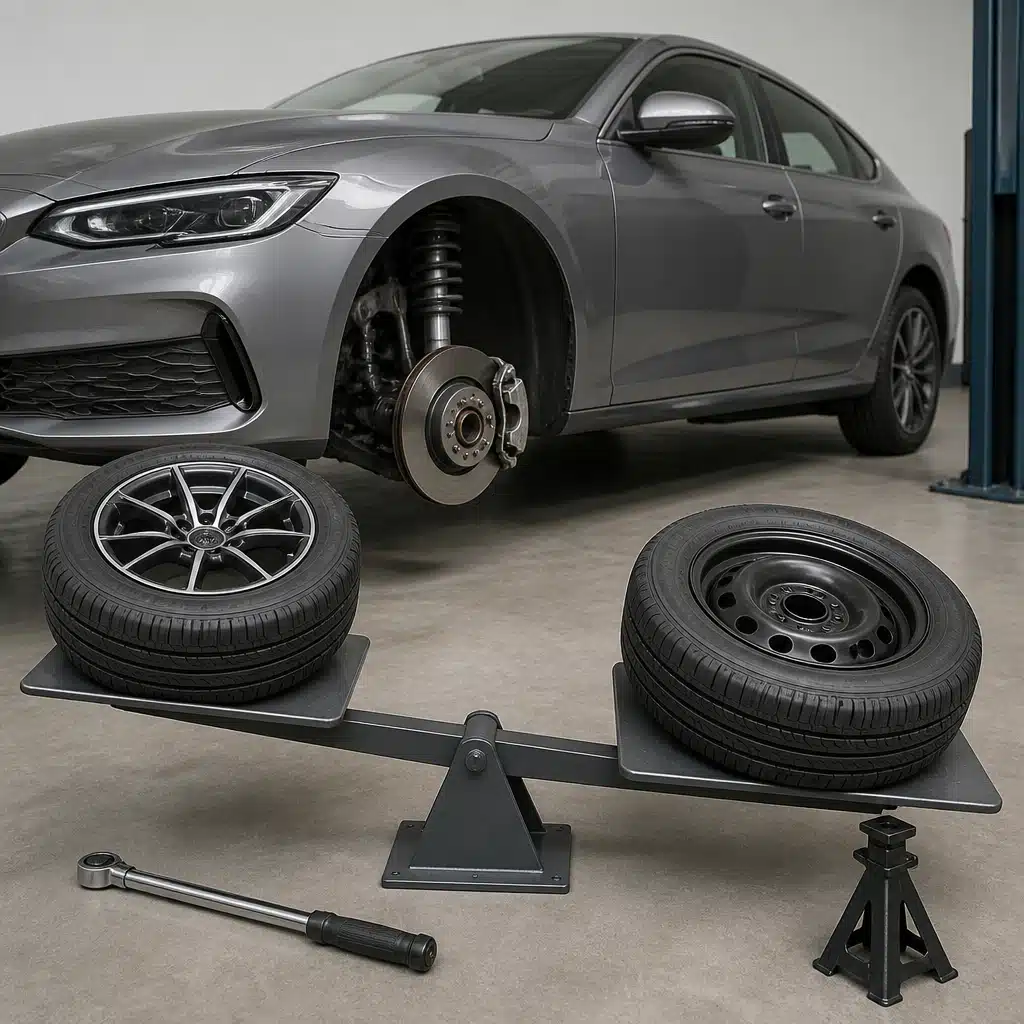
Wheel weight gets talked about like it is a secret shortcut to faster acceleration and better handling. The truth is more balanced.
Lighter wheels can improve how a car responds, especially over rough pavement and during quick changes in speed. But the gains are usually modest, and they depend on where the weight is, not just how many pounds the wheel weighs.
What “Wheel Weight” Really Means
When people say “wheel weight,” they often mix three different ideas:
- Total wheel and tire mass: The combined weight of the wheel and the tire.
- Unsprung mass: Weight that the suspension has to move up and down with the road, like wheels, tires, brake assemblies, and parts of the control arms.
- Rotational inertia: How much the wheel and tire resist spinning up or slowing down. This depends not only on weight, but also where that weight sits (near the rim vs near the hub).
These are related, but not identical. Two wheel and tire packages can weigh the same, yet feel different if one has more weight concentrated toward the outer edge.
How Weight at the Wheel Affects Performance
Rotational inertia: Why spinning mass “counts more”
When you accelerate, the car has to move forward (linear motion). At the same time, the wheels and tires must spin up (rotational motion). That spinning takes extra energy.
SAE engineering work on wheel inertia shows that rotating mass at the wheel behaves like roughly 1.5 to 2 times its static weight during acceleration, because the powertrain must both translate and rotate that mass.
What that means: Dropping 5 pounds per corner is not the same as dropping 20 pounds from the trunk, even though both reduce total vehicle weight. Wheel and tire weight has a bigger effect per pound during acceleration because it also has to spin.
Why it matters: If you care about how quickly the car gains speed, wheel and tire changes can be noticeable in some cars.
Unsprung mass: Why lighter wheels can feel smoother and grippier
Unsprung mass is what the suspension must control as the wheel moves over bumps. Heavier unsprung parts carry more inertia. That makes it harder for the suspension to keep the tire pressed against uneven pavement.
Chassis engineering research, including the long-standing SAE reference Race Car Vehicle Dynamics by Milliken & Milliken, explains the key idea: reducing unsprung mass helps the suspension follow the road more accurately. It can improve ride response and reduce unwanted wheel motion like hop.
What that means: On broken pavement, expansion joints, mid-corner bumps, and rippled highway surfaces, lighter wheel and tire assemblies can help the tire stay in better contact.
Why it matters: Tire contact is grip. Grip affects braking distance, steering response, and stability.
How Much Difference It Makes in the Real World
Wheel weight changes rarely transform a car. They usually refine how the car feels.
Acceleration (0–60 mph and rolling acceleration)
According to SAE analysis on wheel inertia, a typical passenger car that drops about 10 pounds per corner (about 40 pounds total at the wheel and tire) may see roughly a 1–3% improvement in 0–60 mph, depending on vehicle weight and gearing.
What that means: If a car runs 0–60 in 7.0 seconds, a 1–3% change is about 0.07 to 0.21 seconds. That is real and measurable with good testing, but it is not dramatic.
Practical implication: You are more likely to feel improved “eagerness” in low-speed starts and in how quickly the drivetrain responds to small throttle changes than you are to see a huge stopwatch difference.
Braking
Braking has to remove energy, just like acceleration adds energy. Lighter wheels reduce rotational energy that the brakes must scrub off.
What that means: In repeated braking, like spirited mountain driving, a lighter wheel and tire package can slightly reduce brake workload and heat. It is not a substitute for good pads, fluid, rotors, and tire grip, but it can help at the margins.
Important: Tire grip and ABS calibration often dominate braking distance far more than wheel weight. A heavier wheel with a better tire can stop shorter than a lighter wheel with a worse tire.
Handling and ride quality
Unsprung mass effects show up most on rough roads and during quick transitions.
- Over bumps: Less unsprung mass helps the wheel move up and down with less force, so the suspension can keep the tire planted more easily.
- Steering feel: Reduced rotational inertia can make the car feel a bit more responsive when you change speed or direction quickly.
- Ride: Depending on tire and wheel choices, ride can improve, but it can also get worse if you move to a larger wheel with a shorter sidewall.
This is why wheel weight should never be judged alone. Wheel size, tire sidewall height, and tire construction can outweigh the benefit of a few pounds.
Why Where the Weight Sits Matters More Than People Think
A pound at the outer edge of a wheel tends to have a bigger effect on rotational inertia than a pound near the center. Tires and large-diameter wheels often place more mass farther from the hub.
Practical implication: A lighter wheel does not always mean lower inertia if it is paired with a heavier tire, or if the wheel design puts more material near the rim. Likewise, a wheel that is only slightly lighter can feel better if more of its weight is concentrated closer to the hub.
Benefits (When Lighter Wheels Are a Smart Upgrade)
- More responsive acceleration: Especially noticeable in stop-and-go driving and on smaller engines.
- Better suspension control: Less unsprung mass can improve tire contact over rough surfaces.
- Potentially improved brake feel under repeated use: Slightly less energy for brakes to manage, all else equal.
- Steering and transient response: Small improvements in how quickly the car reacts to driver inputs.
Potential Drawbacks and Trade-Offs
Wheel weight changes come with real compromises. Some matter for safety and durability more than performance.
Strength and impact resistance
Some lightweight wheels are very strong, but not all. Wheel durability depends on design, material, and manufacturing method, not just weight. If you drive on rough roads, the wrong lightweight wheel can be more vulnerable to bends or cracks.
Ride comfort can get worse with larger wheels
Many people lose weight with an aftermarket wheel, but also increase diameter. A larger wheel often needs a lower-profile tire to keep the same overall diameter. That shorter sidewall can reduce impact cushioning.
Practical implication: You can end up with a lighter wheel, but a harsher ride and more pothole damage risk.
Cost and tire availability
Lighter wheels can cost more. Also, moving to uncommon wheel sizes can raise tire prices or reduce your tire choices. If tire cost matters, it helps to understand reasons tires are expensive before changing sizes.
Fitment problems can create handling and safety issues
Wheel fitment is not just bolt pattern. Offset and backspacing affect scrub radius, bearing load, fender clearance, and steering feel.
If you are changing wheel width or offset, understanding Offset and Backspacing Basics can prevent rubbing, vibration, and uneven tire wear.
What the Research Shows (Without the Myths)
Finding: Wheel inertia improves acceleration, but not as much as social media claims
SAE research quantifies the effect: rotating mass effectively counts around 1.5 to 2 times during acceleration, and a large drop like 10 pounds per corner often translates to about 1–3% improvement in 0–60 mph for typical passenger cars.
Meaning: Lighter wheels help, but they do not “unlock” huge power gains. They reduce energy losses and improve response.
Why it matters: It helps you set expectations. If you are chasing major acceleration improvements, gearing, traction, and engine output usually dwarf wheel-weight changes.
Finding: Lower unsprung mass helps tire contact and suspension response
Chassis engineering literature explains that reducing unsprung mass lowers the inertial forces the suspension must control. That helps the wheel follow uneven pavement and can reduce hop.
Meaning: The biggest “feel” improvement from lighter wheels may show up as better composure, not just a faster 0–60 time.
Why it matters: Better tire contact can support braking stability and cornering consistency on rougher roads.
Common Misconceptions
- “1 pound of unsprung weight equals 5–10 pounds of vehicle weight.” This rule of thumb is widely repeated, but it is not a reliable, peer-reviewed conversion. The real effect depends on the car, suspension design, tire stiffness, wheel diameter, and where the mass is located.
- “Any lighter wheel is always better.” Not if it compromises durability, fitment, or tire choice.
- “Wheel weight matters more than tires.” Tires often have the biggest influence on braking, grip, hydroplaning resistance, and ride comfort. Wheel weight is secondary to having the right tire for your conditions.
Safety Considerations
Wheel and tire changes can affect safety in ways that do not show up on a scale.
- Load rating: Wheels and tires must meet or exceed your vehicle’s load needs. A too-low load rating risks failure.
- Brake clearance: Some wheels clear calipers poorly, especially if spoke design differs from stock.
- Handling balance: Changing wheel width and offset can change steering behavior and stability, especially during emergency maneuvers.
- Traction control and ABS behavior: Big changes in tire size can confuse systems calibrated for stock rolling diameter.
If the car feels unstable, pulls under braking, or vibrates after a wheel change, treat it as a safety problem, not a comfort issue.
Things to Consider Before Making Changes
| Question | Why It Matters | Practical Tip |
|---|---|---|
| How much weight are you actually saving per corner? | Small changes can be hard to feel, especially on heavier cars. | Compare the full wheel and tire package, not the wheel alone. |
| Are you changing wheel diameter? | Bigger wheels often mean stiffer, shorter sidewalls and higher impact risk. | If comfort matters, consider keeping diameter near stock. |
| What tire are you pairing with the wheel? | Tire construction and weight can erase wheel-weight savings. | Choose tires for your climate and roads first, then optimize weight. |
| Will offset/backspacing change? | Fitment changes can affect steering feel, rubbing, and bearing load. | Verify specs and understand Backspacing vs Offset before buying. |
| Do you drive on pothole-heavy roads? | Light wheels and low-profile tires can be more damage-prone. | Prioritize durability and sidewall height over minimal weight. |
When Lighter Wheels Make the Most Sense
Lighter wheels are most worthwhile when you can reduce weight without creating new downsides.
- You keep a sensible wheel diameter: Similar overall size to stock, with enough tire sidewall.
- Your current setup is unusually heavy: Some factory and aftermarket packages add a lot of mass.
- You drive on mixed-quality roads: Unsprung mass benefits are more obvious on uneven pavement.
- You care about response more than peak numbers: The car can feel more alert even if the stopwatch barely moves.
Practical Guidance for Choosing Wheels Without Regret
Start by deciding what you want to improve: ride comfort, steering response, acceleration feel, or appearance. Then work backward.
If performance is the goal, prioritize a lighter wheel and tire package while keeping fitment close to stock and tire quality high. If comfort and durability matter most, avoid extreme wheel diameters and very short sidewalls, even if the wheel weight looks great on paper.
Finally, treat wheel weight as one part of the chassis system. Suspension tuning, alignment, and tire choice often matter more. If you want the basics of how the suspension manages bumps and grip, it helps to understand Car suspension explained before spending money chasing small gains.


