




This post may contain affiliate links. Please read our disclosure and privacy policy for more information.
- What A Cold Air Intake Really Is
- How Dyno Testing Measures “Gains”
- What The Research Shows About Real Power Potential
- Why Some Cold Air Intakes Show Gains And Others Do Not
- How To Read A Dyno Chart For Cold Air Intake Testing
- Benefits Beyond Peak Horsepower
- Potential Drawbacks And Trade-Offs
- Common Misconceptions About Cold Air Intake “Gains”
- When A Cold Air Intake Is Most Likely To Help
- What To Consider Before Making Changes
- A Simple Way To Set Realistic Expectations
Cold air intakes sound simple: Move the air filter somewhere cooler, get denser air, make more power. In the real world, dyno charts usually show smaller gains than the ads, and sometimes no gain at all.
The reason is not that dynos are “wrong.” It is that engine power depends on what the engine actually needs at that moment: Cool air density, heat soak, knock control, ECU logic, and whether the stock intake was already efficient.
What A Cold Air Intake Really Is
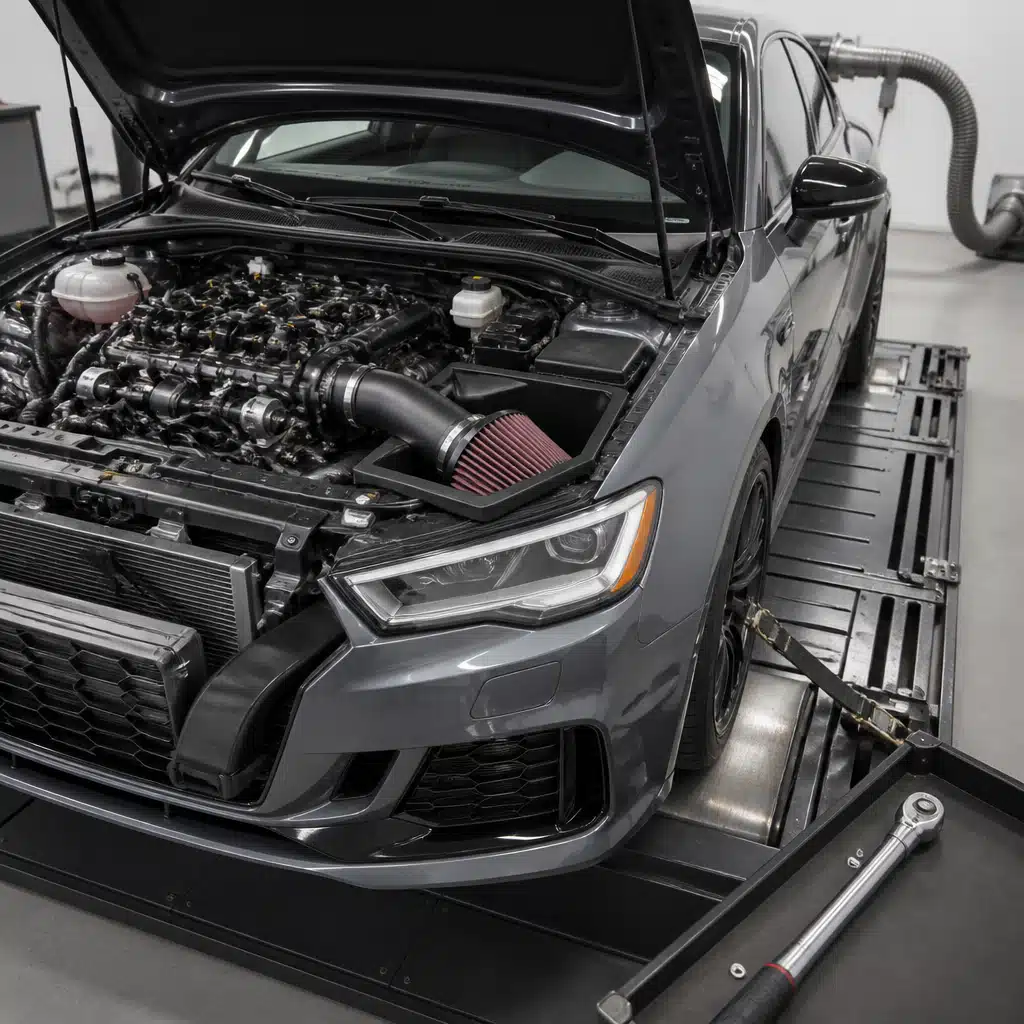
A cold air intake (CAI) is an intake system designed to pull air from a location that is cooler than the engine bay. It usually replaces some combination of:
- The factory airbox
- The inlet snorkel or resonator
- The intake tube to the throttle body or turbo inlet
- The air filter (often a cone filter)
Some kits are true “cold air” designs that seal to a fender or bumper duct. Others are closer to a short ram intake, which often sits in the engine bay and can ingest hotter underhood air unless it has a well-sealed heat shield.
How Dyno Testing Measures “Gains”
A chassis dyno measures wheel torque and wheel horsepower. That matters because anything that changes drivetrain losses, tire slip, or test setup can change the number even if the engine makes the same crank power.
Why One Dyno Chart Can Mislead
- Heat soak: A warm engine bay can raise intake air temperature (IAT) and reduce power on later pulls.
- Fan setup: A dyno fan is not the same as 60 mph airflow. An intake that works on the road may not see the same air on the dyno.
- Pull timing: Back-to-back runs can change coolant temp, oil temp, and intercooler temp (for turbo engines).
- Correction factors: Standard correction helps, but it cannot perfectly correct for underhood heat and ECU behavior.
- “Best run” selection: Some charts show the single best pull after a cooldown, which is rarely how the car runs in traffic.
The most useful dyno testing compares multiple averaged pulls, shows IAT, and repeats testing on different days to see if results are stable.
What The Research Shows About Real Power Potential
Finding: Cooler air has a hard physical limit on power gains
Authoritative engine fundamentals used across SAE research (including work based on Heywood’s engine text and related SAE papers) show a simple relationship: Cooler intake air is denser, and denser air can support more fuel and more power.
For naturally aspirated gasoline engines, a common engineering rule from SAE-supported fundamentals is that about every 10°F (5.5°C) drop in intake air temperature is roughly a 1% increase in air density. If the ECU adds the right fuel and timing is not knock-limited, that works out to about a 1% theoretical power increase.
What it means: Even a meaningful change, like a 30°F drop in IAT, points to roughly a 3% power ceiling from air density alone on a naturally aspirated engine.
Why it matters: This is the main reason large advertised gains can be unrealistic without other changes. Many factory intakes already pull from the fender area and do a decent job at normal speeds.
Practical implication: When dyno gains look small, they may still be “correct.” The intake may not be reducing IAT much in that test, or the engine may not be limited by its intake air temperature in the first place.
Finding: Knock control often explains the real gains, especially on turbo engines
SAE research and U.S. Department of Energy combustion studies (including work from Sandia National Laboratories) highlight another important mechanism: Lower charge temperatures reduce knock tendency. When an engine is knock-limited, cooler intake air can allow the ECU to run more ignition timing, closer to MBT (Maximum Brake Torque).
What it means: On engines that commonly pull ignition timing because of knock, lowering intake temperature can recover timing. That can create a noticeable torque increase, even if the airflow increase is small.
Why it matters: Many modern turbocharged engines on regular fuel use aggressive knock control. A CAI can sometimes help by keeping charge temperatures lower at the compressor inlet or by reducing heat soak effects that push the engine into timing retard.
Practical implication: The same intake can show different results depending on fuel octane, ambient temperature, and how heat-soaked the car is. That is why one owner reports “big gains” and another sees almost nothing.
Why Some Cold Air Intakes Show Gains And Others Do Not
1) The stock intake might not be the restriction
If the factory intake and filter are already sized for the engine’s airflow demand, changing it does not automatically add power. Many OEM systems are designed to support full rated output with margin, while also controlling noise and water ingestion.
2) Heat soak can erase the benefit
An intake that places a cone filter in the engine bay can pick up hot air at idle and low speed. On a dyno, this can be worse because the airflow pattern under the hood is different than real road airflow.
On some setups, you can see this as a strong first pull and weaker later pulls as IAT climbs. That looks like “it makes power once,” which is not a win for daily driving.
3) The ECU can limit what you feel
The ECU’s job is to keep the engine safe and emissions-compliant. It may:
- Adjust fuel trims to hit a commanded air-fuel ratio
- Change throttle angle (even at wide-open pedal on some cars)
- Pull ignition timing if it detects knock
- Change boost targets (turbo engines)
This is why “more airflow noise” does not always equal “more measured power.” In some cases, the ECU simply compensates and you do not gain much.
How To Read A Dyno Chart For Cold Air Intake Testing
Look for area under the curve, not peak numbers
Peak horsepower is easy to advertise. For drivability, midrange torque and how smoothly the curve rises often matter more. A CAI that adds a small amount at the very top but loses torque at 3,000 to 4,500 rpm may feel slower in normal driving.
Pay attention to repeatability
A reliable gain shows up across multiple pulls, not just once. If the “after” run is a single best pull with extra cooldown time, it can exaggerate results.
Watch the intake air temperature trend
The research-based temperature-to-density limit makes IAT important context. If IAT barely changed, do not expect a meaningful gain from density. If IAT dropped and the engine was knock-limited, there may be a timing benefit too.
Be skeptical of huge gains on naturally aspirated stock cars
Based on SAE-supported engine fundamentals, naturally aspirated engines cannot usually pick up large power from temperature alone unless the before condition was unusually hot or restrictive. Big gains typically require tuning changes, other airflow changes, or a factory intake that was unusually limiting.
Benefits Beyond Peak Horsepower
A CAI can still be a reasonable modification if you understand what it tends to change.
- Throttle response feel: Some intakes reduce intake tract volume or smooth flow into the throttle body, which can change how the engine responds. This is not always a true torque gain, but drivers often notice it.
- Consistency on hot days: If the intake avoids engine bay heat, it may hold power better in traffic or after repeated pulls.
- Sound: Less intake silencing often makes the engine louder. Many people like that, but it is not performance on its own.
Potential Drawbacks And Trade-Offs
Hot air ingestion (common on short ram designs)
If the filter breathes hot underhood air, the ECU may reduce timing or the engine may simply make less power because the air is less dense. This can turn a “mod” into a net loss in real traffic.
MAF sensor and fuel trim issues
Many vehicles use a mass airflow (MAF) sensor calibrated for a specific tube diameter and flow behavior. Some intakes change that behavior. Results can include unstable idle, hesitation, or poor fuel trims. If a car starts stumbling under load after intake changes, it can overlap with symptoms seen in Engine misfires during acceleration, even if the root cause is different.
Filtration and engine wear risk
Filter performance is not just about airflow. Engines ingest enormous volumes of air over time. If a filter flows more by filtering less, it can allow more fine dust through, which can increase long-term wear. Not every aftermarket filter has poor filtration, but “high flow” by itself is not a quality standard.
Water ingestion risk
Very low-mounted intakes can increase the chance of pulling in water during deep puddles or flooding. Liquid water does not compress. Hydrolock can bend connecting rods and destroy an engine quickly. This risk is very location-dependent, but it is real.
Legal and inspection issues
In some states, emissions rules require intake parts to have specific approvals. Even if the car runs fine, an unapproved intake can fail visual inspection. This is worth checking before spending money.
Common Misconceptions About Cold Air Intake “Gains”
“The dyno is lying because it did not show the advertised horsepower”
Dynos can be manipulated, but most disappointing results come from basic physics and test conditions. If IAT does not drop much, the density-based power benefit is limited. SAE-backed fundamentals support that ceiling.
“Any intake that flows more must make more power”
An engine only benefits if the intake was a limiting restriction at the operating point. Many street cars are limited more by cam timing, cylinder head flow, catalytic converters, or conservative ignition timing than by the airbox.
“More intake noise means more airflow”
Removing resonators and sound deadening makes the intake louder. That sound often comes from pressure waves and throttle events, not from a large increase in mass airflow.
When A Cold Air Intake Is Most Likely To Help
- Turbo engines that are knock-limited: Cooler charge temps can reduce timing pull. Research from SAE and DOE combustion studies supports this mechanism.
- Heat-soak-prone engine bays: If the factory routing picks up heat or the car is frequently driven in stop-and-go, a true sealed cold-air path can improve consistency.
- Modified engines that outgrow the stock intake: Higher airflow demands can make intake restrictions more meaningful, especially with tuning.
What To Consider Before Making Changes
Before buying an intake for “gains,” decide what you are actually trying to improve: Peak power, consistency in heat, drivability, or sound. Then think about how your car’s engine management will react.
- Think in temperature, not slogans: Based on SAE engine fundamentals, a modest IAT drop usually means a modest power potential on naturally aspirated engines.
- Consider your fuel: If you run regular fuel in a knock-sensitive turbo engine, timing recovery is a realistic reason for a gain. If you already run high octane and the car rarely pulls timing, the improvement may be small.
- Expect variation by conditions: Dyno results on a cool day may not match stop-and-go summer driving, and vice versa.
- Do not ignore drivability symptoms: If a new intake creates hesitation, stumbling, or surging, treat it like a real drivability issue. The same “loss of power” feeling people report at speed can resemble Engine power loss highway speeds, even when the cause is airflow metering changes.
- Budget realistically: If you are weighing modifications, it helps to compare parts cost versus what you actually gain. Some owners find it useful to sanity-check spending using DIY vs pro customization costs, especially when the expected performance change is small.
A Simple Way To Set Realistic Expectations
| Situation | What Dyno Data Often Shows | Most Common Reason |
|---|---|---|
| Naturally aspirated, modern stock intake, cool ambient temps | Small or no change | Stock intake already supports airflow; limited IAT drop |
| Naturally aspirated, heat-soaked engine bay or poor factory ducting | Small gain, sometimes better repeatability | Lower IAT improves density slightly; less heat soak |
| Turbo, regular fuel, known timing pull in heat | Noticeable midrange improvement in some conditions | Less knock, less timing retard, closer to MBT |
| Short ram cone filter in engine bay, minimal shielding | Can lose power after the first pull | Hot air ingestion increases IAT and knock tendency |
If you want the most honest answer for your car, focus on repeatable data: Several pulls, stable test rules, and IAT tracking. If you mainly want sound and a cleaner engine bay look, it is fine to choose an intake for that reason, just do not confuse it with guaranteed horsepower.
For many daily drivers, the best “gain” is consistency: A sealed intake path that avoids hot underhood air, keeps filtration quality high, and does not upset the MAF calibration. If those boxes are not checked, dyno charts often show exactly what the research would predict: Not much changes, and sometimes things get worse.
If your long-term goal is a balanced car rather than a single mod, it can help to start with fundamentals like tires, brakes, and chassis control. For a beginner-friendly overview of handling basics that actually change how fast a car can move through the real world, Car suspension basics can put power mods into better context.


