




This post may contain affiliate links. Please read our disclosure and privacy policy for more information.
- What “Wider Tires” Means in Real Life
- How Wider Tires Change Grip
- Fuel Economy: Rolling Resistance and Aerodynamics
- Noise and Ride Comfort
- Wear and Tire Life
- Performance Impact Beyond Grip
- Safety Considerations
- What the Research Shows (And What It Means on the Road)
- Common Misconceptions
- Pros and Cons at a Glance
- Things to Consider Before Going Wider
Wider tires look sporty, and they can change how a car drives. But “wider” also changes several things you feel every day: how the car grips, how much fuel it uses, how loud it is, and how fast the tires wear.
The important part is this: Tire width is only one piece of tire performance. The tread compound, internal construction, tread pattern, inflation pressure, wheel width, alignment, and even the car’s suspension tuning can matter just as much. Wider tires can help in some situations, but they also come with trade-offs that many drivers do not expect.
What “Wider Tires” Means in Real Life
Tire width is the first number in a common tire size. Example: 225/45R17 is about 225 mm wide. If you move to 245/40R17, you get a wider tread, but you also usually change sidewall height and overall tire shape.
Two things often get mixed up:
- Section width: The tire’s width from sidewall to sidewall (measured on a specific wheel width).
- Tread width: The part that actually contacts the road. This can vary by brand and model even if the listed size is the same.
Also, a “wider tire” is not one single change. Many people also move to a lower-profile tire (shorter sidewall) and sometimes a larger wheel. Those changes affect ride comfort, impact harshness, wheel protection, and sometimes noise.
How Wider Tires Change Grip
Dry grip and cornering
On dry pavement, a wider tire often improves cornering grip and steering response. The main reason is not simply “more rubber on the road.” It is usually a mix of:
- A stiffer, wider tread area that resists squirm during cornering.
- Better heat handling in aggressive driving, depending on compound and construction.
- More stability under load transfer when you turn hard.
For normal commuting, you may notice the car feels more planted, especially during quick lane changes and high-speed curves. But the amount of improvement depends heavily on the specific tire model. A high-quality performance tire in the original size can outperform a cheap wider tire.
Braking grip is complicated
Braking performance depends on compound, road surface, temperature, ABS tuning, and the tire’s ability to maintain grip while loaded. Wider can help in the dry, but it is not a guarantee.
In real testing, the biggest braking differences often come from tire category and compound (touring vs ultra-high-performance vs all-season vs winter), not width alone.
Wet grip and hydroplaning risk
This is where wider tires can surprise people.
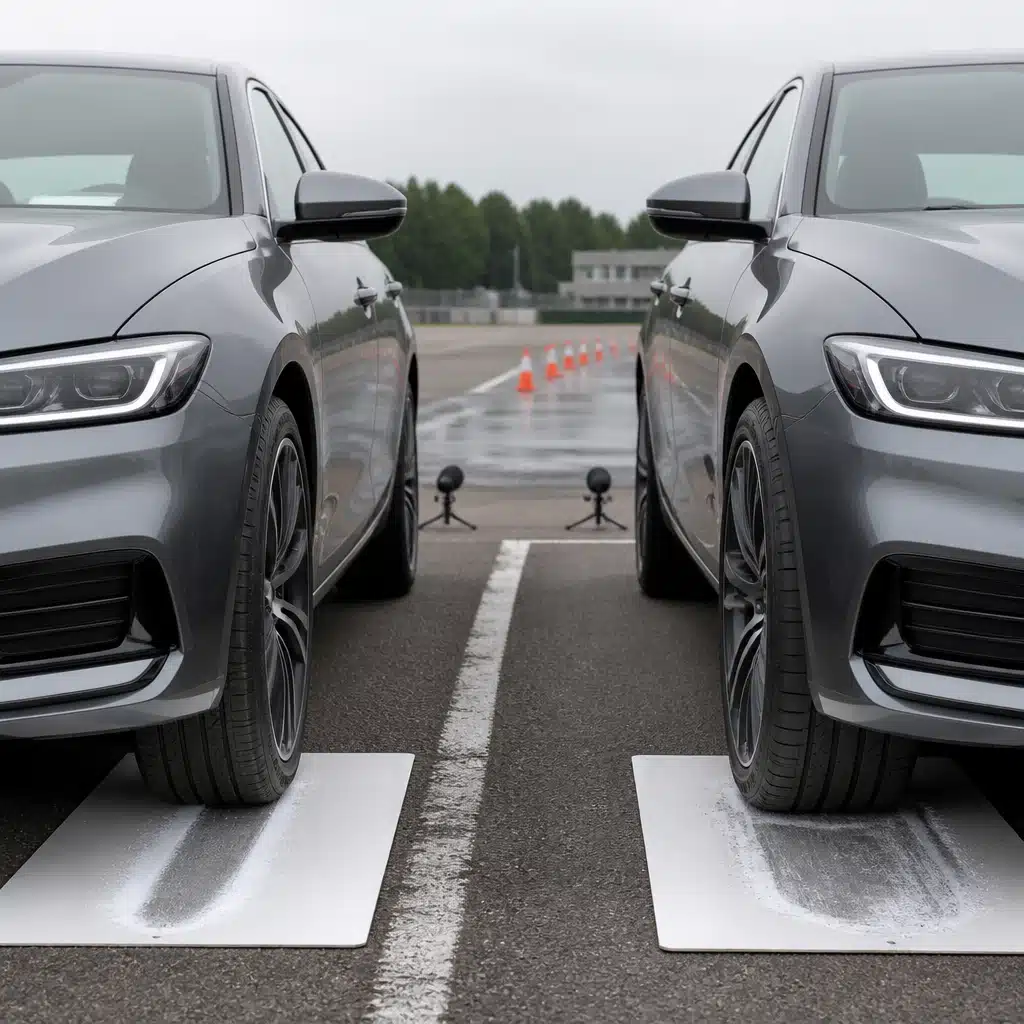
Safety research from NHTSA and SAE shows a consistent trend: Wider tires tend to hydroplane more easily, meaning they can start to ride on a thin film of water at lower speeds. The basic issue is water management. A wider footprint has to move more water out of the way, and if it cannot evacuate water fast enough, it can lose contact with the road.
Hydroplaning risk also depends on:
- Water depth
- Tread depth (worn tires hydroplane sooner)
- Tread pattern design
- Vehicle speed
- Inflation pressure
An engineering rule of thumb often referenced in safety discussions is the Horne equation for hydroplaning speed, which relates hydroplaning speed to tire pressure: Higher pressure generally raises the speed where hydroplaning begins. But even with proper pressure, going wider can still increase the tendency to hydroplane in standing water, especially if you also choose a lower profile and a more performance-focused tread pattern.
Fuel Economy: Rolling Resistance and Aerodynamics
Wider tires can reduce fuel economy in two main ways: rolling resistance and aerodynamic drag.
Rolling resistance: The energy lost as the tire rolls
Rolling resistance is the energy the tire consumes as it deforms and returns to shape on every rotation. More deformation and more internal friction mean more energy lost, which the engine must replace with fuel.
Government and academic engineering work summarized for the U.S. Department of Energy and Oak Ridge National Laboratory (also referenced by the National Academies Transportation Research Board) explains how rolling resistance connects to fuel economy in a measurable way: A 10% reduction in rolling resistance typically improves vehicle fuel economy by about 1–2%.
What that means in daily driving:
- If a wider tire increases rolling resistance, your MPG can drop even if nothing else changes.
- The change is usually not dramatic on its own, but it is real, and it adds up over time.
Important nuance: Tire width often increases rolling resistance, but not always. A wider tire with a low rolling resistance compound and optimized construction can sometimes compete with, or even beat, a narrower tire that uses a grippier compound and heavier build. Tire design matters as much as size.
Aerodynamic drag: Wider tires disrupt airflow
At highway speeds, aerodynamics becomes a bigger part of fuel use. SAE research has shown that tires and wheels can contribute roughly 25–30% of a passenger vehicle’s total aerodynamic drag. Wider tires add frontal area and can increase turbulence around the wheels and wheel wells.
Practical implication: The fuel-economy penalty of wider tires often shows up more on the highway than around town, especially if you move to a wider tire that sticks out more or changes how air flows through the wheel opening.
If your goal is long-distance efficiency, tire choice matters more than many people think. If you are shopping for an efficient road-trip vehicle, the tire and wheel package is part of the overall result, along with weight and gearing. For drivers comparing efficient family vehicles, it also helps to look at real-world priorities like comfort and fuel use together, as discussed in fuel-efficient suvs for long trips.
Noise and Ride Comfort
Tire noise is real, but it is harder to “prove” with one clean number because sound quality and cabin insulation vary a lot by vehicle. Still, there are clear engineering reasons wider tires often sound louder.
Why wider tires can be louder
- More air movement and turbulence: Wider tires can create more airflow disturbance in the wheel well at speed.
- More tread impact noise: Depending on tread pattern, a wider tread can generate stronger “slap” or “hum” as tread blocks hit the road.
- Stiffer sidewalls (common with low-profile setups): Less sidewall flex can transmit more vibration into the chassis.
It is also common for wide performance tires to use more aggressive tread designs or stickier compounds, which can increase road noise compared with a touring tire.
Ride quality: The width is not the biggest factor
Ride harshness usually comes more from sidewall height and tire construction than from width alone. Many “wider tire” changes also reduce aspect ratio. That shorter sidewall has less cushion over bumps and potholes, which can make the car feel sharper but also less comfortable.
If you are also changing suspension height or stiffness, ride quality can swing even more. Alignment settings and suspension geometry changes can add their own downsides. That is why it helps to understand the full package, including options like Lowering springs vs coilovers if your wider-tire plan is part of a bigger handling build.
Wear and Tire Life
People often assume a wider tire will last longer because it “spreads the load.” Sometimes that happens, but tire wear is usually dominated by compound choice, alignment, inflation pressure, and driving style.
How wider tires can wear faster
- Stickier compounds: Many wider upgrades are performance tires, and higher grip usually means faster wear.
- More sensitivity to alignment: Wider tires can show toe or camber problems more clearly, especially at the inside shoulders.
- More scrub in tight turns: Wider tires can increase the chance of scuffing during parking-lot maneuvers on some vehicles.
How wider tires can wear more evenly (in the right situation)
- Better load capacity margin: On heavy vehicles, moving to a tire with more capability can reduce overheating and wear under load.
- Improved stability: Less tread squirm can reduce certain wear patterns, depending on construction.
Keep your expectations realistic: If you buy a wider tire in the same category (same model line, similar compound), tread life might not change much. But many “wider tire” choices also move you into a sportier tire category, and tread life can drop a lot because the rubber is designed for grip.
If tire cost surprises you after upsizing, it helps to understand why pricing jumps with certain sizes and categories. The reasons are explained well in why tires are expensive.
Performance Impact Beyond Grip
Acceleration and braking feel
Wider tires are often heavier. Even small increases in tire and wheel weight can affect how the car feels because that weight is both unsprung (harder for the suspension to control) and rotating (harder to accelerate and decelerate).
In practical terms:
- The car may feel less eager off the line if the package is heavier.
- Brakes may work harder over repeated hard stops if rotational inertia increases.
- Steering may feel slower or heavier on center, depending on tire construction and alignment.
Steering and tramlining
Wider tires can be more likely to follow grooves in the road. This is called tramlining. It is not dangerous by itself, but it can make the car feel twitchy on worn highways with ruts.
If your car already has a sensitive front suspension design, a big jump in width can make it more noticeable.
Safety Considerations
Wider tires can improve control in dry conditions. But safety is about the worst case, not the best case.
Hydroplaning and wet stability
Based on NHTSA and SAE findings, going wider can increase hydroplaning susceptibility, especially in heavy rain, standing water, or when tread depth is low. If you live in a wet climate, the tire model and tread design matter more than the look.
Braking balance and stability systems
Changing tire size can influence how ABS and stability control behave, especially if you change overall diameter or mix tire models. Keep all four tires the same size and similar wear level. If you run different sizes front and rear (a staggered setup), follow the vehicle manufacturer’s guidance.
Clearance, rubbing, and emergency maneuvers
A wider tire may rub the fender liner or suspension under compression or full steering lock. That can damage the tire over time and can become a real safety problem if it cuts into the sidewall. Wheel width and wheel offset are a major part of this, not just tire size. If you are comparing fitment terms, Offset and Backspacing Basics breaks down what those numbers change on the car.
What the Research Shows (And What It Means on the Road)
Finding: Rolling resistance changes fuel economy
What research found: DOE/ORNL and National Academies work shows that a 10% reduction in rolling resistance typically improves fuel economy by about 1–2%.
What it means: Tires are not just “round rubber.” They are a measurable part of how much energy your car wastes while moving.
Why it matters: If your wider tire choice increases rolling resistance, you can lose MPG. If you drive a lot of highway miles, the cost difference can be noticeable over a year.
Practical implication: Do not judge by width alone. Compare tire categories and look for models known for low rolling resistance if fuel economy is a priority.
Finding: Tires and wheels are a big piece of aero drag
What research found: SAE work on tire geometry and aerodynamics shows tires and wheels can contribute around 25–30% of a passenger car’s aerodynamic drag, and wider tires can increase turbulence and frontal area.
What it means: Even if rolling resistance did not change, a wider setup can still hurt highway efficiency.
Why it matters: Many drivers expect wider tires to be “free grip.” At 70 mph, air resistance is a major load, and the wheel area is a messy airflow zone.
Practical implication: If you spend a lot of time on the highway, a modest width increase is usually a smarter compromise than a big jump, especially if the tires end up sticking out closer to the airflow.
Finding: Wider tires can hydroplane sooner
What research found: NHTSA and SAE studies commonly show wider tires are more prone to hydroplaning at lower speeds because they must move more water across a broader contact patch.
What it means: In heavy rain, the wider footprint can become a disadvantage if the tire design cannot evacuate water fast enough.
Why it matters: Hydroplaning reduces steering and braking control quickly. It is one of the most important real-world safety trade-offs tied to tire width.
Practical implication: If wet safety is a priority, choose a tire with strong wet testing results and keep tread depth and inflation pressure in good shape, rather than focusing on width for appearance.
Common Misconceptions
“Wider always means shorter stopping distance”
Not always. Compound, temperature range, and tire design can outweigh width. A premium tire in the factory size can stop shorter than a wider budget tire.
“Wider tires always have more contact patch area”
At the same inflation pressure and load, contact patch area is often similar. The shape changes more than the area. Wider tires tend to have a shorter-and-wider contact patch, which can change how forces build during cornering and how water evacuates in the wet.
“If it fits, it is fine”
Fitment is more than clearing the fender at idle. You also need clearance through suspension travel, over bumps, and at full steering lock. You also want a tire that matches wheel width correctly so the sidewall is supported.
Pros and Cons at a Glance
| Potential Benefit | Why It Happens | Common Trade-Off |
|---|---|---|
| Better dry cornering feel | Wider, often stiffer tread resists squirm | Heavier steering, more tramlining |
| More stable at high speed (sometimes) | More lateral grip capacity and stability | More road noise, harsher ride if profile is lower |
| Sportier response | Often paired with performance construction | Faster wear if compound is stickier |
| Better dry traction in hard driving | More grip potential before sliding | More hydroplaning risk in standing water |
| Can look more “filled out” in the wheel well | More tread width and sidewall presence | Potential rubbing and fitment complications |
Things to Consider Before Going Wider
1) Decide what problem you are solving
If you want better grip, first ask: Grip where? Dry cornering, wet braking, snow traction, or track use all point to different tire types. Width alone is a rough tool.
2) Keep overall diameter close to stock
Big diameter changes can affect speedometer accuracy, shifting behavior, and stability control calibration. Many people upsizing width also change aspect ratio to keep diameter similar.
3) Match the tire to the wheel width
Every tire size has an approved wheel width range. A tire pinched onto a narrow wheel can feel vague. A tire stretched onto a wide wheel can ride harshly and reduce rim protection.
4) Expect some fuel economy loss if you go much wider
Based on DOE/ORNL rolling-resistance relationships and SAE aero findings, a wider setup often costs some efficiency through both rolling resistance and added drag. If MPG matters, keep the width change modest and choose a tire known for efficiency rather than maximum grip.
5) Do not ignore wet performance
If you deal with heavy rain, prioritize a tire with strong wet traction and hydroplaning resistance. Wider can work well in the wet if the tread design and compound are right, but the width change alone does not help you.
6) Budget for the full change
Wider tires can cost more, weigh more, and sometimes require different wheels. They can also make rotations harder if you move to staggered sizes. Plan around the real costs, not just the tire price.
If you want a simple, practical way to choose: For most daily-driven cars, a small step wider (one size up) with a high-quality tire model is usually a better balance than a large jump in width. You get some handling benefit without taking a big hit in wet safety, noise, and fuel economy. If your driving is mostly highway commuting in rain, staying close to stock width and choosing a top wet-rated tire is often the smarter move.


