




This post may contain affiliate links. Please read our disclosure and privacy policy for more information.
Sometimes a car feels “a little off” and you wonder if it is safe to keep driving. That choice matters. Some problems are annoying but low risk. Others can lead to a breakdown or a crash in minutes. This page helps you judge the risk fast and make a smart next move.
What the modification or concept is
“Safe to keep driving” is a quick safety check, not a full diagnosis. It means: Can the car move to your destination or to a repair shop without a high risk of losing control, causing more damage, or putting other road users in danger?
It is not about comfort. It is about the systems that keep the car stable and stop safely: brakes, tires, steering, suspension, engine cooling, lights, and safe engine operation.
Why people do it
Most people try to keep driving because they need to get to work, get kids home, or avoid towing. Some also do not want to overreact to a warning light. The goal is practical: Decide if you can drive slowly to a safe place or if you must stop right now.
Things to know before starting
Before you decide, separate problems into two buckets: “Stop now” and “Drive carefully to a shop.” A small mistake here can turn a simple repair into a serious crash or a ruined engine.
Know what the main warnings look and feel like:
- Red warning lights usually mean stop soon or stop now (oil pressure, coolant temp, brake warning).
- Yellow warning lights often mean a fault that may be safe for a short drive, but depends on the symptom (check engine, ABS, traction control).
- Smells and smoke matter more than most lights. Burning, fuel smell, or visible smoke should be treated as urgent.
- New sounds like grinding, loud knocking, or metal-on-metal are high risk.
Also know the basic limits of your car. If you have very low-profile tires, worn brakes, or a modified suspension, the car may react worse to a failure. If you are running wider tires, understand how wider tires noise and wear can hide early signs of tire problems, like uneven wear or rubbing.
Step-by-step explanation
1. Do a quick “keep control” check
If any of these happen, do not keep driving in traffic:
- Brake pedal goes to the floor, braking feels weak, or the car pulls hard when braking
- Steering suddenly feels heavy, very loose, or the wheel shakes hard
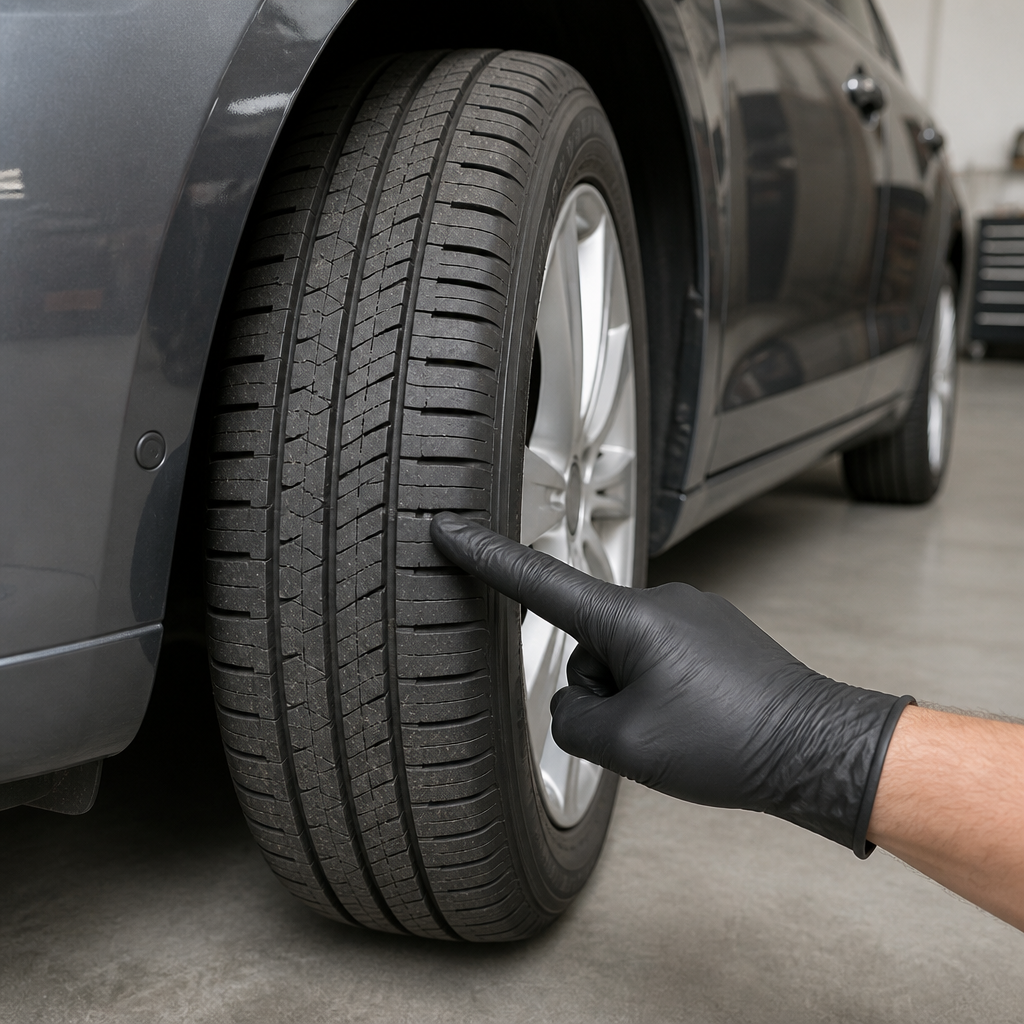
- A tire looks flat, is bulging, or you hear loud flapping or thumping
- Engine loses power badly and you cannot keep a safe speed
If you feel shaking during braking, treat it seriously. Problems like warped rotors or failing pads can get worse fast. If you are thinking about upgrades, a solid Pads vs rotors comparison can help you understand what parts do what, but do not use upgrades as a quick fix for a safety issue.
2. Look at the dashboard and match it to the symptom
Use the light plus the car’s behavior, not the light alone.
- Flashing check engine light plus shaking or no power: Stop driving. A misfire can damage the catalytic converter quickly. If the car stumbles when you press the gas, see common patterns like Engine misfires during acceleration.
- Solid check engine light but car drives normal: Often safe for a short drive to a shop. Still avoid long highway trips and hard acceleration. For basics, use check engine light explained.
- Oil pressure warning or oil light: Stop the engine as soon as you can safely. Running with low oil pressure can destroy the engine fast.
- High temperature warning or overheating gauge: Stop driving. Overheating can warp the cylinder head and blow the head gasket.
- Battery/charging light: You may have limited time before the car dies. Turn off extra electrical loads and head to a safe place.
3. Check for fluid leaks and dangerous smells
Park on a safe, level spot. Turn the engine off. Look under the car and around the wheel areas.
- Fresh oil puddle: Driving can be risky if the oil level drops. If you see active dripping, do not take a long drive. For common causes, see Engine oil leaking under car.
- Fuel smell near the car or inside the cabin: Do not keep driving. Fuel leaks are a fire risk. Helpful background: fuel smell after filling up.
- Coolant leak (often sweet smell, colored fluid): Short driving can turn into overheating fast. Stop and tow if the temp is rising.
- Brake fluid leak near a wheel: Do not drive. You can lose braking.
4. Decide: Stop now, limp to a shop, or continue normally
Use these simple rules.
- Stop now and call for help: Overheating, oil pressure warning, fuel smell, smoke, grinding brakes, major steering issues, tire damage, loud knocking, or flashing check engine with rough running.
- Limp to a shop: Solid check engine with normal driving, mild vibration that does not change, minor exhaust leak noise, or a battery light with stable engine operation.
- Continue but schedule service: Cosmetic issues, non-safety electronics, mild squeaks with no handling change, or a maintenance reminder.
5. If you must limp, drive in a way that lowers risk
- Pick the shortest route with slower speeds and safe pull-off spots.
- Avoid highways if the car has any power, braking, or vibration issue.
- Accelerate gently and keep rpm low.
- Leave extra space for braking and avoid sudden lane changes.
- Turn off the radio and listen for changes in sound.
- Stop and reassess if the symptom changes or gets worse.
Common mistakes to avoid
- Ignoring a flashing warning light: Flashing usually means active damage risk.
- Driving an overheating car “just a few miles”: One short trip can cause major engine damage.
- Assuming ABS or traction lights mean brakes are fine: The base brakes may still work, but stopping distance can change. Drive slower and get it checked.
- Pumping the brake pedal repeatedly with a leak: You may lose the last bit of braking you have.
- Using thicker oil or additives to “fix” a noise: This can hide symptoms and delay proper repair.
- Continuing with strong vibration: A bad tire, wheel, or suspension part can fail fully at speed.
Safety and legal considerations
You are responsible for operating a roadworthy vehicle. If your car has unsafe tires, weak brakes, or broken lights, you can be ticketed, and you may be liable if a crash happens.
Do not keep driving if you cannot safely maintain speed, stay in your lane, or stop within normal distance. If the car becomes a hazard, pull over safely, turn on hazard lights, and move away from traffic if conditions are dangerous.
Also consider local rules on warning lights, emissions faults, and noise. A car that is running very rough or has a serious exhaust issue may not be legal to operate until fixed.
Final practical advice
When in doubt, treat the problem as safety-first. If the issue involves brakes, steering, tires, overheating, oil pressure, fuel smell, smoke, or a flashing check engine light, do not keep driving. If the car feels normal and the warning is not urgent, take the shortest gentle route to a shop and avoid high speeds.
Keep a simple kit in the car: A tire pressure gauge, a flashlight, gloves, a phone charger, and basic fluids your car uses. Check your tire pressure and fluid levels regularly. Small habits catch big problems early and help you make better “keep driving or stop” decisions under stress.


