


This post may contain affiliate links. Please read our disclosure and privacy policy for more information.
- The Origins
- Early Development
- Major Turning Points: The V12, V16, and the Meaning of “Silent Power”
- Postwar Expansion and the Rise of the American Luxury Formula
- Technology Evolution: From Features to Systems
- Design Evolution: From Formal Luxury to Aerodynamics
- Challenges and Competition: The Quality and Identity Tests of the 1980s
- Consumer Reception: What Cadillac Meant to Different Generations
- Cultural Impact: Symbol, Soundtrack, and Street Presence
- Modern Evolution: Performance, SUVs, and a New Technology Race
- Influence on the Industry
- Legacy and Lasting Influence
Cadillac’s story is closely tied to how Americans came to define “luxury” in a car: Not just comfort, but quietness, power delivered without drama, status communicated through design, and new technology introduced in a way that felt trustworthy. Across more than a century, Cadillac repeatedly tried to turn advanced engineering into something an everyday buyer could live with, and that effort changed the expectations for premium cars across the industry.
The Origins
Cadillac was founded in 1902 in Detroit, taking its name from Antoine de la Mothe Cadillac, the French explorer associated with the city’s early history. The company grew out of the remains of Henry Ford’s first attempt at an automobile business, reorganized by investors who brought in engineer Henry M. Leland.
Leland’s background mattered. He came from precision machining, and at the start of the 1900s that was not a normal strength in car making. Early automobiles were often built with parts that needed fitting by hand. That made repairs difficult, hurt reliability, and limited how far manufacturers could scale production.
Cadillac pushed the idea that parts should be interchangeable, not “close enough.” In 1908, Cadillac received the Dewar Trophy from the Royal Automobile Club in Britain for a demonstration of interchangeability. The punchline was not a publicity stunt. Standardized parts were a practical solution to a major barrier in early motoring: Owners needed cars that could be serviced without a craftsman custom-making repairs.
This focus on manufacturing quality helped Cadillac earn a reputation for dependability at a time when luxury often meant “finicky.” That early trust would become a key asset as Cadillac later introduced more complex technology.
Early Development
In 1909, General Motors acquired Cadillac. For GM, Cadillac became the technical flagship and the top of the brand ladder. For Cadillac, being part of GM provided scale and capital. That support would matter when the company pursued high-cost engineering solutions that smaller firms struggled to fund.
One early milestone clearly shows Cadillac’s role as an industry teacher. In 1912, Cadillac introduced the electric starter and electric lighting as a fully integrated system. Electric starters existed in limited form before, but Cadillac’s implementation helped normalize the idea. Hand cranking was not just inconvenient, it could be dangerous. A backfire could break wrists and arms. The starter removed a real physical barrier to car ownership, particularly for drivers who could not or did not want to crank an engine.
Consumer response was strong because the benefit was immediate and easy to understand. Competitors moved quickly after that, and within a few years the hand crank began to look old-fashioned. This is an early example of a Cadillac pattern: Introduce technology that reduces effort and risk, then watch it spread across the market.
Major Turning Points: The V12, V16, and the Meaning of “Silent Power”
During the 1920s and early 1930s, luxury buyers increasingly expected smoothness and quietness. Better roads and higher average speeds made vibration and harshness more noticeable. Cadillac responded with multi-cylinder engines designed for refinement, not just output.
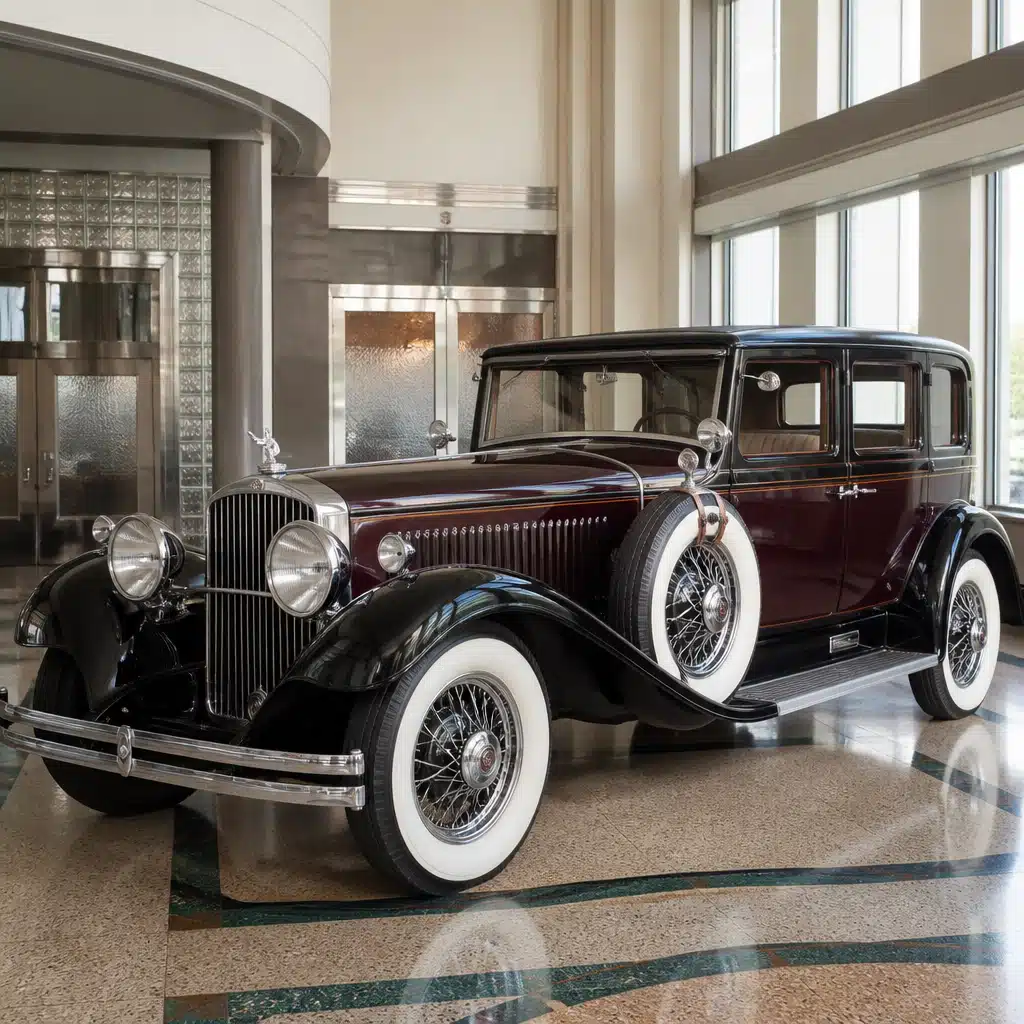
Cadillac introduced a V12 in 1930 and a V16 the same year. The V16, in particular, was an engineering statement: Extremely smooth, complex, and expensive. It was launched at the worst possible time, just as the Great Depression crushed the market for ultra-luxury vehicles. Sales volumes were limited, and the V16 did not “save” Cadillac financially. But the deeper impact was reputational. Cadillac used the V16 to set a benchmark for what top-tier refinement looked like, even if most buyers never owned one.
The Depression forced luxury makers to justify their products in different terms. Status alone was not enough. The brands that survived learned to sell luxury as long-term value, durability, and comfort that could be enjoyed daily. Cadillac’s earlier emphasis on engineering quality gave it a credible story during a time when conspicuous consumption was increasingly sensitive.
Postwar Expansion and the Rise of the American Luxury Formula
After World War II, the American car market changed quickly. Pent-up demand, rising incomes, and expanding suburbs reshaped what people wanted from cars. Luxury now meant effortless highway travel, space for families, and features that made long commutes less tiring.
Cadillac benefited from GM’s scale and from a market ready to spend. It was also the era when design became a louder part of luxury. Tailfins, dramatic lighting signatures, and long, low proportions helped Cadillac stand out in a crowded road environment.
It is easy to treat the flamboyant styling of the 1950s as pure fashion, but there was a business reason behind it. Detroit competed in a volume market where model-year changes mattered. Buyers expected visible novelty. For Cadillac, bold design worked as a quick signal of success at a time when American optimism was high and car ownership itself was part of identity.
The other half of the postwar Cadillac formula was convenience technology: Power steering, power brakes, automatic transmissions, power seats, and later, air conditioning becoming more common. These systems added cost and complexity, but they solved a real expectation problem. In a heavy, large-displacement car, customers did not want to “work” to drive. They wanted progress to feel like ease.
Technology Evolution: From Features to Systems
Cadillac often introduced technology early, then refined it until it became an industry norm. Over time, luxury technology shifted from individual gadgets to integrated systems, especially as electronics matured.
In 1967, Cadillac introduced the front-wheel-drive Eldorado with a large-displacement V8. The broader market context matters here. Front-wheel drive was not new globally, but it was unusual in American full-size luxury. The layout helped packaging: It could deliver a long, low profile without a traditional rear driveline tunnel, and it improved traction in poor weather. Cadillac was responding to an image question as much as an engineering one. Luxury design trends favored lower roofs and sleeker proportions, and front-wheel drive made that easier to execute at Cadillac size.
In 1975, Cadillac introduced one of the first production catalytic converters, as emissions regulations tightened in the United States. The 1970 Clean Air Act and the subsequent standards forced every manufacturer to rethink fuel delivery, ignition timing, and exhaust treatment. For luxury brands, the challenge was emotional as well as technical. Customers used to smooth, strong power did not want a car that felt strangled.
The industry went through a difficult transition period in the 1970s as manufacturers balanced emissions control with drivability and fuel economy. Electronic engine controls and better fuel metering would later help resolve many of these tradeoffs, but early solutions were often blunt. Cadillac was not immune to the era’s compromises, and its reputation sometimes suffered when performance and reliability did not match the brand image.
Today, drivers may take charging systems and electrical reliability for granted, but many everyday ownership questions still come back to basics like battery condition. Even on modern cars packed with electronics, a test car battery with multimeter remains one of the simplest ways to confirm whether the electrical foundation is healthy.
Design Evolution: From Formal Luxury to Aerodynamics
Cadillac design has always had to balance two conflicting goals: Being instantly recognizable, and not becoming dated. In the 1960s, Cadillac settled into a more formal look, with crisp lines and restrained ornamentation compared to the late 1950s. That change reflected consumer maturity and shifting tastes. It also aligned with a growing sense that luxury should look expensive rather than loud.
By the late 1970s and 1980s, aerodynamics and fuel economy became larger forces. Downsizing was not optional. GM reduced the size and weight of many models starting in the late 1970s, including Cadillac’s full-size cars, to meet changing regulations and consumer concerns after fuel crises.
This was a tricky time for Cadillac’s identity. Traditional buyers equated luxury with physical size and a “big car” ride. Cadillac had to persuade them that a smaller car could still be a Cadillac if it delivered isolation, comfort, and features. Some customers accepted the change; others felt something essential had been lost. Competitors, especially European brands, used this period to argue that luxury should be about engineering precision and handling, not just softness and space.
Challenges and Competition: The Quality and Identity Tests of the 1980s
By the 1980s, the luxury market was no longer mostly American. Mercedes-Benz and BMW expanded their presence in the United States with products that emphasized high-speed stability, braking confidence, and a more connected driving feel. Japanese luxury brands were also on the horizon, preparing to compete on refinement and reliability.
Cadillac answered with more technology, more electronics, and new engine strategies aimed at efficiency. Some of these efforts worked, while others became cautionary tales. The most famous example is the V8-6-4 engine introduced for 1981, which attempted cylinder deactivation using early electronic controls. The idea targeted a real problem: Big V8 cars faced worsening fuel economy expectations and rising regulatory pressure, but Cadillac customers still wanted V8 smoothness.
The concept itself was forward-looking, but the control systems of the time struggled with transitions and real-world variability. Many cars were later converted to run in full V8 mode. The long-term impact was not that cylinder deactivation was “bad,” but that it needed better computing power, sensors, and calibration. Decades later, improved electronics allowed similar ideas to work smoothly across the industry.
This era also highlights how luxury buyers react when a brand’s promise feels inconsistent. In premium segments, perceived quality is not just about breakdown rates. It is about whether every switch, every start-up, and every acceleration feels predictable. When power delivery feels uneven, owners notice quickly. Even in ordinary cars, symptoms like a Car feels slow to accelerate can shape how people judge overall vehicle health, and luxury customers are often less forgiving because their expectations start higher.
Consumer Reception: What Cadillac Meant to Different Generations
For much of the 20th century, Cadillac became an American shorthand for having “made it.” That reputation was built on real product differences: Smoother engines, quieter cabins, more standard features, and dealer experiences designed around convenience.
But consumer expectations changed by generation. Postwar buyers often wanted a relaxed, floating ride and styling that projected prosperity. By the 1990s and 2000s, many premium buyers, including younger professionals, valued athletic handling and European-style interior discipline. Cadillac’s audience became more fragmented, and the brand had to speak to multiple definitions of luxury at once.
One reason this was difficult is that luxury is partly comparative. It is not a fixed standard. If competitors redefine what precision feels like at highway speed or how a steering system communicates, the market’s baseline moves. Cadillac had to prove it could deliver modern competence without abandoning the comfort that long-time customers expected.
Cultural Impact: Symbol, Soundtrack, and Street Presence
Cadillac’s cultural footprint is unusually broad. It appears in early jazz-era references, mid-century Hollywood, and later in music and street culture, often as a symbol of aspiration. That matters historically because it shows Cadillac’s role as more than transportation. It became a public signal, visible in a way that even other luxury cars were not.
The cars themselves helped create that symbolism. Long hoods, formal rooflines, and later the distinctive presence of models like the Escalade made Cadillac easy to read at a distance. When a brand becomes a cultural reference, it can gain resilience. Even in periods where product strategy struggles, the name still carries meaning. The risk, of course, is that symbolism can outlive reality, and then the brand must work to close the gap.
Modern Evolution: Performance, SUVs, and a New Technology Race
In the 2000s, Cadillac made a deliberate push to be taken seriously as a performance luxury brand. The “Art and Science” design era brought sharper edges and more technical surfaces. Cars like the CTS and later the high-performance V-Series models signaled that Cadillac wanted credibility against established European rivals.
This shift happened because the premium market had expanded. Buyers were willing to pay for dynamics, braking, tires, and body control, not just leather and chrome. Technology also enabled the move. Modern stability control, better suspension design, and improved tire construction made it possible to build large sedans that could both ride comfortably and handle with real control.
At the same time, SUVs became central to luxury in America. Cadillac’s Escalade, introduced for 1999, turned into a defining product for the brand in the 2000s. The Escalade’s success reflected changing consumer priorities: High seating position, perceived safety, space, towing capability, and a strong visual identity. For Cadillac, it also reflected a business reality. Profit and volume followed SUVs, and every luxury maker had to compete there to stay relevant in the United States.
Modern luxury also depends on day-to-day usability, and that includes small electric features that people touch constantly. A slow or sticking window can make even a well-kept car feel tired, which is why topics like power window moves slowly resonate with owners across price segments.
More recently, Cadillac has moved deeper into electrification, launching the Lyriq and the Celestiq in the 2020s as part of GM’s broader EV strategy. The market conditions are different from earlier Cadillac technology bets. Today, emissions standards, global competition, and battery cost curves shape decisions as much as consumer desire for novelty. The problem Cadillac is trying to solve is not just performance or luxury feel, but how to translate traditional Cadillac quietness and isolation into an EV era where many cars are already smooth and silent by default.
Influence on the Industry
Cadillac’s influence is easier to see when you focus on what became normal elsewhere. Interchangeable parts helped define modern manufacturing expectations. The electric starter accelerated mass adoption of user-friendly convenience. Postwar feature content helped standardize the idea that comfort technology should be widely available, not exotic.
Even Cadillac’s missteps had industry value. The early attempt at cylinder deactivation showed what the idea needed in order to work: Better sensors, faster processors, and deeper calibration knowledge. Later systems across multiple brands benefited from that learning curve.
Cadillac also helped shape the American definition of luxury as something approachable. European luxury historically leaned into engineering seriousness and restrained presentation. Cadillac’s approach often emphasized ease, comfort, and visibility. Neither philosophy is “correct,” but Cadillac’s approach matched American geography and culture: Long distances, wide roads, and a desire for stress-free driving.
That difference is helpful to keep in mind when comparing automotive histories. A company like Volvo built its modern reputation around safety systems and a particular kind of Scandinavian restraint, as explained in Volvo history and evolution. Cadillac’s legacy is more about making advanced technology feel natural to live with, and about defining luxury as a complete experience, not a single engineering metric.
Legacy and Lasting Influence
Cadillac’s long legacy is not a straight line of constant success. It is a cycle of setting expectations, being challenged when competitors shift the market, then reasserting itself with new priorities. The brand helped teach the industry that luxury buyers pay for effortlessness, and that effortlessness has to be engineered.
That idea still matters today. Whether the powertrain is a V16, a turbocharged V6, or an electric motor, the job is similar: Manage noise, vibration, and harshness; deliver predictable response; and make complex systems disappear behind a calm driving experience. Cadillac helped invent that American luxury goal, and it continues to shape what buyers expect from premium cars on U.S. roads.


