


This post may contain affiliate links. Please read our disclosure and privacy policy for more information.
A power window that moves slowly or sticks is usually caused by extra friction or a weak electrical supply to the window motor. It often starts as an occasional slowdown and turns into a window that struggles, tilts, or stops partway.
What This Problem Feels Like
You press the window switch and the glass creeps up or down instead of moving at a normal speed. It may slow down more near the top of travel, or it may stick at one spot and then jump past it. Some windows move normally when the car is cool, then slow down after the interior heats up in the sun.
You might also notice the window angles forward or backward as it rises, like it is binding in the track. Sometimes it will go down faster than it goes up. You may hear the motor working harder, or a dull straining sound, but the main symptom is slow or sticky movement.
Is It Safe to Drive?
Most of the time, the car is safe to drive. The bigger issue is security and weather protection.
- If the window is stuck open and it is raining, snowing, or dusty: It can quickly become unsafe due to poor visibility and cabin exposure.
- If the window is stuck down in a high-crime area or when parked outside: It is a security risk.
- If the window sticks halfway and blocks your mirror view: Treat it as unsafe until you can get the glass fully up or fully down.
If the window is moving very slowly, avoid cycling it repeatedly. That can overheat the motor or damage plastic parts in the regulator.
Common Causes
These are listed from most common to less common.
Dry or dirty window run channels (rubber seals)
The glass slides inside rubber channels along the door frame. Over time, the rubber dries out, gets dusty, or becomes tacky. That extra drag makes the motor struggle, especially when raising the window. This is very common on older cars and on cars parked outside.
Misaligned glass or worn guides
If the glass isn’t centered in its tracks, it can bind. A window that tilts as it moves is a strong clue. Worn guide bushings, loose mounting points, or a slightly shifted window frame can all change alignment enough to cause sticking.
Weak window motor or tired regulator
The motor wears internally and loses torque. The regulator (the mechanism that lifts the glass) can also develop stiff joints, bent arms, or worn slides. When the regulator binds, the motor has to work harder, and speed drops.
Electrical resistance in the switch, wiring, or connectors
The motor needs solid voltage. A worn switch, corroded connector, or damaged wiring in the door jamb can reduce power. The window may move faster in one direction than the other, or only work well if you press the switch in a certain spot.
Low system voltage or charging issues
If the battery is weak or the alternator is not keeping voltage steady, power windows can slow down, especially at idle with headlights, rear defroster, and blower motor running. If multiple electrical items seem weaker than normal, voltage is worth checking.
Weather-related swelling or contamination
Heat can soften rubber and increase drag. Cold can stiffen grease in the regulator and make movement sluggish. Also, after a door has been detailed, some cleaners leave residue in the channels that increases friction.
Quick Checks You Can Do at Home
These checks are simple and low risk. If anything feels unsafe or you need to remove door parts, stop and have a shop handle it.
Compare window speed with the engine off versus running
With the car parked and safe, try the window with the engine off (key on) and then with the engine running. If the window is noticeably stronger with the engine running, the motor may be okay and the issue may be low voltage or resistance in the circuit.
Listen for motor strain
If you hear a steady motor sound but the glass barely moves, that points to binding in the tracks or a regulator problem. If you hear nothing at all sometimes, that is a different symptom and may involve the switch or wiring. Keep the focus here on slow or sticky movement.
Inspect and clean the visible rubber channels
Lower the window partway and look at the rubber run channel where the glass passes. If you see heavy dirt, tree debris, or sticky residue, gently wipe the area you can reach with a clean, damp cloth, then dry it. Dirt in the channel is a common cause of sticking.
If your seats and door panels get dirty often due to pets or outdoor use, the same habits that help cabin cleaning can help window channels stay cleaner too, like regular vacuuming and wiping up grime before it builds. If you deal with interior mess regularly, Remove pet hair car seats can help cut down on debris that ends up in door seals over time.
Check the glass for tilt while moving
Operate the window and watch the top edge of the glass relative to the window frame. If the gap changes side to side or the glass leans, that usually means the guides are worn or the glass is out of alignment. That kind of binding can damage the regulator if it keeps being forced.
Try the window with other electrical loads off
With the engine idling, turn off the blower fan, heated seats, rear defroster, and headlights if safe to do so. If the window speeds up, voltage drop may be part of the issue. It does not prove the alternator is bad, but it tells you the window motor is power-sensitive.
When This Becomes Serious
A slow or sticking window becomes more than an annoyance when it starts risking a sudden failure.
- The window stops halfway and you must help it by hand: This often means the regulator is binding or failing.
- The window gets worse quickly over days or weeks: That points to a mechanical part wearing out, not just dry rubber.
- You smell a hot, electrical odor near the door after operating the window: Stop using it. The motor or switch can overheat.
- The window moves in jerks or makes popping noises: The regulator may be damaged, and the glass can come off track.
If the glass is crooked or looks like it may jump out of its track, avoid operating it until it is inspected. A window that comes off track can shatter or jam in a position you can’t secure.
How a Mechanic Fixes It
A shop will usually start by confirming whether the problem is friction, weak motor output, or voltage drop. They may test how much current the motor draws while moving the window. High current with slow movement often points to binding. Low power at the motor points to electrical resistance.
If friction in the channels is the main cause
The mechanic will clean the run channels and use the correct window-safe lubricant made for rubber and glass contact. They will also check for torn rubber, hardened seals, or debris deeper in the channel that can’t be reached from the outside.
If alignment or guides are worn
They will inspect the glass mounting points and guide tracks inside the door, then adjust alignment so the glass travels straight. Worn guide clips or bushings are replaced. If the door frame itself is slightly out of position from a past repair, they may correct that as well.
If the regulator is binding or failing
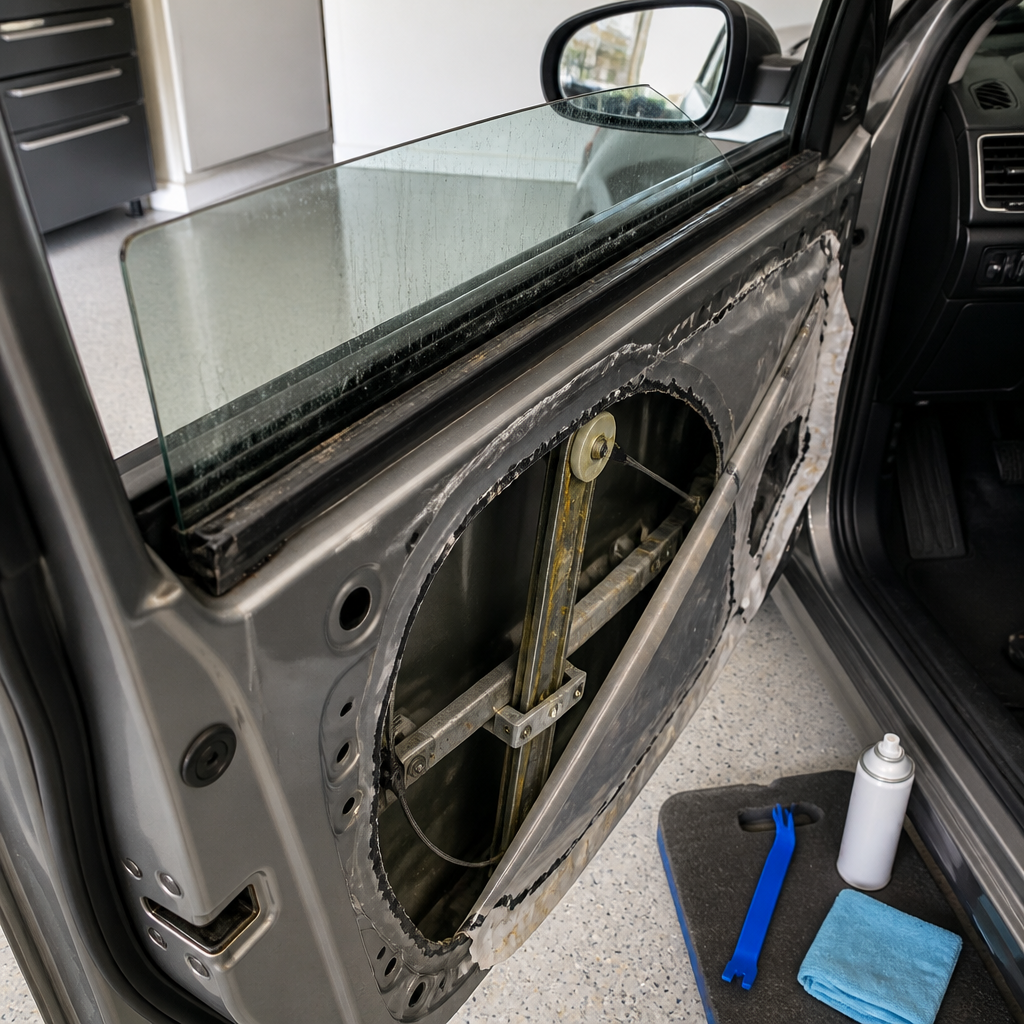
The inner door panel is removed, the regulator is inspected for bent arms, cracked plastic sliders, or frayed cables (on cable-type regulators). The regulator assembly is replaced if wear is advanced. In many cars, the motor is transferred to the new regulator if it tests good, or replaced if it is weak.
If the issue is electrical resistance
The shop will test voltage at the motor while it is operating. If voltage is low, they check the switch, connectors, and wiring in the door jamb where wires flex. Repairs may involve cleaning terminals, replacing a worn switch, or repairing a damaged wire.
If you are tracking other car problems at the same time, it helps to separate symptoms. For example, a power window issue is unrelated to driveline vibration like car shakes at highway speeds, even if both show up around the same time.
Common Mistakes to Avoid
- Holding the switch down after the window stops: This can overheat the motor and damage the regulator.
- Slamming the door to “free it up”: That can shift alignment further or crack plastic mounts.
- Spraying the wrong products into the window channels: Some oils and harsh cleaners swell rubber, attract dirt, or stain glass.
- Forcing the glass by hand while pressing the switch: It can bend the regulator arms or strip gears.
- Ignoring a window that tilts: Tilt is a warning sign that parts are wearing and could fail suddenly.
Related Problems to Watch For
Keep these related signs in mind, but don’t assume they are the cause of slow movement:
- One-touch up/down stops or reverses: Often linked to pinch protection calibration or extra resistance in the track.
- Intermittent window operation: Can point to a failing switch or wiring issue rather than simple drag.
- Moisture inside the door or repeated fogging: Water intrusion can corrode connectors and increase electrical resistance.
If you also notice persistent odors after rain or AC use, that is a separate issue, more like Car AC musty smell problems, but moisture in the car can still contribute to corrosion in door wiring over time.
And if you’re dealing with overall upkeep habits, basic routines like seasonal car maintenance data can help you catch small items like drying seals before they turn into bigger repairs.
Final Thoughts
If your power window moves slowly or sticks, start by treating it as a friction problem first: Keep the window channels clean and avoid cycling the switch repeatedly. If the glass tilts, jerks, or needs help by hand, stop using it and have the door mechanism inspected. A simple drag issue can turn into a broken regulator or overheated motor if it’s forced.


