


This post may contain affiliate links. Please read our disclosure and privacy policy for more information.
A dirty mass airflow sensor (MAF) can make your car feel “off.” You may notice rough idle, weak power, slow acceleration, or poor fuel mileage. The good news is this: Cleaning a MAF sensor is usually quick and cheap, and you can do it at home with basic tools.
This guide walks you through a safe way to clean a MAF sensor without damaging it. You will also learn when cleaning will not help, and when you should replace the sensor instead.
Tools and Items Needed
- Mass airflow sensor cleaner spray (MAF cleaner only)
- Basic hand tools (usually a screwdriver or small socket set)
- Work gloves
- Safety glasses
- Clean towel or shop towels
- Small flashlight (helpful)
- Optional: OBD2 code reader (helpful for checking codes)
If your car has slow acceleration or inconsistent power, a dirty MAF is only one possible cause. For a broader checklist, you can compare symptoms with Slow acceleration checks.
Safety or Legal Notes
Work on a cool engine. Hot intake parts can burn you, and cleaner spray can flash off fast on hot surfaces.
Disconnect the negative battery cable if you want extra safety while unplugging sensors. Some cars may lose radio presets, so keep that in mind.
Use only MAF sensor cleaner. Do not use brake cleaner, carb cleaner, throttle body cleaner, or compressed air. Those can damage the sensing element and ruin the sensor.
Spray cleaners are flammable. Work in a well-ventilated area and keep away from sparks, cigarettes, or open flames.
Step-by-Step: Clean a Mass Airflow Sensor at Home
1) Confirm You Have a MAF Sensor
Open the hood and find the air intake tube. The MAF sensor is usually mounted in the intake duct between the air filter box and the throttle body. It often has an electrical connector and is held in by two screws.
Some cars use a MAP sensor instead of a MAF sensor. If you do not see a MAF on the intake tube, check your owner’s manual or search your engine layout before you start removing parts.
2) Check for Common Symptoms
A dirty or failing MAF sensor can cause:
- Rough idle
- Hesitation when you press the gas
- Stalling at stops
- Weak power at highway speed
- Poor fuel economy
- Check engine light (sometimes)
If the car surges when you hold a steady speed, it can be related to airflow and fuel trim issues. You can also compare symptoms with car surges at steady speed.
3) Turn the Car Off and Let It Cool
Remove the key and wait a few minutes. If the engine was running, let the intake area cool down. This also gives the engine computer time to fully power down.
4) Unplug the Electrical Connector
Locate the MAF electrical plug. Press the locking tab and gently pull the connector straight off. Do not pull on the wires.
If the plug is stuck, wiggle it a little while pressing the tab. If it still will not move, look for a secondary lock clip.
5) Remove the MAF Sensor
Most MAF sensors are held by two screws. Use the correct bit or socket so you do not strip them.
Lift the sensor out carefully. The sensing element is delicate. Do not touch the inside parts with your fingers, a rag, or a brush.
Some cars use a MAF sensor integrated into the housing. If yours does, you may be able to remove the whole section, or the sensor portion may still come out with screws.
6) Inspect the Sensor and the O-Ring
Look at the sensor tip and inside the opening. You may see light dirt, oil film, or dust. Also check the rubber seal (O-ring). If it is torn, flat, or missing, you can get unmetered air leaks that cause rough running.
If the sensor looks wet with oil, that may point to an over-oiled aftermarket air filter, or heavy crankcase vapors. Cleaning can help, but the root cause may return.
7) Spray the MAF Cleaner the Right Way
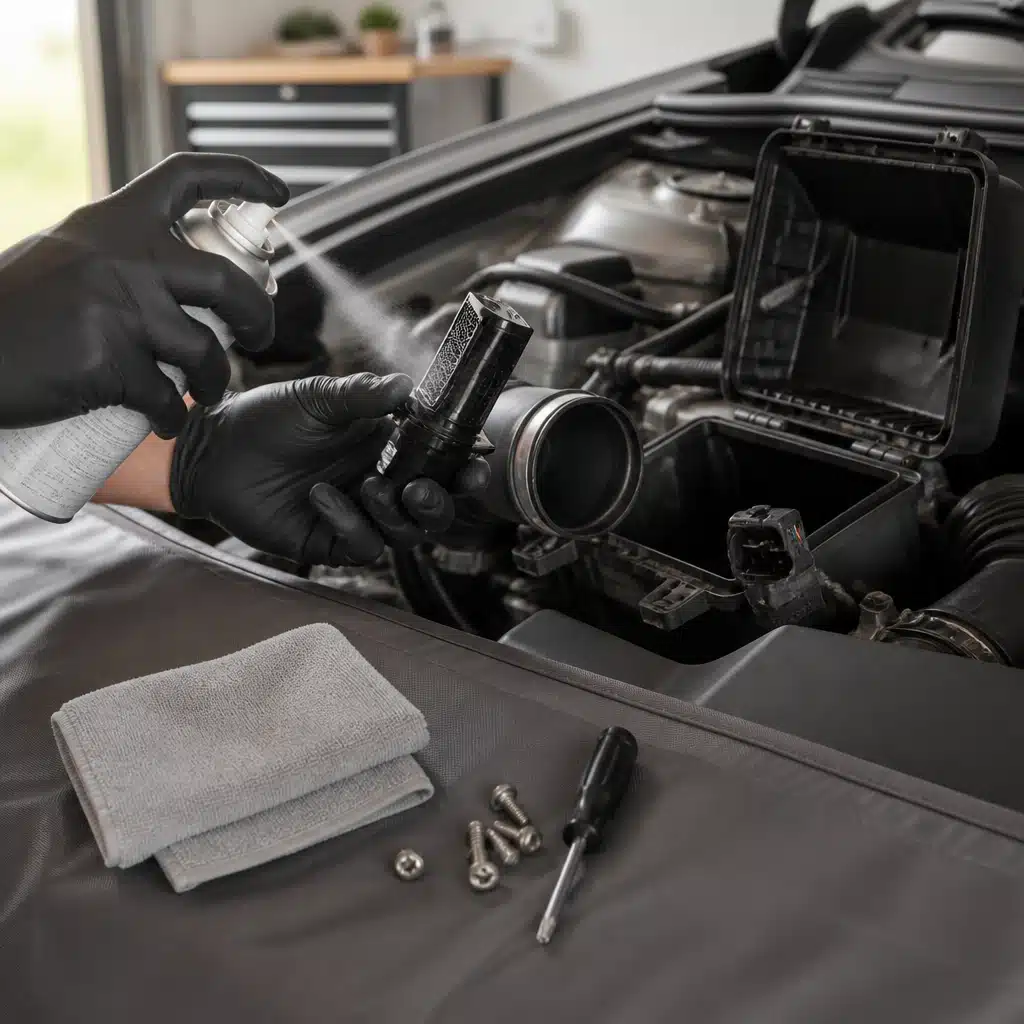
Hold the sensor over a towel. Shake the can. Spray the sensing element and internal passages with short bursts from about 4 to 6 inches away.
- Spray from different angles to rinse off dirt.
- Do not scrub.
- Do not wipe.
- Do not put anything into the sensor opening.
Most sensors need about 10 to 15 sprays total. The goal is to rinse, not soak the connector.
8) Let the Sensor Air Dry
Set the sensor on a clean towel in a safe place. Let it air dry fully. This usually takes 10 to 20 minutes, depending on temperature and airflow.
Do not use compressed air, a hair dryer, or heat gun. The sensing wire or film is fragile, and forced air can damage it.
9) Reinstall the MAF Sensor
Carefully place the sensor back into its position. Make sure it sits straight and the O-ring seals properly.
Tighten the screws snug. Do not overtighten. The sensor body is often plastic.
10) Reconnect the Plug and Start the Car
Plug the connector back in until it clicks. If you disconnected the battery, reconnect it now.
Start the engine and let it idle for a minute. You may notice a smoother idle right away, but some cars need a short drive for the computer to adjust fuel trims.
If your check engine light was on, you can scan for codes. A MAF issue can sometimes set misfire-like symptoms, so it helps to understand what the code means. If you see a random misfire code, use P0300 code troubleshooting to guide your next steps.
Common Mistakes
- Using the wrong spray: Brake cleaner and carb cleaner can damage the sensor surface.
- Touching the sensing element: A light touch can break it. Never wipe inside the sensor.
- Not letting it dry: Installing it wet can cause a rough start and false readings.
- Mixing up sensor direction: Some MAF housings have an airflow arrow. Install it the same way it came out.
- Ignoring vacuum leaks: A cracked intake boot can still cause rough idle even with a clean MAF.
Maintenance Tips
MAF sensors do not have a fixed service interval, but these habits help keep them clean longer:
- Replace the engine air filter on schedule. A torn or cheap filter can pass dirt.
- Avoid over-oiling reusable air filters. Too much oil can coat the MAF.
- Fix intake tube cracks and loose clamps. Unmetered air can cause bad drivability.
- If your car loses power only after it warms up, do not assume it is the MAF. Compare symptoms with Power loss after warm-up.
If the car runs better after cleaning but the problem returns quickly, look for the reason the sensor is getting dirty. Oil mist, dusty driving, or an intake leak are common.
Is It Worth It?
Yes, in most cases. A can of MAF cleaner is inexpensive, and the job often takes less than 30 minutes with drying time.
Cleaning is worth it when:
- The car has mild symptoms and no major codes.
- The sensor is dirty from normal dust and age.
- You recently bought the car and do not know the maintenance history.
Cleaning may not fix it when:
- The sensor is electrically failing.
- The sensing element is damaged from wrong cleaner or physical contact.
- There is a separate problem like a vacuum leak, fuel issue, or ignition issue.
If you clean it and the car is still weak during acceleration, you may need deeper diagnosis. Symptoms can overlap with other issues, so comparing with car loses power during acceleration can help narrow it down.
Conclusion
Cleaning a mass airflow sensor at home is a simple DIY job that can improve idle quality, throttle response, and drivability. Use only MAF sensor cleaner, handle the sensor gently, and let it air dry before reinstalling. If cleaning does not change anything, the sensor may be failing, or the real problem may be elsewhere in the intake, fuel, or ignition system.


