


This post may contain affiliate links. Please read our disclosure and privacy policy for more information.
A jump start should get you moving again. If the car still will not start after a jump, the problem is usually not the jumper cables or the helper car. It is often a weak battery, a bad connection, or a charging problem that left the battery too low to run the car.
What This Problem Feels Like
Most drivers notice one of these right after trying to jump the car:
- The engine cranks very slowly, or cranks for a second and stops.
- You hear rapid clicking when you turn the key, but the engine does not turn over.
- The dash lights come on during the jump, but the car dies as soon as you remove the cables.
- Nothing happens at all, even with cables connected, or the lights flicker and go out.
You might also notice the clock and radio resetting, power windows moving slowly, or the interior lights dimming hard when you try to start. Those are strong signs the system voltage is still too low.
Is It Safe to Drive?
If the car starts only while the cables are connected or it stalls right after, do not drive it. That usually means the battery is not being charged or the battery cannot hold a charge. You could end up stalled in traffic, lose power steering assist, and lose brake assist.
If it finally starts and seems OK, treat it as a warning. Drive only a short distance to a safe place if needed, and avoid turning the car off until you are somewhere you can deal with it. If headlights are dim, warning lights are bright, or the car runs rough and then dies, stop and get help.
Common Causes
These are the most common reasons a car still will not start after a jump, listed from most likely to less likely.
Battery is too weak or damaged
A jump start can add enough power to crank the engine, but it cannot fix a battery that is worn out inside. If the battery has a dead cell, heavy sulfation, or internal damage, it may accept a surface charge for a moment and then drop voltage fast. That is why some cars start during the jump and then die right away.
Cold weather, short trips, and an old battery make this more likely. A battery can also be bad even if it is only a few years old.
Poor connection at the battery terminals
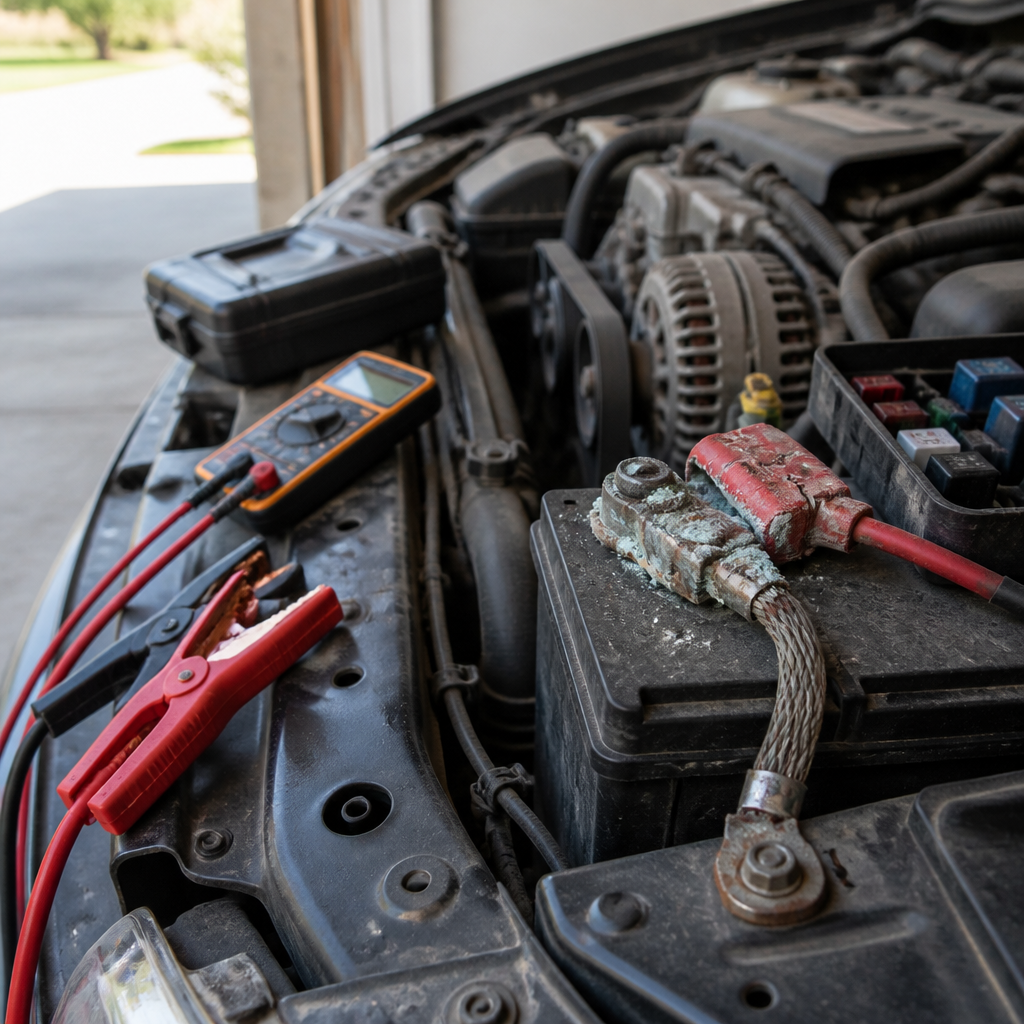
Corrosion, loose terminals, or damaged battery posts can block power, even with jumper cables attached. You can have plenty of battery power available, but it cannot reach the starter and the rest of the car.
This is especially common when the clamps are attached over crusty corrosion, or the battery cables can be rotated by hand on the posts.
Bad ground connection
The battery ground cable connects the battery to the body and engine. If that ground point is loose or rusty, the starter will not get the current it needs. A bad ground can also cause strange electrical behavior like flickering lights, random clicking, or the dash going dark during cranking.
Jump start setup issues
Even when everything is “hooked up,” small details matter. Wrong clamp placement, weak contact on painted metal, or thin, poor-quality jumper cables can keep enough current from flowing. If the helper car is idling with many accessories on, voltage may not be stable.
This does not mean the car has no other problem. It only means the jump attempt may not have delivered enough power to crank properly.
Charging system problem (alternator not charging)
If the alternator is not charging, the battery runs down while you drive. After a jump, the engine may start, but it will not stay running for long once the battery voltage drops again. Sometimes you will see a battery warning light, dim headlights, or electrical issues before the no-start happens.
Starter or control issue (less common for “after a jump”)
If the battery connections are clean and tight, and the battery is known good, the problem may be the starter motor, starter relay, or the signal that tells the starter to crank. This is less common than battery or connection issues, but it happens. If your symptom is a solid click with no crank, it can point this direction.
If that matches what you are seeing, this page can help narrow it down: starter and relay checks.
Quick Checks You Can Do at Home
These checks are focused on safety and basics. They can help you decide whether the problem is likely battery, connections, or charging. If anything feels beyond your comfort level, stop and call for help.
Check the battery terminals for looseness and heavy corrosion
With the car off, open the hood and look closely at both battery terminals. White, blue, or green crust is corrosion. Also check if the clamps are tight. If you can twist a battery terminal by hand, it is too loose.
Do not poke metal tools between terminals. Do not allow tools to touch both terminals at the same time.
Verify jumper cable connection points
When jumping, connect the negative (black) clamp to a clean metal ground on the dead car, not the negative battery post if possible. A solid engine bracket or unpainted metal is usually better than thin sheet metal.
Also check the clamps. If they are barely hanging on or clamped over corrosion, they may not carry enough current.
Try a longer charge time before cranking
If the battery is deeply discharged, it may need time to take in some charge before the starter can crank. Let the helper car run at a steady idle for several minutes with the cables connected, then try to start. If the crank speed improves over time, that points toward a very low battery rather than a sudden starter failure.
Look for signs the battery is failing
- Battery is more than 3 to 5 years old and has been weak lately.
- It needed multiple jumps recently.
- Lights go bright with cables connected, then go dim fast when removed.
- Clicking returns immediately after you stop jumping.
If these fit, the next step is testing the battery and replacing it if it fails. If you want a general idea of what battery service involves, see Car battery replacement statistics.
Watch what happens after the engine starts
If you do get it running, pay attention for the first minute:
- If it runs only with jumper cables attached: The battery is likely too weak, or the terminal connections are poor.
- If it starts but then stalls soon after, or the battery light is on: The alternator may not be charging.
- If it starts and runs but lights are very dim and wipers are slow: Charging voltage may be low.
A simple way to follow up is a basic charging system test. If you are comfortable doing that with a meter, this can help you understand the process: test your car alternator.
Check the main ground cable visually
Look at the negative battery cable and where it bolts to the body or engine. If you see a loose bolt, heavy rust, frayed cable strands, or an oily, dirty connection, that is a red flag. A poor ground can mimic a dead battery and can stop a jump from working.
When This Becomes Serious
This problem becomes serious when it is more than a weak battery and starts pointing to a charging failure or high resistance in the main cables.
- The car dies while driving or stalls at stops.
- The battery warning light comes on and stays on.
- You smell hot plastic or see smoke near the battery cables.
- Battery terminals or cables get very hot during a jump attempt.
- The battery case looks swollen, cracked, or is leaking.
If you notice heat, smoke, swelling, or leaking, stop trying to jump it. A failing battery or cable can be dangerous.
How a Mechanic Fixes It
A shop will usually handle this in a simple order:
- Test the battery with a proper load test to see if it can actually hold voltage under demand.
- Check for voltage drop at the battery terminals and main cables while cranking. This finds hidden resistance from corrosion inside the cable or loose connections.
- Test alternator output and charging voltage under load. This confirms whether the battery is being recharged once the engine is running.
- Inspect the starter circuit if battery and charging checks pass, including the starter relay, starter solenoid control, and the starter motor itself.
The actual repair depends on what fails: Battery replacement, cleaning and tightening terminals, replacing a corroded cable end, repairing a ground, or replacing/repairing the alternator or starter components.
Common Mistakes to Avoid
- Removing the cables immediately after the engine starts: Let it stabilize first. If it dies right away, that is a clue that charging or battery condition is poor.
- Clamping onto corrosion and expecting it to work: Corrosion can block current just like an unplugged wire.
- Connecting the negative clamp to a bad ground: Painted or rusty metal can prevent the jump from working.
- Cranking repeatedly for long periods: This can overheat the starter and drain what little charge the battery has left.
- Assuming a jump proves the battery is good: A jump only proves the starter can turn if enough power is supplied.
Related Problems to Watch For
These do not change the main diagnosis, but they often show up around the same time:
- Battery light on while driving, or headlights that pulse brighter and dimmer.
- Slow cranking in the morning that improves later in the day.
- Electrical resets, like the radio losing presets or the clock resetting.
- Rough idle after it starts, which can happen after low voltage events. If that turns into a consistent misfire, treat it as a separate issue.
If your car starts later but then becomes unreliable again, it can help to compare symptoms with another common scenario: car won’t start, battery good.
Final Thoughts
If your car still will not start after a jump, focus first on the basics: Battery condition, clean and tight terminals, and a solid ground connection. Those three cause most repeat no-starts after a jump. If the car runs only with cables attached or dies soon after starting, treat it as unsafe to depend on and plan for battery and charging system testing as soon as possible.


