


This post may contain affiliate links. Please read our disclosure and privacy policy for more information.
An engine that shakes at idle while storing a P0303 code is telling you one thing: Cylinder 3 is not firing normally. At idle, the engine is at its weakest and smoothness depends on every cylinder doing its job. When one cylinder drops out, the whole car can feel like it is shuddering.
What This Problem Feels Like
Most drivers notice the shake first at stoplights or when parked in Drive. The steering wheel, seat, or dash may buzz or thump in a steady rhythm. Some cars feel like the engine is “loping” or uneven, almost like it wants to stall.
You may also notice:
- The idle speed dips or hunts up and down
- A flashing or solid Check Engine light
- A mild fuel smell from the exhaust
- Less power when pulling away from a stop (sometimes)
P0303 specifically means the computer detected a misfire on cylinder 3. It does not automatically tell you the exact part that failed, only which cylinder is acting up.
Is It Safe to Drive?
It depends on how the car is behaving and whether the Check Engine light is flashing.
- If the Check Engine light is flashing: Treat it as unsafe to drive. A flashing light often means active misfires that can quickly damage the catalytic converter.
- If the light is solid and the shake is mild: Short, gentle driving is sometimes possible, but it is still a risk. Avoid hard acceleration and high speeds, and get it checked soon.
- If it’s shaking hard, stalling, or lacks power: Do not keep driving. Have it towed.
Misfires dump unburned fuel and extra oxygen into the exhaust. That heat and fuel can overwork the converter and turn a smaller repair into a much bigger one.
Common Causes
These are listed from most common to less common for a single-cylinder misfire like P0303.
Worn or fouled spark plug (cylinder 3)
A spark plug that is worn out, cracked, oil-fouled, or fuel-fouled may not fire well at idle. Idle needs a clean, strong spark because the air and fuel movement in the cylinder is slower and easier to disrupt.
Bad ignition coil or plug wire feeding cylinder 3
Many engines use a coil-on-plug setup, where each cylinder has its own coil. If the coil on cylinder 3 is weak, the spark can drop out most noticeably at idle, then feel a bit better at higher RPM. Engines with plug wires can have the same issue if the wire has high resistance or internal damage.
Fuel injector problem on cylinder 3
If the injector for cylinder 3 is clogged, sticking, or electrically failing, that cylinder can run too lean or not get fuel consistently. Lean misfires often shake at idle and may set fuel trim codes alongside P0303.
Vacuum leak affecting one cylinder
A small vacuum leak near the intake runner for cylinder 3, a cracked hose connection, or a leaking intake manifold gasket can let in extra air. That cylinder runs lean and misfires most at idle, when intake vacuum is highest.
Low compression or mechanical issue in cylinder 3
A burned valve, worn rings, or a head gasket issue can cause low compression. When compression is low, the air-fuel mix does not heat and burn correctly. This tends to cause a steady misfire that does not fully go away when you rev the engine.
Oil or coolant contamination on the plug
If oil or coolant is getting into cylinder 3, the spark plug can foul quickly and the misfire comes back soon after replacing ignition parts. This is less common than simple wear, but important to catch early.
For a broader look at how idle shake ties into misfires in general, Engine shakes at idle covers the typical patterns drivers notice.
Quick Checks You Can Do at Home
These checks are aimed at safety and basic observation. They can help you avoid guesswork before you schedule service. Do them with the engine off unless noted.
Look for a flashing Check Engine light
If the light is flashing at idle, stop driving and plan for a tow or mobile service. A flashing light is one of the clearest warning signs with a misfire.
Listen at idle and note when it’s worst
Pay attention to whether it’s worst only at idle, or if it continues the same way when you lightly raise RPM to around 1,500. Misfires that smooth out off-idle often point toward spark or minor fueling problems. Misfires that stay severe can point toward compression or a stronger fuel issue.
Check the basics under the hood
- Look for loose intake ducting between the air box and the engine
- Check for cracked vacuum lines near the intake manifold
- Look for obvious coil connector issues: Loose plug, broken tab, corrosion
- Check for oil pooled in the spark plug well (common on some engines with valve cover leaks)
If you find oil in a plug well, do not ignore it. Oil can interfere with coil boots and cause repeat misfires.
Smell for raw fuel at the tailpipe
A strong fuel smell can happen during a misfire because fuel is not burning completely. This is another sign to avoid driving far, since the catalytic converter is being stressed.
Check for recent work that could be related
If the misfire started right after recent maintenance, think about anything touched near the engine. A connector left loose, a vacuum hose knocked off, or a coil not fully seated can trigger P0303 quickly.
If you want context on misfire codes that are not limited to one cylinder, P0300 engine misfire fixes explains what changes when the misfire is random instead of tied to a single cylinder like cylinder 3.
When This Becomes Serious
P0303 is already a real problem, but these signs mean you should stop driving and get professional help right away:
- Check Engine light is flashing
- The engine shakes so hard it feels like it may stall in traffic
- Loss of power is obvious, even with gentle throttle
- You hear popping through the intake or exhaust
- You smell sulfur or “rotten egg” from the exhaust (converter overheating)
- The misfire is accompanied by rising coolant temp or coolant loss
A single-cylinder misfire can also lead to extra vibration that stresses engine mounts over time, but the biggest immediate risk is damage to the catalytic converter.
How a Mechanic Fixes It
A shop will focus on confirming the misfire on cylinder 3, then tracing why that cylinder is not contributing.
Confirm and isolate the fault
The technician will scan freeze-frame data and misfire counters to see when the misfire happens: Cold start, hot idle, under load, or all the time. That helps narrow the direction quickly.
Ignition system checks first
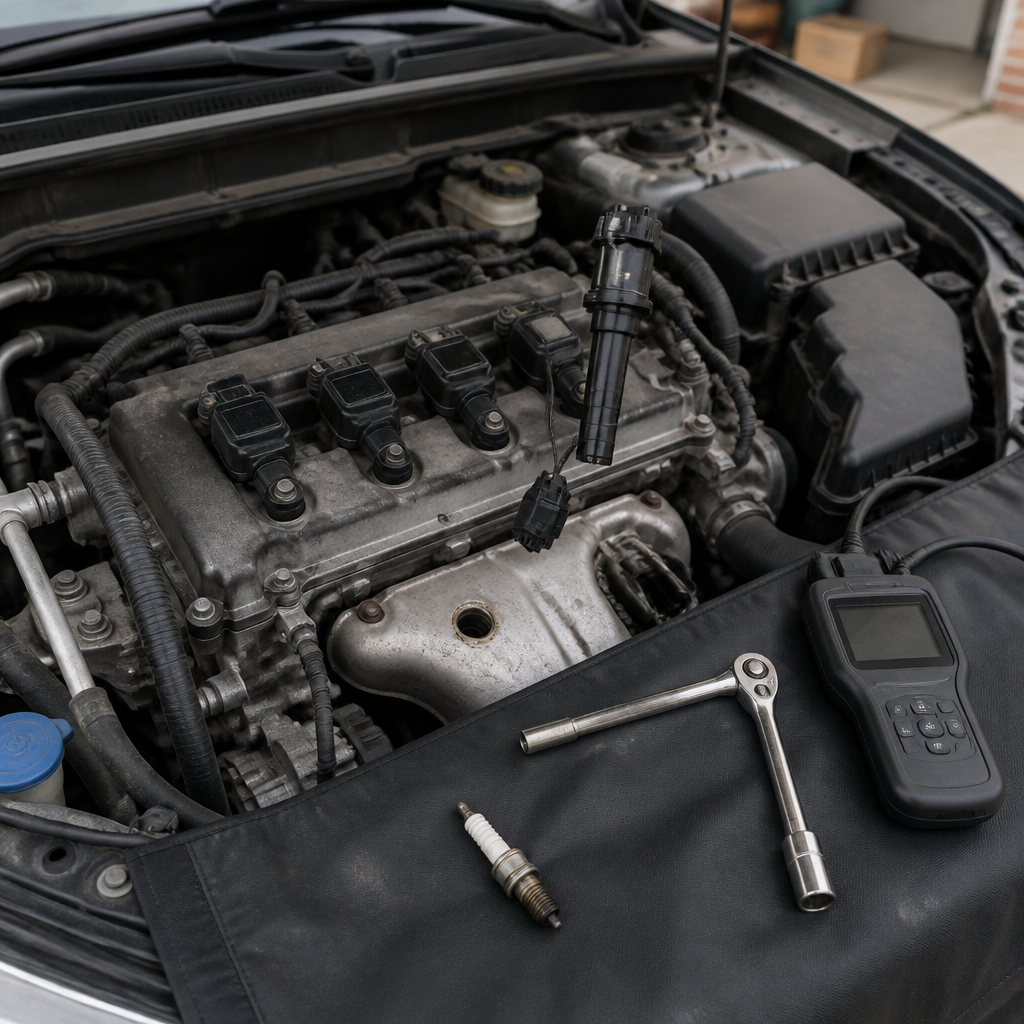
Because ignition issues are common and relatively quick to verify, many techs start by inspecting the cylinder 3 spark plug and coil. They may swap the coil with another cylinder to see if the misfire “moves” to the new cylinder. If it does, the coil is the cause. They will also check plug condition and gap, and inspect the coil boot for carbon tracking.
Fuel injector testing
If ignition checks out, they may test the cylinder 3 injector operation and wiring. This can include listening for injector clicking, checking resistance, checking injector command signals, and confirming fuel pressure is correct for the engine.
Air leak and fueling balance checks
A smoke test may be used to find vacuum leaks near the intake runner feeding cylinder 3. Fuel trim readings can also help show whether the engine is running lean at idle.
Compression and leak-down testing
If ignition and fuel delivery look normal, mechanical condition is next. A compression test or leak-down test can confirm whether cylinder 3 has a valve sealing issue, ring issue, or head gasket problem.
The actual repair depends on what fails: Plug and coil replacement, wiring repair, injector service or replacement, fixing an intake leak, or internal engine work if compression is low.
Common Mistakes to Avoid
- Replacing a bunch of parts at once: It gets expensive and can still miss the cause. P0303 is specific enough that testing first usually saves time.
- Ignoring a flashing Check Engine light: That is how catalytic converters get damaged.
- Only clearing the code and hoping it stays away: The misfire often returns, and the driving damage continues.
- Mixing up cylinder numbers: Cylinder 3 location depends on the engine layout. A shop manual or proper diagram matters before any diagnosis.
- Overlooking oil in a plug well: If a valve cover leak is soaking the coil boot, the misfire can come back even after new ignition parts.
Related Problems to Watch For
A cylinder 3 misfire at idle can come with a few related symptoms. These do not change the focus from P0303, but they are worth noticing because they help describe severity.
- Jerking or shaking when pulling away: If the misfire continues off-idle, you may also feel shaking during acceleration. Related vibration concerns are covered in car shakes when accelerating.
- Hesitation or sluggish response: This can happen if the misfire becomes more noticeable under load. If you also feel weak power as RPM climbs, Car feels slow to accelerate matches that symptom.
- Occasional stumbling at steady speed: Less common for an idle-only misfire, but it can appear as the problem worsens.
Final Thoughts
If your engine shakes at idle and you have a P0303 code, treat it as a cylinder 3 misfire until proven otherwise. If the Check Engine light is flashing, stop driving and arrange service to prevent catalytic converter damage. If the light is solid and the car is still drivable, keep trips short, avoid hard acceleration, and schedule diagnosis soon. The fastest path to a real fix is simple testing on cylinder 3: Spark plug, coil, injector, air leaks, then compression if needed.


