




This post may contain affiliate links. Please read our disclosure and privacy policy for more information.
A soft or spongy brake pedal when you are stopped can be unsettling. It usually means the brake system is not building or holding pressure the way it should. Because brakes are a safety system, this symptom should be taken seriously, even if the car still seems to stop.
What This Problem Feels Like
You press and hold the brake pedal at a stoplight, and it does not feel firm. It may feel springy, like you are pushing into a soft cushion.
Some drivers notice the pedal slowly sinks a little while their foot stays steady. Others feel the pedal sits lower than normal and takes more travel before the car feels “held” in place.
This symptom is most noticeable while stopped because your foot is holding steady pressure. If the system cannot keep pressure, the pedal feel changes right in your foot.
You might also notice related signs like a longer stopping distance, the need to pump the pedal, or the brake warning light. Those are not the main symptom here, but they matter because they raise the risk level.
Is It Safe to Drive?
Driving is not considered safe if the pedal is very soft, goes close to the floor, must be pumped to feel normal, or sinks while you hold it. In those cases, the car may not stop as expected on the next hard brake application.
If the pedal is only slightly softer than normal and braking still feels consistent, you may be able to move the car a short distance at low speed to a repair shop. Keep extra following distance and avoid highways and heavy traffic.
If you are unsure, treat it as unsafe. A brake problem can get worse suddenly. For a broader safety check mindset, Safe to Keep Driving can help you decide when it is better to stop and get help.
Common Causes
These causes are listed from most common to less common for a soft or spongy pedal when stopped.
Air in the brake lines
Air compresses, brake fluid does not. If air is in the lines, some of your pedal travel goes into squeezing air bubbles instead of pushing the brake calipers hard. This often happens after brake work, a low-fluid event, or a small leak that let air enter.
Brake fluid leak
A leak reduces the amount of fluid available and can also let air into the system. Leaks may be at a brake hose, a caliper, a wheel cylinder (rear drum brakes), or a steel brake line. Even a small seep can change pedal feel over time.
Old or moisture-contaminated brake fluid
Brake fluid absorbs moisture as it ages. Moisture lowers the fluid’s boiling point. During heavier braking, the fluid can heat up and form vapor bubbles, which compress and feel like a spongy pedal. Even when stopped, contaminated fluid can contribute to a softer, less consistent feel.
Brake hose swelling under pressure
Rubber brake hoses can weaken inside. When you press the brake pedal, the hose may expand slightly instead of sending full pressure to the brakes. This can feel like a soft pedal that is hard to pin down.
Master cylinder internal bypass
The master cylinder creates hydraulic pressure. If its internal seals wear out, fluid can slip past the seals inside the cylinder. A classic sign is a pedal that slowly sinks while you hold steady pressure at a stop.
ABS hydraulic unit issues (less common)
Some ABS problems can cause odd pedal feel, especially if the system has been opened for repairs and not bled correctly with the proper procedure. A true ABS unit failure is less common than air, leaks, or a master cylinder problem.
Quick Checks You Can Do at Home
These checks are meant to be simple and safe. Do them on a flat surface with the car in Park (or in gear for a manual), parking brake set, and the engine off unless stated.
Check the brake fluid level
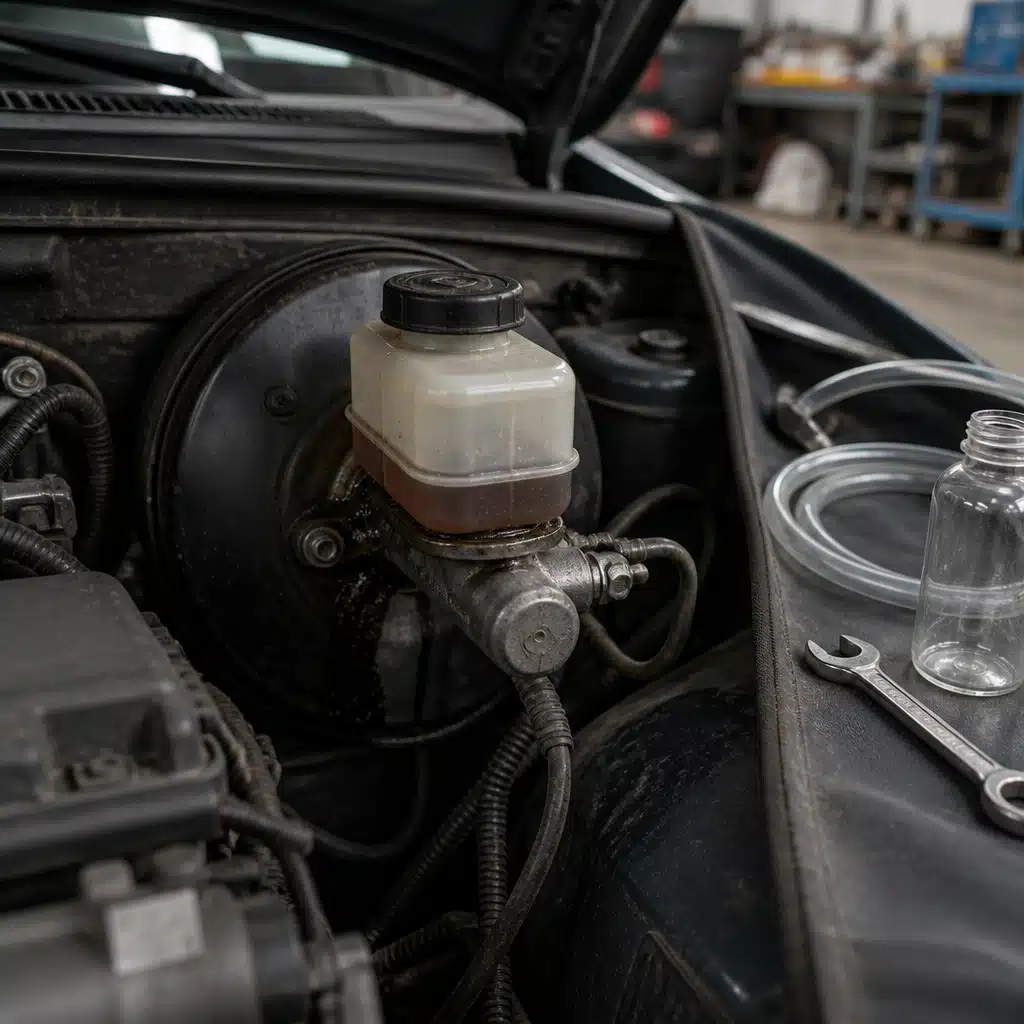
Open the hood and find the brake fluid reservoir. The level should be between the MIN and MAX marks.
- If the level is low: That usually means fluid has leaked out or the brake pads are very worn. Low fluid plus a soft pedal is a strong warning sign.
- If the level is normal: You can still have air in the system, old fluid, hose issues, or a master cylinder problem.
Do not top off brake fluid just to “make the problem go away.” If fluid is low, there is a reason, and adding fluid can hide it for a short time.
Look for obvious wet spots
Check under the car for fresh wet spots near any wheel. Then look behind each wheel if you can safely see the back side of the tire and suspension. Brake fluid often looks clear to amber and feels slippery.
Also check the brake master cylinder area where it mounts to the brake booster (the round unit on the firewall). Any wetness there can point to a leak.
Pedal hold test (engine off)
With the engine off, press the brake pedal several times to remove any vacuum assist. Then press and hold firm pressure for 30 seconds.
- If the pedal slowly sinks: This often points to a master cylinder internal bypass or a leak.
- If the pedal stays solid but feels spongy: Air in the lines or hose expansion is more likely.
If the pedal sinks quickly or goes near the floor, stop the test and do not drive the car.
Quick visual check of tire-side brake components
If your wheels allow it, look through the spokes for signs of fluid spray or wet buildup on the caliper. Do not put your hands near hot brakes. If you recently drove, let the car cool.
When This Becomes Serious
This problem becomes urgent if any of these are true:
- The brake warning light is on.
- The pedal travels much farther than normal or feels close to the floor.
- The pedal must be pumped to get firm.
- The pedal sinks while you hold it at a stop.
- You see brake fluid leaking anywhere.
- Braking performance changes from stop to stop.
Any of the above can lead to reduced braking ability with little warning. If you suspect a leak, it can get worse quickly because the system relies on sealed pressure.
If the issue started right after brake work, treat it as serious. It can mean trapped air or an incomplete bleed, and that can reduce braking when you need it most.
How a Mechanic Fixes It
A shop will usually start by confirming the pedal feel and checking for stored ABS codes if needed. Then they will inspect the system for leaks and worn parts.
Common professional fixes include:
- Repairing leaks: Replacing a leaking caliper, wheel cylinder, hose, or rusted brake line, then refilling with the correct brake fluid and bleeding the system.
- Bleeding the brakes correctly: Removing trapped air from the lines. Some cars require a scan tool procedure to cycle the ABS unit during bleeding if air is suspected inside it.
- Brake fluid flush: Replacing old contaminated fluid with fresh fluid to restore proper hydraulic behavior and heat resistance.
- Replacing weak brake hoses: If a hose expands under pressure or shows cracking, swelling, or internal breakdown signs.
- Master cylinder replacement: If tests show internal bypass or poor pressure holding, followed by proper bleeding and validation.
After repairs, a mechanic will verify a firm pedal, stable pedal height at a stop, and consistent braking on a road test in safe conditions.
If you are thinking about changing how your car stops overall, it helps to understand the Brake upgrade path so parts choices match the way you drive. That is separate from fixing a soft pedal, but it can come up during brake service.
Common Mistakes to Avoid
- Ignoring a sinking pedal: A pedal that drops while held often points to a pressure-holding problem. That is not something to “monitor for a while.”
- Adding brake fluid without finding the cause: Brake fluid does not get “used up.” If it is low, something changed.
- Driving normally because the car still stops: A soft pedal can turn into a no-brake moment under panic braking or after a few stops.
- Assuming it is just worn pads: Worn pads can change pedal height slightly, but they are not a normal cause of a spongy feel at a stop.
- Letting unapproved fluid touch the system: Using the wrong brake fluid type can damage seals. A shop will match the correct DOT spec for your vehicle.
If you are looking at a used vehicle and the brake pedal already feels soft or inconsistent, treat it as a major warning sign. It fits right in with Used car warning signs that point to skipped maintenance or unfinished repairs.
Related Problems to Watch For
These are not the same problem, but they can show up alongside it:
- Brake pedal pulsation: Often felt while braking from speed and can point to rotor issues. It is different from spongy feel while stopped.
- Brake warning lights: Can indicate low fluid or ABS issues and should not be ignored.
- Burning smell after braking: Can appear if a brake is dragging or overheating, which can also affect pedal feel.
- Pulling to one side under braking: May point to uneven braking, sometimes seen with leaks or caliper issues.
If the car also shakes at speed, that is a separate issue from a soft pedal, but it can confuse the overall “feel” of stopping. steering wheel shakes covers that symptom.
Final Thoughts
A soft or spongy brake pedal when stopped usually means the brake system is not holding pressure the way it should. The most common causes are air in the lines, a fluid leak, old fluid, weak hoses, or a failing master cylinder.
If the pedal sinks, goes low, needs pumping, or you see any sign of a leak: Do not keep driving. Have the car towed or repaired before regular use.
If the pedal is only slightly softer but still consistent: Drive as little as possible, avoid high speeds, and get it inspected soon. Brakes should feel firm and predictable every time you press the pedal.


