


This post may contain affiliate links. Please read our disclosure and privacy policy for more information.
The Mini began as a practical answer to a national problem, then grew into a symbol of modern Britain. Across four decades under British ownership and then a reinvention under BMW, it showed how a small car could reshape packaging, influence design thinking worldwide, and still connect with everyday drivers.
The Origins
Mini’s story starts with pressure, not romance. In 1956, the Suez Crisis disrupted oil supplies and pushed fuel prices up. Britain had already relied on small, economical cars, but the moment sharpened the need for something better than the tiny “bubble cars” being imported from Europe.
The British Motor Corporation (BMC), formed from the merger of Austin and Morris in 1952, wanted a modern small car it could build in high numbers and sell for honest family money. It needed to be cheap to run, easy to park in crowded cities, and roomy enough to replace larger cars in many households. Those goals demanded new thinking, because simply shrinking a traditional front engine, rear drive layout produced cramped cabins and awkward proportions.
Early Development
BMC’s Leonard Lord tasked engineer Alec Issigonis with creating a radically space-efficient small car. Issigonis had strong ideas about what mattered: Driver visibility, nimble road manners, and packaging that put people first. He pushed for front wheel drive, not because it was fashionable, but because it freed the cabin from a long propshaft tunnel and a bulky rear axle layout.
The resulting design carried several bold choices into one compact package. The engine sat transversely, the gearbox was placed in the engine sump to save length, and the wheels were pushed to the corners. Small 10-inch wheels helped keep the body low and the cabin wide for its footprint. Rubber cone suspension, developed with Alex Moulton, reduced complexity and saved space compared with conventional springs.
These were not styling tricks. They were decisions aimed at one result: Maximise interior room without making the car longer, heavier, or expensive.
The First Generation: 1959 to 2000
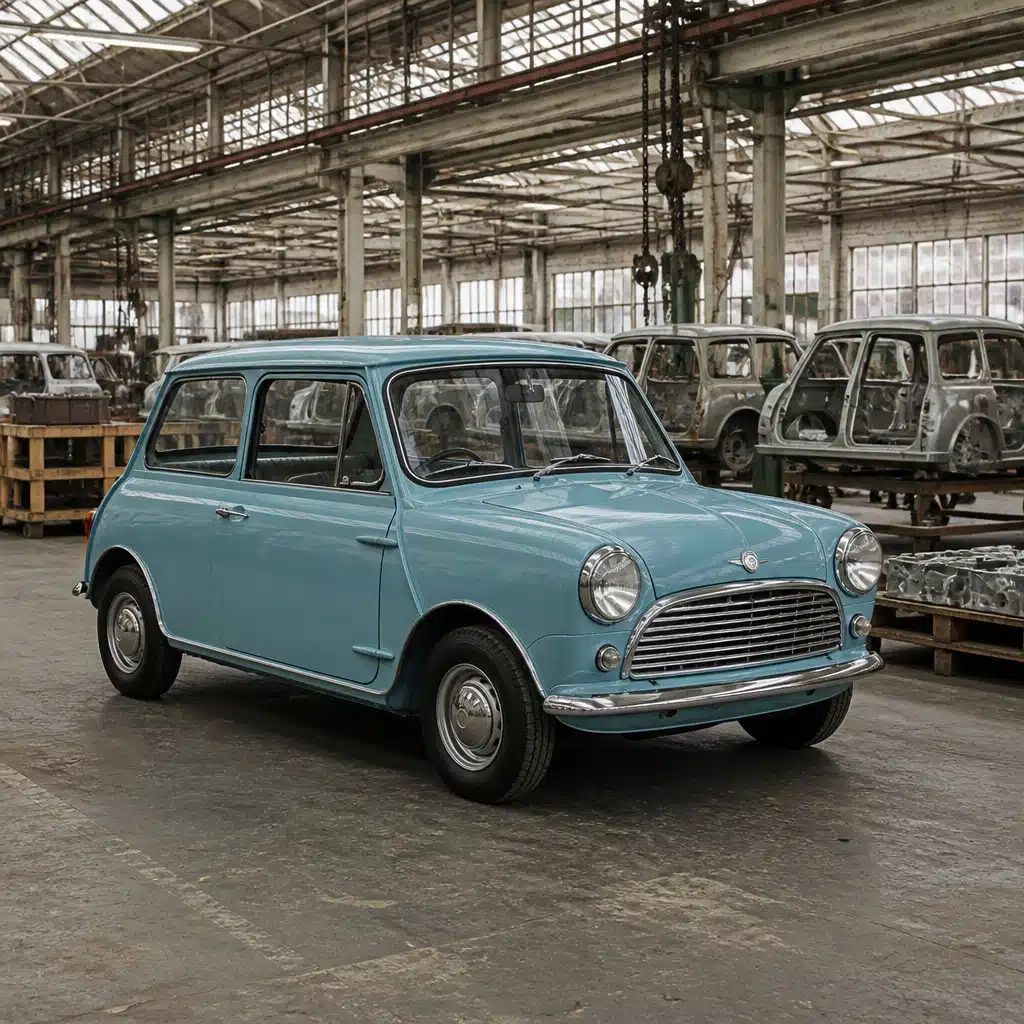
The Mini launched in 1959 as two closely related models: The Austin Seven and Morris Mini-Minor. “Mini” was the core idea more than a brand, and BMC sold it through both dealer networks. Early buyers found a car that felt unlike most small cars of the period. It was low, wide for its size, and it steered with a directness that made city driving easy and countryside roads entertaining.
Mini’s impact was immediate in engineering terms. It demonstrated that a small, affordable car could offer real adult seating for four, plus usable luggage space, by changing the mechanical layout rather than simply cutting dimensions. Over time, the transverse engine and front drive configuration became the dominant template for small and mid-size cars globally, not because everyone wanted to copy Mini’s details, but because the packaging logic was hard to ignore.
There were problems too. Early cars could be noisy, the compact mechanical package complicated servicing in some areas, and rust resistance was a constant reality of British cars in that era, not a Mini-specific flaw. But consumers were often willing to accept these trade-offs because the Mini solved daily life problems better than many alternatives.
How buyers reacted
For many British households, the Mini felt like a step into modernity. It made dense streets and small parking spaces less stressful. It used fuel carefully, which mattered in a country sensitive to running costs. It also suited new drivers and young families who wanted straightforward transportation that did not feel like a compromise.
Major Turning Points
The Cooper transformation
One of the most important shifts came when racing constructor John Cooper saw potential in Mini’s handling. With BMC’s agreement, the Mini Cooper arrived in 1961, followed by the more powerful Cooper S in 1963. These versions did more than add speed. They changed how the public talked about small cars.
At a time when performance was often associated with larger engines and bigger bodies, the Mini Cooper showed another route: Light weight, grip, and agility. It gave the Mini credibility beyond basic transport and helped create the idea that a small car could be a driver’s car without becoming exotic or expensive.
Corporate change and the long life problem
Mini also became trapped by its own success. The British car industry went through repeated reorganisation: BMC became part of British Motor Holdings in 1966, then merged into British Leyland in 1968. Each change brought shifting strategies, budget pressures, and urgent priorities. The Mini kept selling, so replacing it was often delayed.
That delay had consequences. While the car’s basic packaging stayed brilliant, expectations moved forward. By the 1970s and 1980s, buyers increasingly demanded quieter cabins, better corrosion protection, improved crash performance, and more consistent build quality. The Mini received updates, but deep redesign was expensive, and British Leyland had larger fires to put out.
Technology Evolution
The Mini’s mechanical concept was stable, but it still evolved as regulations and customer expectations tightened.
Engines and drivability
The A-Series engine family was updated many times. Displacements varied, and later cars worked to improve refinement and emissions without changing the essential architecture. By the 1990s, the need to meet modern emissions rules pushed the Mini toward fuel injection. Single-point injection arrived in the early 1990s, with multi-point injection appearing later in the decade on certain versions. These changes were driven less by performance and more by regulation and drivability requirements, especially cold starting and consistency.
Safety and compliance pressures
The original Mini was designed in an era with few crash standards. As European safety thinking matured, it became harder to keep an old structure compliant. Rover, which controlled Mini in the late period, made incremental changes, but the fundamental limits of a 1950s design were always there. The Mini survived longer than many expected, partly because it occupied a special place in British culture and partly because it still served a clear urban role.
Owners who kept older cars on the road learned the value of staying on top of maintenance basics. Electrical health was a common theme in classic ownership more generally, and many enthusiasts got comfortable with tasks like a test car battery with multimeter to sort weak starting and charging issues before they became bigger problems.
Design Evolution
Mini’s design changes were often subtle because the proportions were the point. The body stayed recognisable, with upright glass, short overhangs, and a stance that made it look planted. Over time, details shifted: Grilles, bumpers, lighting, interior trim, and instrumentation reflected fashions and cost realities.
The Mini’s cabin was always part of the story. The central speedometer layout and simple switchgear helped keep costs down and supported left-hand and right-hand production with minimal changes. Later interiors became more comfortable and better finished, but the design language stayed functional.
By the 1990s, special editions became common. They helped keep the Mini fresh in showrooms without the expense of major re-engineering. For buyers, editions offered a way to get character and style in a small car, even as competitors offered more modern platforms.
Challenges and Competition
From the 1960s onward, the Mini faced pressure from newer small cars that learned from the same packaging lessons and executed them with newer manufacturing techniques. Competitors improved rust protection, heating and ventilation, noise control, and later, crash engineering. The supermini class that emerged in the 1970s and matured in the 1980s offered more space and comfort for similar money, even if some lacked the Mini’s unique steering feel.
Market conditions also shifted. British buyers still liked small cars, but they increasingly wanted motorway capability and refinement. Meanwhile, the economics of building an old design on older tooling grew harder to defend.
Mini’s survival into 2000 under Rover was remarkable, but not accidental. It still had a clear identity, it was compact in a way newer cars often were not, and it had built a loyal base. In a market where many cars felt anonymous, the Mini still felt personal.
Motorsport Influence
Mini’s competition success was not just a footnote. The most famous highlights came in the 1960s, particularly the Monte Carlo Rally wins in 1964, 1965, and 1967 by Mini Cooper S teams. Those results mattered because rallies were widely followed, and they were seen as tough tests of real-world speed and durability.
The Mini’s rally reputation strengthened the idea that clever engineering could beat brute force. It also helped sell more regular Minis. Even buyers who never watched motorsport absorbed the message: This small car was not fragile or second-rate.
Motorsport also shaped the aftermarket. Suspension tweaks, wheel and tyre upgrades, and engine tuning became part of Mini culture. That community kept older cars alive and helped the Mini remain visible even when newer front drive hatchbacks crowded the roads.
Cultural Impact
The Mini became a British cultural marker because it arrived at the right time and suited a changing society. Postwar Britain was modernising, cities were busy, and personal mobility mattered more each year. The Mini fit daily life, and it also photographed well: Boxy, friendly, and instantly recognisable.
It appeared in film and television, was adopted by celebrities, and became tied to a particular image of swinging 1960s London. Yet the Mini’s cultural reach was not limited to fashion. It was also a working car: Used by families, small businesses, and drivers who simply needed cheap, dependable transport.
That mix, style and utility in the same small shape, is why the Mini stayed iconic. Few cars manage to be both a tool and a symbol without drifting into cliché.
Influence on the Industry
The Mini’s most lasting contribution was not a single component. It was the proof that a small car could be packaged around passengers rather than machinery. The transverse engine and front wheel drive layout existed before Mini, but Mini made it mainstream and showed how to industrialise the idea for mass buyers.
As European manufacturers refined compact hatchbacks, the Mini’s logic echoed through the segment. The idea that smart packaging could deliver real-world usefulness became a baseline expectation. In that wider story, it is worth noticing how European design evolved across brands and decades, including the approach described in Peugeot shaping car design, where practicality, efficiency, and identity had to coexist in competitive small-car markets.
Mini also demonstrated the business risk of under-investing in replacements. Even a brilliant original design eventually meets regulatory and customer walls. The British industry’s difficulty funding clean-sheet successors is part of why foreign-owned groups later had opportunities to acquire famous British names and rebuild them with global-scale resources.
Modern Evolution: The BMW Era
The classic Mini ended production in 2000. By then, it was clear a true successor could not simply be a modernised version of the same shell. Meeting safety rules, emissions standards, and customer expectations for refinement would require a new platform.
BMW acquired the Rover Group in 1994, and although BMW later sold most of Rover, it kept the Mini brand. The new MINI launched in 2001 (often called the new MINI hatch, internally R50). It was larger, heavier, and built to a different set of rules. For some traditionalists, that size increase felt like betrayal. For many buyers, it was the price of modern safety engineering, higher-speed stability, and features people now expected.
BMW’s MINI kept key themes: A compact footprint relative to mainstream cars, agile handling as a priority, and strong visual links to the 1959 original. It also made MINI a global premium small-car brand, shifting its market position upward. That new positioning changed the competitive set: The car was now competing as much on design and image as on basic affordability.
Under BMW, the MINI family expanded beyond the three-door hatch into convertibles, the Clubman, and later the Countryman. This was driven by consumer trends as much as corporate ambition. Buyers wanted small cars with more flexibility, and the broader lineup helped MINI survive in markets where a single body style could not carry the whole business.
As these newer cars aged, they also reminded owners that modern drivability depends on consistent engine management and ignition health. When performance feels flat, many of the same diagnostic questions apply across makes, like the common causes of slow acceleration that can turn a brisk small car into a frustrating one.
Legacy and Lasting Influence
Mini’s importance is easy to misunderstand if it is treated only as a cute classic or a fashionable badge. Its deeper legacy is practical. It reset expectations for how much space and usability could be extracted from a small footprint, and it did it with solutions that other manufacturers could apply widely.
In Britain, it also helped normalise the idea that a small car did not signal lower status. Minis were used by students, tradespeople, young families, and public figures at the same time. That broad appeal mattered in a car culture that had often linked prestige to size.
The Mini story also shows how design can outlive the company structures around it. BMC and British Leyland are history, yet the Mini idea survived long enough to be reinvented for a new era. That reinvention raised debates about authenticity, but it also proved something else: A small car can remain relevant if it continues solving real problems, whether that is urban space, efficiency, or the desire for a car that feels distinctive on ordinary roads.
Even outside the Mini context, modern ownership has made vehicle history feel closer to daily life. When people buy older used cars, brand identity and nostalgia can sometimes distract from fundamentals like paperwork and provenance. Practical habits, including how to spot a stolen used car, matter as much now as mechanical knowledge did to earlier generations keeping classics running.
The original Mini remains a reference point because it represented a moment when constraints led to imagination rather than retreat. It was not just small. It was intelligently small, and that difference is why it changed Britain’s roads and helped reshape the world’s small cars.


