




This post may contain affiliate links. Please read our disclosure and privacy policy for more information.
DIY Car Scratch Touch-Up At Home for Beginners
Small scratches happen. Shopping carts, keys, bushes, road grit. The good news is: Many scratches are simple to touch up at home. You just need the right products, a clean surface, and patience.
This guide is for beginners. It focuses on easy touch-up work that makes a scratch less visible and helps protect the metal from rust. It will not replace a full body shop repair for deep damage. But it can make your car look much better.
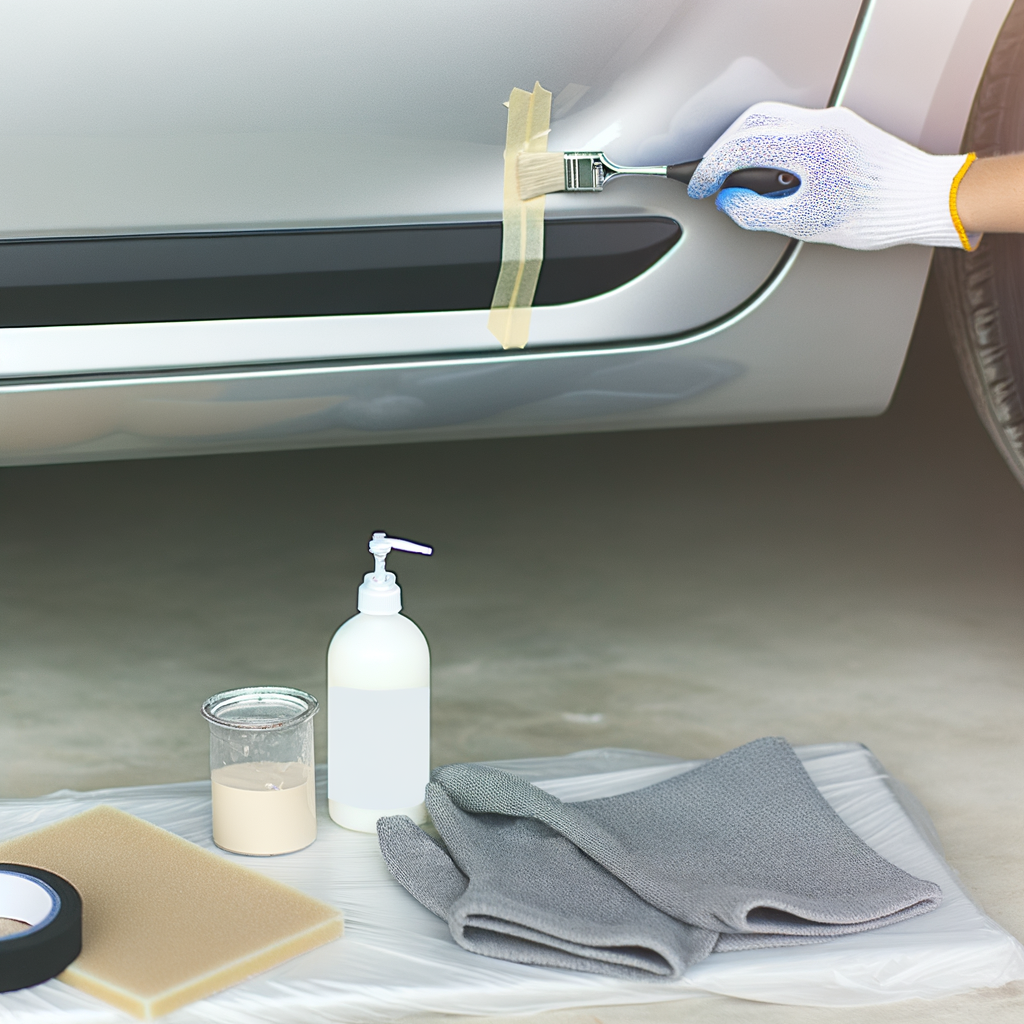
Tools and items needed
- Car wash soap and a bucket
- Microfiber towels (a few)
- Isopropyl alcohol (70% or higher) or a wax and grease remover
- Clay bar kit (optional, helpful for rough paint)
- Masking tape (automotive painter’s tape is best)
- Touch-up paint that matches your paint code
- Clear coat touch-up (if your paint system uses it)
- Fine-tip touch-up brush or touch-up pen (often included)
- Toothpicks (great for tiny chips)
- Nitrile gloves
- Good lighting (a bright work light or sunlight)
- Wet/dry sandpaper: 2000 and 3000 grit (optional, only for leveling)
- Small sanding block or a rubber eraser (optional, for flat support)
- Rubbing compound and polishing compound
- Foam or microfiber applicator pads
- Wax or paint sealant (for later, not same day)
If you like small DIY jobs like this, you may also enjoy DIY door edge guards. They help prevent new paint chips on door edges.
Safety or legal notes
- Work in a ventilated area. Touch-up paint and clear coat have strong fumes.
- Wear gloves. Solvents and paint are harsh on skin.
- Do not smoke or use open flames near paint products.
- Check local rules if you live in an apartment or shared parking. Some places do not allow paint work in lots.
- Do not touch up a leased car without reading your lease terms first.
Numbered touch-up steps
1) Identify the scratch type
Run a clean fingernail across the scratch.
- If your nail does not catch: It may be in the clear coat. You may only need polishing, not paint.
- If your nail catches a little: It may be through clear coat and into color. Touch-up paint can help.
- If you see gray metal or rust: It is deeper. You can still touch it up, but you must cover it well to slow rust.
- If you see plastic (like on a bumper): You can touch it up, but it may not look perfect without more prep.
2) Find your paint code and buy the right paint
Your paint code is usually on a sticker in the driver door jamb, under the hood, or in the trunk area. Buy touch-up paint by code, not by “close enough” color.
Many cars use a base coat (color) plus clear coat. If your touch-up kit includes both, use both.
3) Wash and dry the area
Wash the panel with car soap. Rinse well. Dry with a clean microfiber towel. Dirt left behind will end up in the paint.
4) Decontaminate and wipe with alcohol
If the paint feels rough, use a clay bar kit first. Then wipe the scratch area with isopropyl alcohol on a clean towel. This removes wax and oils so the paint sticks.
5) Mask around the scratch (optional but helpful)
Use masking tape to mark the area. Do not tape right on the scratch. Leave a little space so you can blend and clean up edges.
6) Prep the scratch lightly (only if needed)
If there are sharp, lifted edges around the scratch, the touch-up can sit weird. In that case, you can very lightly smooth the area with 3000 grit wet sandpaper.
- Soak the sandpaper for 10 to 15 minutes.
- Use lots of water.
- Sand gently. A few passes only.
- Stop if you see color coming off around the scratch.
If you are not confident, skip sanding. A careful touch-up with no sanding is safer for beginners.
7) Apply touch-up paint in thin layers
Shake the paint well. Then test on a piece of plastic or cardboard.
- Use a toothpick for tiny chips. Use a fine brush for longer scratches.
- Load a small amount of paint. Do not “paint like a wall.”
- Dot the paint into the scratch. Let it flow and fill.
- Do one thin layer. Let it dry.
Repeat until the scratch is filled close to level. This often takes 2 to 6 layers. Dry time depends on the product and weather. Follow the label times.
8) Apply clear coat (if your kit uses it)
After the color coat is fully dry, apply clear coat the same way. Thin layers are key. Clear coat helps match the shine and adds protection.
Let the clear coat cure. For many products, that means at least 24 hours before you touch it much. Longer is better.
9) Level the repair (optional, only after full cure)
If the touch-up dried as a small bump, you can level it. This step is where beginners make mistakes, so go slow.
- Wait for full cure. Often 48 to 72 hours. Some kits need more.
- Wet sand with 3000 grit using light pressure.
- Sand only the high spot. Stop often and wipe to check.
If you sand too much, you can cut through the clear coat around the repair. If you are unsure, skip leveling and move to gentle polishing later.
10) Polish and blend
Use a small amount of rubbing compound on a foam or microfiber applicator. Work a small area. Use light pressure. Then wipe clean.
Follow with polishing compound to bring back gloss. Clean the area with a fresh microfiber towel.
11) Protect the paint later
Do not wax the repaired spot right away. Fresh paint needs time to gas out. Wait about 2 to 4 weeks, depending on the product, then apply wax or sealant.
While you are doing small car care tasks, it is also a good time to clean battery terminals at home. It is quick and helps prevent starting problems.
Common mistakes
- Using the wrong paint code: The color will look off in daylight.
- Skipping cleaning: Wax and road film cause fish-eyes and poor bonding.
- Putting on thick paint: It blobs up and takes forever to dry.
- Touching the repair too soon: Fingerprints and smears happen fast.
- Sanding too early: Soft paint will tear and look worse.
- Over-polishing edges: You can burn through clear coat on sharp body lines.
- Trying to fix every scratch at once: Start with one small spot and learn.
If your scratch came from a tight interior item like a belt buckle or hard plastic, you might also want to fix loose interior panels. Loose panels can rub and make new marks over time.
Maintenance tips
- Wash by hand with clean mitts. Dirty sponges make new micro-scratches.
- Use microfiber towels and light pressure when drying.
- Keep a small touch-up kit in the garage for new chips. Fresh chips are easier to hide.
- Use door edge protection if you park in tight spaces.
- Keep your tire pressures correct. It helps the car track straight and reduces road spray and grit hitting the sides. You can do a home tire pressure check in a few minutes.
Is it worth it?
For small scratches and stone chips, yes. A DIY touch-up is cheap, fast, and it helps stop rust on exposed metal. It also makes the scratch much less noticeable from a few feet away.
It may not be worth it if the scratch is long, through multiple layers, or on a highly visible flat panel where perfect color match matters. In those cases, a body shop blend can look cleaner. Also, if the panel is already peeling clear coat, touch-up paint will not fix that bigger problem.
Conclusion
Touching up a car scratch at home is a realistic beginner project. Clean the area well, match the paint code, and apply thin layers. Let it dry fully before any sanding or polishing. Even if the repair is not perfect up close, it can protect the panel and make your car look better every day.


