




This post may contain affiliate links. Please read our disclosure and privacy policy for more information.
- 1. Start With Your Car’s Factory Specs
- 2. Understanding Wheel Diameter
- 3. Wheel Width and How It Affects Fitment
- 4. Offset Explained in Simple Words
- 5. Bolt Pattern and Center Bore
- 6. Choosing the Right Tire Size
- 7. Wheel Materials: Cast vs. Flow Formed vs. Forged
- 8. Fitment Styles: Clean, Flush, or Aggressive
- 9. How Lowering Affects Wheel Fit
- 10. Style Options: Picking the Wheel Design
- Final Tips Before Buying
- Related Resources
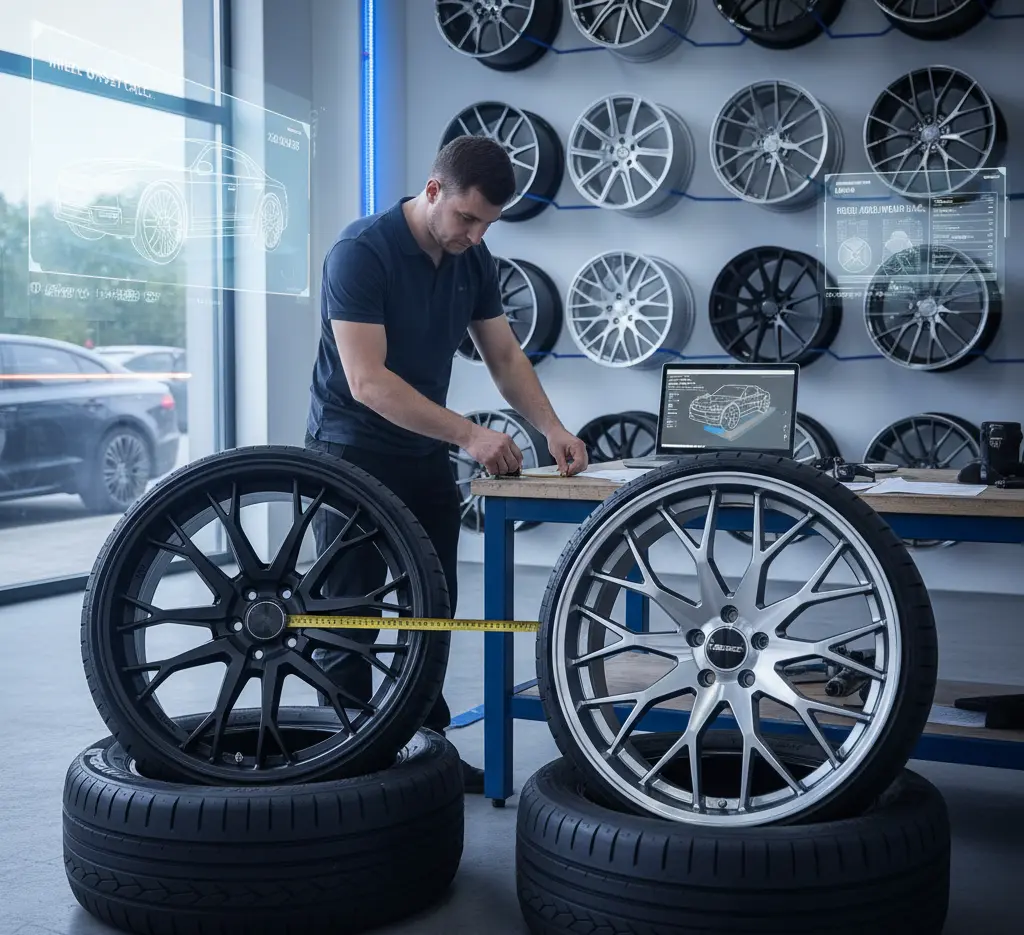
Picking the right wheels is one of the best upgrades you can make to your car. The right set can change the entire look of your ride, improve handling, and even help with acceleration. But choosing wheels is not as simple as picking the design you like. Size, offset, width, and bolt pattern all play an important role. If they do not match your car, you can run into rubbing issues, bad handling, or damaged suspension parts.
1. Start With Your Car’s Factory Specs
Before looking at designs, know your stock wheel specs. Your car came with specific numbers that match the suspension geometry. When you go too far from these numbers, the fitment becomes risky.
Important factory details:
- Wheel diameter (example: 17 inches)
- Wheel width (example: 7.5 inches)
- Offset (example: +45)
- Bolt pattern (example: 5×114.3)
- Center bore
2. Understanding Wheel Diameter
Wheel diameter is the number most people focus on first. Bigger wheels look stylish, but they also come with trade-offs.
Popular choices:
- Sedans: 17 to 19 inches
- Coupes: 18 to 20 inches
- SUVs: 20 to 23 inches
Pros of bigger wheels:
- Sharper look
- Better brake clearance
- More aggressive stance
Cons:
- A heavier weight that can affect acceleration
- More expensive tires
- Less comfort on rough roads
A simple rule is to move one or two inches above the stock. For example, if your car came with 17s, going to 18 or 19 inches usually works well.
3. Wheel Width and How It Affects Fitment
Width plays a big role in how your car handles and how the wheel sits inside the fender. Wider wheels give a sporty look and more grip, but they need the right offset to avoid rubbing.
Common widths:
- Daily drivers: 7.5 to 8.5 inches
- Performance builds: 9 to 10 inches
- Aggressive show builds: 10.5 to 12 inches
4. Offset Explained in Simple Words
Offset is one of the most confusing wheel terms, yet it is one of the most important. Offset controls how far in or out the wheel sits.
Three types of offset:
- Positive offset: Wheel sits more inside the fender
- Zero offset: Middle position
- Negative offset: Wheel sits more outward
If the offset is too low, the wheel may poke out and rub the fender. If it is too high, it can hit the suspension.
A safe way to choose an offset:
- Stay within +5 to –10 of your stock offset
This keeps the wheel sitting close to the original position.
5. Bolt Pattern and Center Bore
Bolt pattern must match exactly. If your car is 5×114.3, you cannot use 5×120 or 5×112.
The center bore should also match so the wheel sits tight on the hub. If it is bigger, you can use hub-centric rings.
These two numbers decide whether the wheels can physically fit on your car, so double check before buying.
6. Choosing the Right Tire Size
After selecting wheel diameter and width, you must pick the right tire size. The wrong size can change your speedometer reading or cause rubbing during turns.
A simple way to find the correct size:
- Google “tire size calculator”
- Enter your stock size
- Enter the wheel size you want
Try to keep the total diameter within 2% of stock. This gives a clean look and keeps your driving safe.
7. Wheel Materials: Cast vs. Flow Formed vs. Forged
Wheels come in three main construction types.
Cast Wheels
- Cheapest
- Heavier
- Good for daily driving
Flow Formed Wheels
- Lighter and stronger
- A nice balance between price and performance
Forged Wheels
- Very strong
- Very light
- Most expensive
If you want performance without spending too much, flow-formed wheels are a great choice. If you want a show-level build, forged wheels give the best premium look.
8. Fitment Styles: Clean, Flush, or Aggressive
Every builder has their own style. The three most popular fitment goals are:
Clean Fitment
- No rubbing. Daily friendly.
- Perfect for people who want a simple look.
Flush Fitment
- The wheel sits right at the fender line.
- Popular among stance fans.
Aggressive Fitment
- Wider wheels and lower offset.
- Looks bold, but rubbing is common.
9. How Lowering Affects Wheel Fit
Lowering your car changes the wheel’s relationship with the fender. Even a small drop can make a perfect fit become a rubbing problem.
If you install coilovers, you get:
- Height adjustment
- Better handling
- A cleaner stance
10. Style Options: Picking the Wheel Design
Once you have the technical numbers sorted out, you can pick the style.
Popular designs:
- Multi spokes for a sporty look
- Deep dish for retro builds
- Mesh designs for classic JDM feel
- Split spokes for modern performance cars
Final Tips Before Buying
- Check test-fit photos of the same wheel size on your car model
- Never guess your offset or width
- Buy quality tires since they affect grip, safety, and handling
- Balance performance with style
- Avoid cheap replicas since they can crack
Choosing the right wheels is a big step in the modding journey. When you match the correct size, offset, width, and design, your car will sit right, drive better, and look perfect on the road.


