




This post may contain affiliate links. Please read our disclosure and privacy policy for more information.
An engine knock at idle can be hard to judge because the car is not under load. Still, a steady knocking or tapping sound at idle is not something to ignore. Sometimes it is something simple like low oil. Other times, it points to internal wear that needs quick attention.
What This Problem Feels Like
You may notice a knocking, tapping, or light thudding sound while the engine is idling in Park or Neutral. It often gets more noticeable when the engine is warm and the oil is thinner.
In many cars, the sound changes with engine speed. A light tick may speed up slightly if you blip the throttle. A deeper knock may become louder as the rpm rises and then fade when you let it settle back to idle.
You might also notice the noise more when standing outside the car with the hood open, or when idling next to a wall or in a garage where sound bounces back.
Is It Safe to Drive?
It depends on the type of knock, but you should treat any new knocking at idle as a warning.
If the noise is light and you have no warning lights, you can usually drive a short distance to a safe place to check oil level and look for obvious issues. Keep rpm low and avoid hard acceleration.
Stop driving and shut the engine off if any of these happen:
- The oil pressure warning light comes on, even briefly
- The knocking suddenly gets louder or turns into a heavy banging sound
- The engine runs rough, stalls, or feels like it is losing power
- You see the temperature gauge climbing higher than normal
If you are unsure, use a cautious approach and follow the basics in Safe to Keep Driving.
Common Causes
These are listed from most common to less common. The goal is to focus on causes that can make a knock appear at idle.
Low engine oil level
Low oil is one of the most common reasons for knocking and tapping noises at idle. At idle, oil pressure is naturally lower than when driving. If the oil level is low, some parts may not get a strong oil film, and you can hear it as ticking or knocking.
Why it happens: Oil leaks, oil consumption, or long intervals between checks. If you regularly have to top off oil, it is worth reviewing signs of Oil loss between changes.
Oil that is too thin, too old, or the wrong type
Oil that is worn out can lose some of its ability to cushion moving parts. Oil that is too thin for the engine can also make idle noises more noticeable, especially when hot.
Why it happens: Extended oil change intervals, the wrong viscosity, or an engine that is sensitive to certain oil specs.
Lifter noise or valvetrain tapping
A common idle noise is valvetrain tapping. Many engines use hydraulic lifters or lash adjusters that depend on clean oil and proper oil pressure. If a lifter is sticky or not pumping up, it can tick at idle and sometimes quiet down as rpm rises.
Why it happens: Dirty oil, varnish buildup, low oil pressure at idle, or normal wear.
Loose or failing belt-driven components
Sometimes what sounds like engine knock is coming from the front of the engine. A worn belt tensioner, idler pulley, alternator bearing, or AC compressor clutch can make a rhythmic knock or tapping sound that is most obvious at idle.
Why it happens: Bearing wear, weak tensioners, or a compressor clutch that chatters.
Exhaust heat shield rattle or exhaust contact
An exhaust heat shield or a loose bracket can make a knocking or ticking sound at idle, especially when the engine is warm. The vibration at idle can shake a loose shield or pipe just enough to tap metal on metal.
Why it happens: Corrosion, broken spot welds, missing hardware, or an exhaust that is touching the body or a crossmember.
Engine mount wear letting the engine bump or shake
Worn mounts can let the engine sit lower or move more at idle. That added movement can cause a dull thump or knock, or it can make other parts touch and create noise.
Why it happens: Age, oil contamination on rubber mounts, or high idle vibration from other causes.
Rod knock or main bearing wear (less common, but serious)
A deeper, heavy knock at idle can be a sign of bearing clearance issues inside the engine. Rod bearing wear often gets louder with light throttle and may be most noticeable when the engine is warm.
Why it happens: Low oil, oil starvation, contaminated oil, or high mileage wear. This is not the most common cause, but it is one of the most important to rule out if the knock is deep and steady.
Quick Checks You Can Do at Home
These checks are beginner-friendly and focus on safety. Avoid putting your hands near moving belts or fans. If you need to look closely, shut the engine off first.
1) Check the oil level and oil condition
Park on level ground, shut the engine off, wait a few minutes, and check the dipstick.
- If the level is below the safe range, do not keep idling the engine. Low oil can quickly turn a minor noise into major damage.
- If the oil looks very dark and thin, or smells burnt, the oil may be overdue or stressed.
If you also see oil spots where you park, it may help to compare symptoms with Oil leak after parking overnight.
2) Listen for where the noise is loudest
With the hood open, try to pinpoint the area without leaning into the engine bay. A phone video can help you compare sound location later.
- Top of engine: More likely valvetrain or lifter noise
- Front of engine: More likely belt, pulley, or accessory noise
- Under the car or near the firewall: More likely exhaust rattle
3) Look for obvious loose heat shields or exhaust contact
With the engine off and cooled down, gently check for loose metal shields or brackets around the exhaust. Do not touch the exhaust when hot.
You are looking for metal pieces that can move and tap. Even a small rattle can sound like a knock from the driver seat.
4) Check for abnormal engine movement at idle
From a safe distance, watch the engine while it idles. A normal engine will move slightly. Excessive rocking can point to worn mounts or an engine that is misfiring and shaking.
If the engine is visibly shaking and the knock seems related to the roughness, the root issue may not be a “knock” at all. Keep the focus on the knocking symptom, but be aware that a rough idle can make other noises stand out.
5) Scan for warning lights and changes in behavior
If the check engine light is on, note whether the engine runs differently. A scan does not diagnose the knock by itself, but it can show if the engine is struggling to idle correctly. For basic context on what a warning light can mean, see check engine light explained.
When This Becomes Serious
Idle-only noises can still be serious because idle is when oil pressure is lowest and the engine is lightly loaded but still moving fast internally.
It becomes urgent when:
- The knock is deep and dull, not a light tick
- The sound gets louder quickly over days or even minutes
- The oil light is on or flickers at idle
- The engine has low power, misfires, or stalls
- You hear the knock along with a drop in oil level
In these cases, continued driving can damage bearings, crankshaft journals, or other internal parts. Once metal-to-metal wear starts, the repair can become much larger.
How a Mechanic Fixes It
A shop will first confirm the noise and separate internal engine knock from external rattles. This matters because many “knocking” complaints end up being exhaust shields or worn pulleys.
Common professional steps include:
- Verify oil level, oil pressure, and oil condition
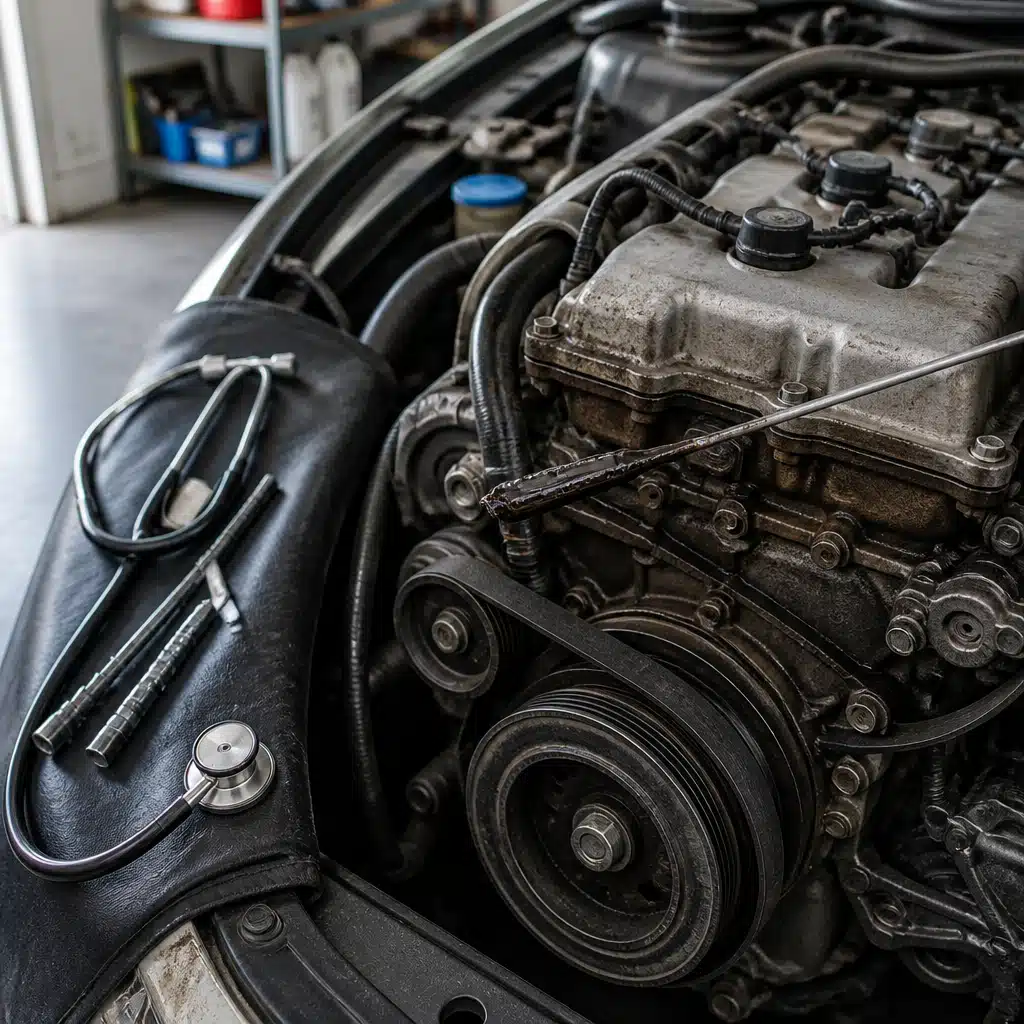
- Listen with a mechanic’s stethoscope at the valve cover, timing cover area, oil pan, and accessories
- Inspect belts, tensioners, and pulleys for play or rough bearings
- Check for exhaust shields, loose brackets, and contact points
- If internal knock is suspected: Measure oil pressure with a mechanical gauge and look for metal in the oil or filter
Depending on the findings, the fix may be as simple as correcting the oil level or replacing a worn pulley. For lifter or valvetrain issues, the repair may involve cleaning-related corrections, parts replacement in the valvetrain, or addressing oil pressure problems. For bearing knock, the repair path can involve internal engine work after confirmation testing.
Common Mistakes to Avoid
- Continuing to idle the engine for long periods while you “listen to it”: If oil pressure is low, idling can make damage worse.
- Assuming all knocks are the same: A light tick and a deep knock can mean very different things.
- Adding random additives without checking oil level first: Low oil cannot be fixed by additives.
- Revving the engine repeatedly to test the sound: Higher rpm can increase load on worn parts and can also hide where the noise is coming from.
- Reaching near belts and fans while the engine is running: Loose clothing and fingers can get pulled in fast.
Related Problems to Watch For
These issues can show up alongside an idle knock, or they can make a normal engine sound seem worse:
- Oil warning light or low oil pressure messages
- Rough idle, shaking, or stalling at stops
- Ticking that is louder on cold start and quiets later
- Burning oil smell or visible oil smoke
- Rattling noise that changes when the AC turns on
If the engine begins stalling at stops, treat it as a separate problem and address it promptly, similar to issues described in engine shuts off at stops.
Final Thoughts
If your engine is knocking at idle, start with the basics: Check oil level and pay attention to warning lights. Then listen for where the sound is coming from and look for simple causes like exhaust rattles or worn pulleys.
If the knock is deep, gets louder, or comes with an oil pressure light or rough running, stop driving and arrange a tow or professional inspection. Catching the cause early is the best way to prevent internal engine damage.


