


This post may contain affiliate links. Please read our disclosure and privacy policy for more information.
A ticking noise from the engine at idle can be harmless, or it can be an early warning sign of wear. The key is to notice when it happens, where it seems to come from, and whether it changes with rpm, temperature, or load.
What This Problem Feels Like
You usually hear a light, fast “tick-tick-tick” when the car is idling in Park or Neutral, or while stopped at a light. It may be louder with the hood open and quieter inside the cabin.
Many drivers notice the ticking most right after a cold start, then it fades as the engine warms up. Others notice it only after a long drive when everything is hot. Some notice it speeds up slightly if they tap the gas, even a little.
Most of the time, the car still drives normally. Power feels the same, the idle may still feel smooth, and no warning lights come on. If the sound is new or getting louder over days or weeks, that matters.
Is It Safe to Drive?
Sometimes yes, but you should treat a new ticking noise as a reason to be cautious. It depends on how loud it is and what else is happening.
Usually OK for short drives to get checked soon if:
- The tick is light and steady
- It goes away (or gets much quieter) once warm
- No warning lights are on
- Oil level is correct and the engine feels normal
Do not keep driving if:
- The ticking suddenly gets loud or becomes a heavy tapping
- The oil pressure warning light comes on
- The engine misfires, shakes, or loses power
- You smell burning oil or see smoke from under the hood
- The tick turns into a knock (deeper sound), especially at idle
If you are unsure whether the sound is ticking or knocking, compare it to symptoms described in engine knocking noise at idle. A knock is generally deeper and more urgent than a light tick.
Common Causes
Here are the most common reasons an engine ticks at idle, listed from most common to less common. Different engines have different “normal” sounds, so the change from your usual baseline matters most.
Low engine oil level
This is one of the first things to suspect. Many ticking noises come from the top of the engine where valve train parts need a steady supply of oil. If the level is low, oil may not reach those parts as well at idle.
Why it happens: Oil slowly burns off in some engines, leaks externally, or was not filled to the right level during service. Short trips can also leave oil dirty and thicker, which can make valve train noise worse at idle.
Oil that is too thin, too thick, or worn out
Even if the level is correct, the wrong oil viscosity can make ticking more noticeable. Old oil can also lose its ability to cushion moving parts, especially when hot. Some engines are picky about oil type, and the wrong choice can make lifters or cam followers noisier at idle.
Why it happens: Incorrect oil used at an oil change, extended oil change intervals, or oil that got diluted by fuel from lots of short trips.
Normal injector ticking
Fuel injectors often make a fast, light ticking. This can be more noticeable at idle because there is less overall engine noise. On many cars this is normal, especially with direct injection engines.
Why it happens: Injectors are fast-acting valves. The click you hear is their normal operation. It often sounds like it is coming from the top of the engine.
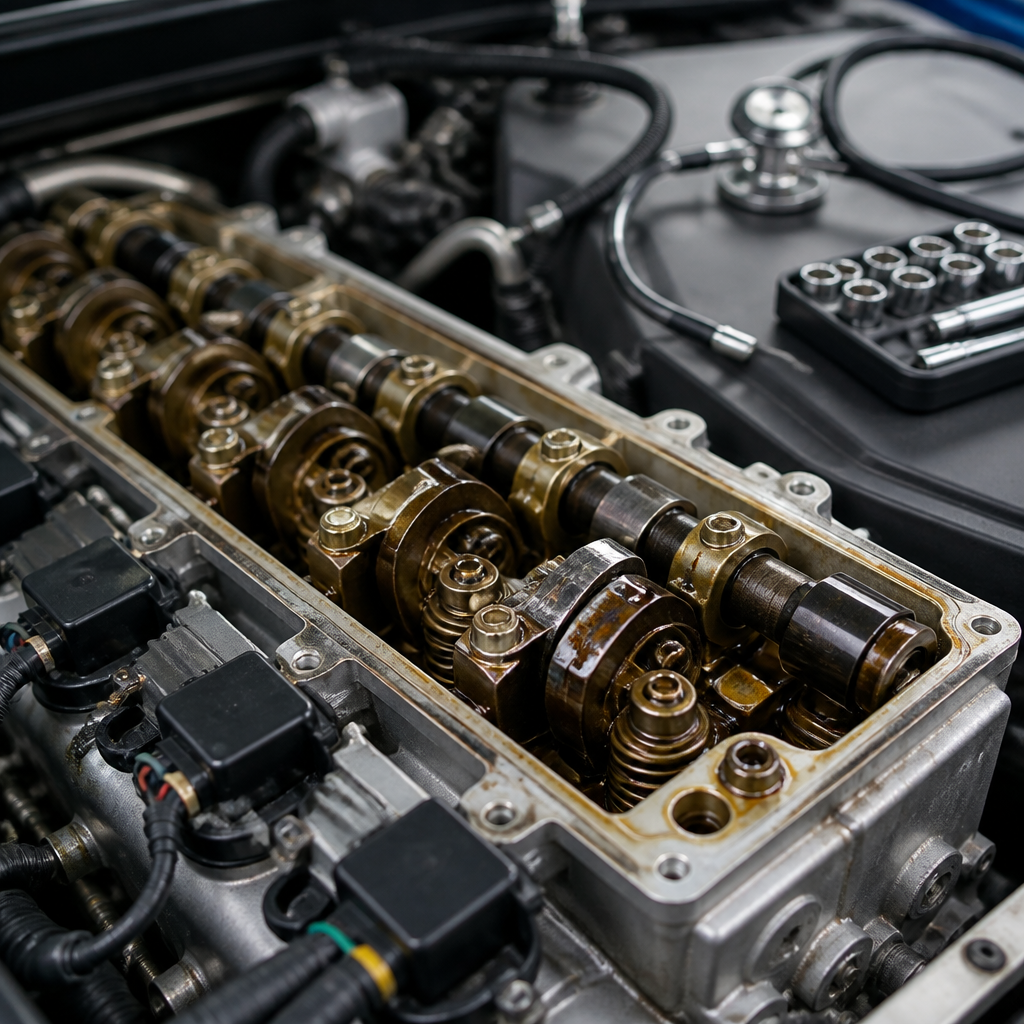
Valve train noise (lifters, lash adjusters, or cam followers)
Hydraulic lifters and lash adjusters use oil pressure to maintain proper clearance. If one is sticking, worn, or not filling with oil quickly, you can get a tick that is more pronounced at idle.
Why it happens: Dirty oil passages, internal wear, low oil pressure at hot idle, or parts that are simply worn with mileage.
Small exhaust leak near the engine
A small leak at the exhaust manifold or a gasket can sound like a ticking or puffing at idle. It is often loudest near the engine bay and may get quieter as the metal heats up and expands.
Why it happens: A cracked manifold, a failing gasket, or loose hardware. Exhaust pulses at idle can create a sharp tick that fools people into thinking it is internal engine noise.
Loose heat shield or bracket
A thin metal shield can vibrate and make a light ticking or metallic tap. Idle vibrations can set it off, and revving slightly may change the rhythm.
Why it happens: Rusted fasteners, missing bolts, or a shield bent close enough to touch another part at idle vibration.
Accessory or pulley noise
Less commonly, a ticking can come from an accessory pulley, belt tensioner, or an alternator clutch pulley. The sound may be more “clicky” or “rattly” near the belt side of the engine.
Why it happens: Bearing wear, a weak tensioner, or a pulley that is starting to fail.
Quick Checks You Can Do at Home
These checks are meant to be safe and simple. Do them with the car parked on level ground. Keep hands, hair, and clothing away from belts and fans when the engine is running.
Check the engine oil level
With the engine off for a few minutes (so oil can drain back), check the dipstick. If it is below the safe range, that alone can explain ticking at idle. If it is very low, do not keep driving until the level is corrected and the cause of the oil loss is understood.
Listen for where the sound is loudest
Open the hood and listen from a safe distance. Try to narrow it down:
- Top of engine: Often valve train or injector noise
- Front/side where the belt is: Possible pulley or tensioner
- Back of engine area: Possible exhaust leak
You do not need special tools to do a basic “location” check, but do not lean near moving parts.
See if it changes with light rpm
From idle, raise rpm slightly for a second or two. A normal injector tick usually speeds up smoothly with rpm. A loose heat shield may buzz or rattle in a narrow rpm range. Valve train ticking often becomes faster with rpm, but may get quieter if oil pressure rises.
Look for obvious exhaust leakage signs
With the engine cold, look around the exhaust manifold area (as visible) for black soot marks, which can point to a leak. Do not touch hot exhaust parts. If you smell exhaust in the engine bay or cabin, treat it seriously.
Check for loose metal shields
With the engine off and cool, lightly wiggle any reachable heat shields. If one is loose, it can mimic an engine tick at idle. Do not crawl under a car supported only by a jack.
When This Becomes Serious
A ticking noise is more concerning when it changes fast or comes with other symptoms. Pay attention to these warning signs:
- The ticking gets louder week to week
- The tick turns into a deeper knock or thud
- Idle becomes rough, or you feel shaking
- You see the oil pressure light, even briefly
- The sound is loudest after the engine fully warms up
- You find metal flakes in oil, or the oil looks glittery on the dipstick
If the oil pressure light appears, shut the engine off as soon as it is safe. Driving with low oil pressure can damage bearings and cam parts quickly.
How a Mechanic Fixes It
A shop will first confirm whether the noise is normal (like injector tick) or a sign of wear. They will also try to pinpoint the area and conditions where it happens.
Common professional steps include:
- Verify oil level, oil condition, and correct oil spec for the engine
- Check for oil pressure issues with a mechanical gauge if needed
- Use a mechanic’s stethoscope to isolate the tick (valve cover area, injectors, accessories, exhaust)
- Inspect for exhaust leaks at the manifold and nearby joints
- Inspect belt drive components for pulley or tensioner noise
- If valve train noise is suspected: Inspect for worn lifters, lash adjusters, cam followers, or related parts (engine-specific)
The actual fix depends on the cause. It might be as simple as correcting oil level or using the correct oil at the next service. It could also involve replacing a leaking exhaust gasket, securing a heat shield, or repairing worn valve train parts if there is confirmed wear.
Common Mistakes to Avoid
These are the pitfalls that often make the problem worse or delay a real diagnosis:
- Ignoring the oil level because the car “still runs fine”
- Continuing to drive with an oil pressure warning light on
- Assuming all ticking is normal injector sound without checking basics
- Revving the engine repeatedly to “see what happens” when the cause is unknown
- Using random additives as a first move instead of verifying oil type, level, and pressure
If you recently bought the car and you are sorting out its maintenance history, it helps to stay alert for other signs of neglect. A quick scan of Signs of poor maintenance can help you spot patterns that go with noises like this.
Related Problems to Watch For
Keep this focused on the ticking, but be aware of nearby clues that can point to the direction of the fault:
- Low oil between oil changes or oil spots where you park
- Exhaust smell under the hood or inside the car at idle
- A louder noise on cold start that slowly calms down
- White smoke at startup, which can point to other engine issues: See white smoke from exhaust
- Rough idle or shaking that starts along with the tick (a separate symptom that needs its own diagnosis)
If you like keeping the engine bay clean for easier spotting of oil seepage or loose shields, do it safely and gently. engine bay cleaning for beginners covers smart basics without overdoing water around electronics.
Final Thoughts
A ticking noise at idle is often linked to oil level, oil condition, normal injector operation, or small leaks and vibrations around the engine. Start with the simple checks: Oil level, where the sound is loudest, and whether it changes hot vs cold.
If the noise is new, getting louder, or comes with an oil pressure warning light, rough running, or a deeper knock, stop driving and have it inspected. Catching the cause early is the best way to avoid turning a small tick into major engine damage.


