


This post may contain affiliate links. Please read our disclosure and privacy policy for more information.
Losing power only when climbing hills usually means the engine cannot make enough power under heavy load. On flat roads it may feel fine, but as soon as the car has to work harder, something in the air, fuel, spark, or exhaust side falls behind. The good news is that many causes are common and fixable, and a few simple checks can help you decide how urgent it is.
What This Problem Feels Like
Most drivers describe it as the car “running out of breath” on inclines. You press the gas, but the car does not respond the way it normally does. Speed drops off, and you may need to press the pedal much farther than usual.
Common things you may notice:
- Slow acceleration only on hills or when merging uphill
- Frequent downshifts in an automatic, or needing to shift down in a manual
- Engine RPM rising but the car not gaining speed as expected
- Possible shaking or a light stumble with heavy throttle
- Check engine light may be on or may come on only during hard pulls
On many cars, the problem feels worse with passengers or cargo, or with the air conditioning on. That is a strong clue that the issue shows up under load.
Is It Safe to Drive?
If the car still accelerates, just slowly, it is often safe for short, low-stress driving. But hills are where you can get into trouble fast because you may not be able to keep up with traffic.
Driving is usually not safe if any of these happen:
- The car cannot maintain speed on moderate hills and traffic is stacking behind you
- The engine is misfiring hard, shaking, or the check engine light is flashing
- You smell raw fuel, a strong sulfur or rotten egg smell, or something burning
- The car goes into limp mode and will not rev past a certain point
- Power loss is getting worse quickly over a day or two
If you have to floor it just to climb a hill, treat it as a safety issue. Pick routes without steep grades and get it checked soon.
Common Causes
These are listed from most common to less common. The key idea: Hills demand more air, more fuel, and strong ignition. Anything marginal shows up there first.
Dirty air filter or restricted intake
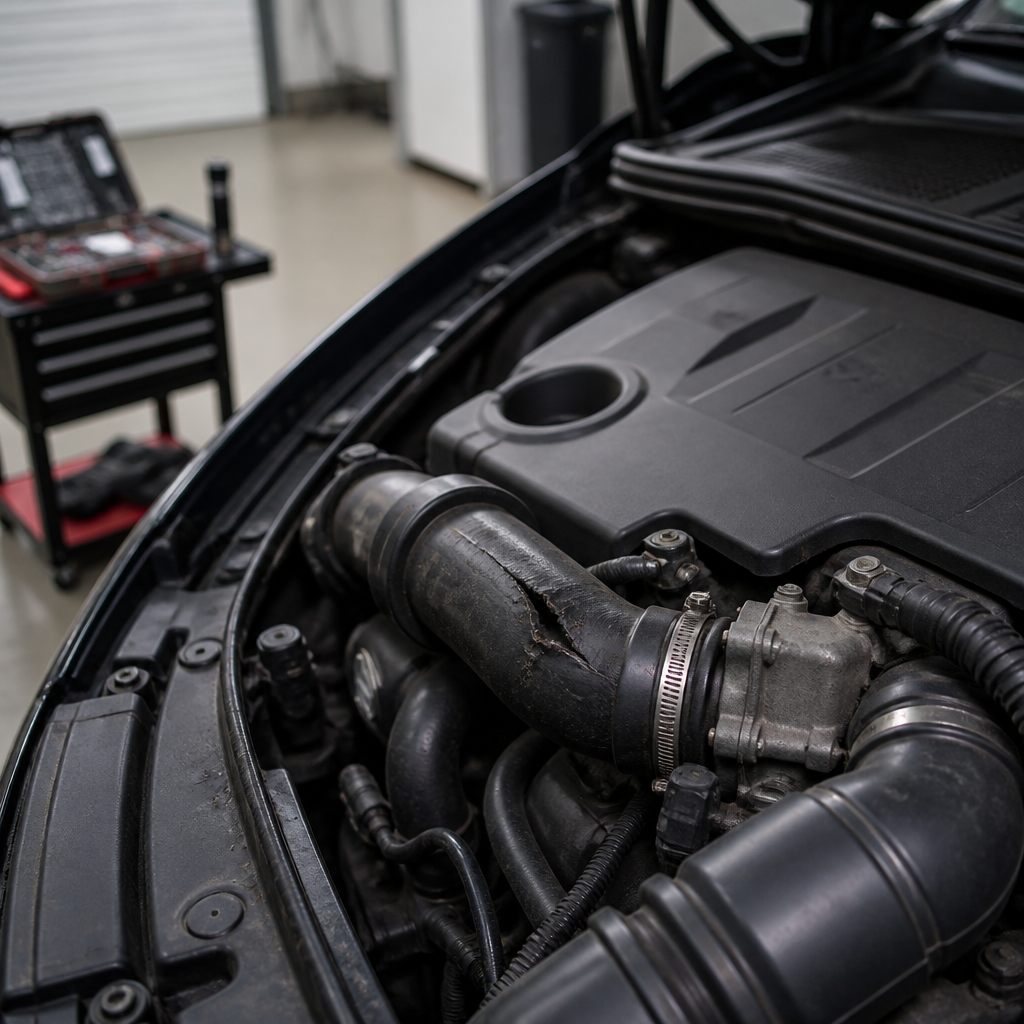
If the engine cannot breathe freely, it cannot make power under load. A clogged engine air filter, a collapsed intake hose, or heavy buildup in the throttle body can reduce airflow. On flat roads you may not notice much, but on hills it can feel like the engine is being held back.
Weak ignition: Worn spark plugs or failing coils
Ignition problems often show up under load because the spark has to jump a tougher gap when cylinder pressure is higher. Worn plugs, incorrect plug gaps, weak coil packs, or damaged plug boots can cause a misfire you feel mainly on hills. Sometimes you will feel a “bucking” or hesitation. Sometimes it just feels weak.
If the check engine light flashes while climbing, treat that as urgent. A hard misfire can damage the catalytic converter.
Fuel delivery problems
Climbing hills needs more fuel. If fuel pressure or flow is low, the engine will feel starved under load. Common reasons include:
- Partially clogged fuel filter (on vehicles that have a serviceable one)
- Weak fuel pump
- Dirty injectors
- Low fuel pressure from a failing pressure regulator (where applicable)
This can feel like the car pulls for a moment, then falls flat as you press harder. Some cars will also surge.
Mass airflow sensor or manifold pressure sensor problems
Modern engines depend on airflow and pressure readings to calculate fuel delivery. If the MAF sensor is dirty or failing, or if the MAP sensor is giving wrong readings, the engine may run too lean or too rich under load. That can cause weak power uphill, sometimes with a hesitation when you tip into the throttle.
A vacuum leak can also interfere with these readings. Small leaks might not show much at idle, but they can still cause poor performance when the engine is working.
Restricted exhaust or failing catalytic converter
A partially plugged catalytic converter can act like a blockage in the exhaust. The engine can idle and cruise, but under load it cannot push exhaust out quickly enough, so it cannot make power. Hills often make this very obvious.
Common clues include: Power drops off the longer you climb, the engine feels hot, and you may smell sulfur. Sometimes the car will not rev freely in park or neutral either.
Transmission slipping under load
Sometimes the engine is fine, but the transmission cannot transfer power to the wheels. If RPM rises but road speed does not follow, the transmission may be slipping. This can show up most clearly on hills because that is when the drivetrain is under the most strain. If this matches what you feel, you may also notice delayed engagement or odd shifting.
Related: Transmission slipping causes can help you decide what signs matter most.
Overheating or heat-soak reducing power
Hills raise engine and under-hood temperatures. If the cooling system is marginal, or if intake air temps get very high, the engine computer may reduce power to protect the engine. You might see the temperature gauge creeping up, or power fading after a few minutes of climbing.
Quick Checks You Can Do at Home
These checks are simple and low risk. Do them with the engine off and cool when needed. If you are not comfortable, skip them and book a shop visit.
Look for basic airflow restrictions
- Check the air filter. If it is dark, packed with debris, or very old, replace it.
- Inspect the intake tube from the air box to the engine for cracks, loose clamps, or a collapsed section.
- Make sure nothing is blocking the air box inlet.
Check for warning lights and stored codes
If the check engine light is on, scan for codes with a basic OBD2 scanner. Codes do not “diagnose” the car by themselves, but they point you in the right direction, especially for misfires, airflow sensors, and fuel trim issues.
Notice when it happens
Write down a few details:
- Does it happen only with the A/C on?
- Does it get worse after 10 to 15 minutes of driving?
- Does it happen only at high speeds, or even on slow hills?
- Does the engine shake, or does it just feel weak?
This helps a technician avoid guesswork.
Do a quick under-hood visual check
- Look for disconnected vacuum hoses or obvious broken plastic lines.
- Check for oil or water intrusion around ignition coils, if they are easy to see.
- Make sure the electrical connectors on sensors near the intake are fully seated.
Check transmission fluid condition if applicable
If your vehicle has a dipstick and the manual allows checking it, verify the fluid level and look at the fluid condition. Low fluid can contribute to slipping and poor hill performance. If the transmission is sealed or has a specific procedure, do not guess.
When This Becomes Serious
Power loss on hills turns serious when it creates traffic risk or points to damage that can spread.
Get the car inspected soon if:
- The check engine light flashes during climbs
- The car hesitates hard, bucks, or misfires under load
- Power fades more as the drive goes on
- You smell sulfur, burning, or fuel
- You cannot maintain safe speed on normal grades
If you also notice other vibrations at speed, that is usually a separate issue, but it can add to the feeling that the car is struggling. For example, car shakes at highway speeds is not the same problem, but it can make long climbs feel worse.
How a Mechanic Fixes It
A professional diagnosis focuses on what changes under load. A good shop will road test the car on a hill or use live data to simulate load.
Common professional steps include:
- Scan for codes and review live data, especially fuel trims, misfire counters, airflow readings, and load values
- Check ignition parts and confirm proper spark under load, replacing plugs or coils as needed
- Test fuel pressure and fuel volume, and verify injector operation
- Smoke test the intake system to find vacuum leaks
- Check exhaust backpressure or catalytic converter performance if restriction is suspected
- Evaluate transmission operation and fluid condition if slipping is suspected
If the issue is a restricted converter, the fix is not just clearing codes. The restriction has to be confirmed and corrected. If the issue is fuel delivery, the shop will confirm pressure and flow before replacing parts.
Common Mistakes to Avoid
- Replacing parts based only on a guess. Hills reveal problems, but several systems can cause the same feeling.
- Ignoring a flashing check engine light. That can mean an active misfire that can overheat the catalytic converter.
- Cleaning sensors aggressively. Some sensors are fragile and can be damaged by the wrong cleaner or touching the element.
- Assuming it is “just the transmission” because RPM rises. Misfires and fuel starvation can also make the engine flare and feel unstable.
- Continuing to floor it up hills. Extended heavy throttle can turn a mild issue into a breakdown.
Related Problems to Watch For
These can show up along with hill power loss, and they help narrow down the direction of the problem:
- Ticking or tapping noises at idle that were not there before, which can point to engine wear or valve train issues: Engine ticking noise causes
- White smoke on startup, which can point to coolant or oil issues and can reduce power if the engine is not healthy: white smoke from exhaust
- Brake shake when you slow down after a long climb, often heat-related and separate from power loss: steering wheel vibration when braking
If any of these appear at the same time, mention them to the shop. They may not be caused by the same fault, but they provide useful context.
Final Thoughts
If your car loses power only when climbing hills, treat it as a load-related performance problem: The engine or drivetrain cannot keep up when demand rises. Start with the simple checks like the air filter, obvious intake leaks, and any stored trouble codes. Avoid hard uphill drives until you know what is going on, especially if the check engine light flashes or the car cannot hold speed. If the problem repeats, book a diagnostic visit and describe exactly when it happens: That is the fastest path to a correct fix.


