


This post may contain affiliate links. Please read our disclosure and privacy policy for more information.
A steering wheel that shakes when you brake is one of the most common vibration complaints. Most of the time it comes from the front brakes or front suspension parts reacting to braking force. The key is to treat it as a safety issue until you know what’s causing it.
What This Problem Feels Like
You press the brake pedal and the steering wheel starts to wobble or shimmy. It may feel like a back-and-forth shake in your hands, or a fast vibration that gets worse as you slow down.
Many drivers notice it most at higher speeds, like braking off the highway or coming down a long hill. Light braking may feel pretty normal, but firmer braking makes the shake obvious.
You might also notice:
- The shake is strongest in the steering wheel, not the seat.
- The brake pedal may pulse lightly at the same time.
- The problem can come and go depending on speed and how hot the brakes are.
If the whole car shakes more than the steering wheel, that points more toward a different vibration source. If you feel that too, it can help to compare symptoms with car shakes at highway speeds, but the classic “steering wheel shake only when braking” usually starts at the front brakes.
Is It Safe to Drive?
Sometimes it’s safe for a short, careful drive to a shop, but you should treat it as a warning.
It’s usually safer to drive if:
- The shaking is mild and only happens during firm braking from higher speeds.
- The car still stops straight without pulling left or right.
- You don’t hear loud grinding or metal-on-metal scraping.
Do not keep driving if:
- The steering wheel shakes violently or the car feels unstable.
- The car pulls hard to one side when braking.
- You hear grinding, clunking, or banging when you brake.
- The brake pedal feels very soft, drops lower than normal, or braking power changes suddenly.
- A brake warning light is on.
If the pedal itself feels weak or squishy, that can be a separate problem from the shake. In that case, treat it as urgent and compare the feel to brake pedal feels spongy.
Common Causes
Below are the most common reasons, listed from most likely to less likely.
Front brake rotors with thickness variation or hot spots
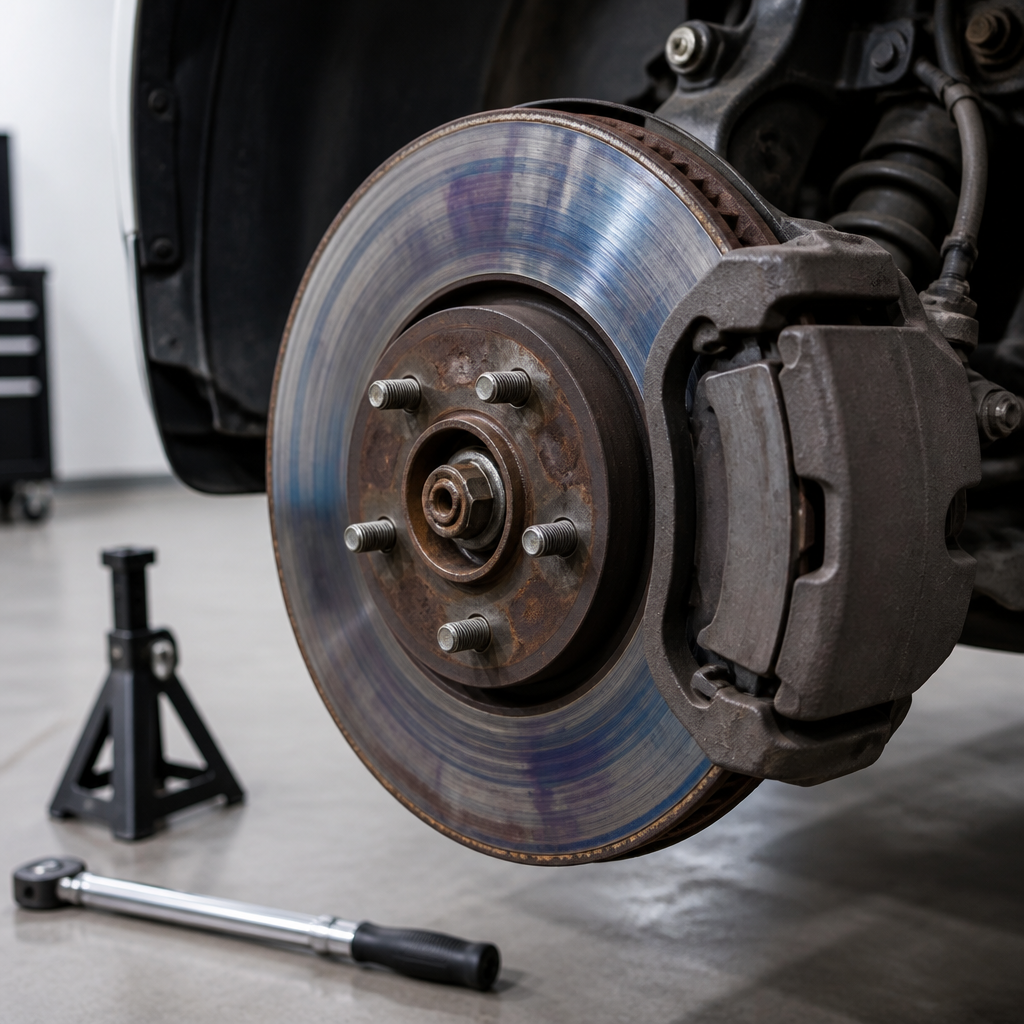
This is the number one cause. People often call it “warped rotors,” but the shake usually comes from uneven rotor thickness or uneven friction on the rotor surface. When the pads clamp down, the braking force rises and falls as the rotor turns, and that pulse travels right into the steering wheel.
Why it happens:
- Braking hard repeatedly, especially downhill or towing.
- Holding the brake pedal firmly at a stop after a hard stop (can leave a pad imprint on a hot rotor).
- Cheap rotors or pads that don’t handle heat well.
- Improper lug nut tightening that stresses the rotor hat.
Brake pads unevenly worn or contaminated
If pads are worn unevenly, glazed from heat, or contaminated (oil, grease, brake fluid), they can grab and release instead of braking smoothly. That can feel like a steering shake, especially if it’s combined with rotor surface issues.
Why it happens:
- Caliper or slide pins not moving freely.
- Overheating from aggressive driving or dragging brakes.
- Fluid or grease leaking onto the pad or rotor.
Sticking front brake caliper or sticking slide pins
A caliper that doesn’t release smoothly can keep one pad dragging on the rotor. That overheats the rotor and creates uneven friction, which leads to shaking during braking.
Other clues:
- One front wheel has much more brake dust than the other.
- The car may pull slightly while braking.
- You may smell hot brakes after a normal drive.
Loose or worn front suspension or steering parts
Braking shifts weight forward and loads the front suspension. If a tie rod end, ball joint, control arm bushing, or wheel bearing has play, braking can trigger a shimmy that you don’t feel when cruising.
Why it happens:
- Normal wear, especially on higher-mile vehicles.
- Pothole impacts bending or loosening components.
- Prior alignment issues that stressed parts.
Wheel lug nuts unevenly tightened or wheel/rotor mounting rust
If lug nuts were run on unevenly with an impact gun, the rotor can sit slightly distorted on the hub. Rust scale between the rotor and hub can also prevent the rotor from sitting flat. Either issue can create a braking pulse and steering shake.
This often shows up soon after tire rotation or brake work.
Out-of-balance or damaged front tires (less common for braking-only shake)
Tires that are out of balance usually shake while cruising, not just while braking. But a tire with a separated belt or a bent wheel can add to braking shake and make it feel worse.
Quick Checks You Can Do at Home
These checks are meant to be safe and basic. If you need to lift the vehicle, use proper jack stands on a solid surface. If you are not set up for that, skip lifting and let a shop handle it.
Pay attention to when it happens
- If it happens mostly at higher speeds during braking: Rotors or front suspension are likely.
- If it gets worse after a long downhill or repeated stops: Heat-related brake issues are likely.
- If it started right after tire work: Lug nut torque or rotor seating is likely.
Look through the wheel at the rotor surface
With the car parked and cooled down, look at the front rotors through the wheel openings. You’re looking for obvious signs like deep grooves, heavy rust scaling, or blue/purple discoloration (overheating). You won’t always see rotor thickness variation with your eyes, but heavy heat marks can be a clue.
Check for obvious looseness (no lifting required)
With the car in park, gently rock the steering wheel left and right a small amount while watching the front wheels. If you hear clunking from the front end or see a delay before the wheels respond, there may be steering play that braking makes worse.
Check wheel lug nuts for “something changed”
If the shake started after recent work, double-check that all lug nuts are present and seated. If you have a torque wrench and know the correct spec for your car, you can verify torque when the wheels are cool. Do not guess by feel.
After a normal drive, do a cautious heat check
Without touching the wheels or brakes, feel near each front wheel for excess heat. One wheel radiating much more heat than the other can point to a sticking caliper. Keep your hands away from the wheel and brake parts. They can be hot enough to burn.
When This Becomes Serious
This problem becomes more than an annoyance when braking control is affected or parts are wearing rapidly.
Get the car checked soon if:
- The shake is getting worse week to week.
- You feel pulsing that’s strong enough to change your stopping distance.
- You feel a new pull to one side under braking.
- You smell burning after normal stops.
- You hear grinding or a rough scraping sound.
Also take it seriously if the steering wheel shake is paired with clunks over bumps or loose steering feel. That can mean worn front suspension parts, which can affect control even when you’re not braking.
How a Mechanic Fixes It
A shop will usually confirm the cause with a road test first, then inspect the brakes and front end.
Common professional steps include:
- Measure rotor runout and rotor thickness variation with proper tools.
- Inspect brake pads for uneven wear, glazing, or contamination.
- Check caliper operation, slide pin movement, and piston condition.
- Clean the hub mounting surface so the rotor sits flat.
- Verify wheel lug torque and wheel condition.
- Inspect front suspension and steering joints for play under load.
Typical fixes, depending on what’s found:
- Replace front rotors and pads as a matched set.
- Service or replace calipers if they stick or slide hardware is seized.
- Correct rotor-to-hub mounting issues and torque wheels properly.
- Replace worn suspension parts (like control arm bushings or tie rod ends) and align the car afterward if needed.
After brake work, many shops do a controlled break-in procedure for pads and rotors. That helps prevent uneven friction from coming back.
Common Mistakes to Avoid
- Replacing pads only and reusing rotors that are already causing vibration: The shake often returns quickly.
- Assuming it’s “just ABS”: ABS can pulse the pedal during hard stops on slippery roads, but it won’t cause a steady shake every time you brake on dry pavement.
- Over-tightening lug nuts with an impact gun: Uneven torque can trigger rotor issues.
- Ignoring a sticking caliper: It can overheat parts, damage the rotor, and reduce braking ability.
- Mixing low-quality parts with heavy driving: Brakes that run hot need parts that can handle heat.
Related Problems to Watch For
These don’t change the main diagnosis, but they can show up alongside the shake and help a mechanic pinpoint the cause.
- Brake pedal pulsation without steering shake: Often rear rotor/drum issues or ABS activation, depending on when it happens.
- Steering pull when braking: Can point to a sticking caliper or uneven brake force side to side.
- Vibration while cruising: More likely tire balance, wheel damage, or tire issues than brakes. If you feel it at speed even without braking, compare it to highway speed vibration causes.
- Noises like clunks during braking: Can suggest worn suspension bushings or loose hardware.
If you’re also tracking other maintenance-related issues, it can help to be aware of Common car maintenance mistakes that lead to repeat problems, like skipped brake hardware service or incorrect wheel tightening.
Final Thoughts
If your steering wheel shakes when braking, start by treating it as a brake or front-end warning. Drive gently, leave extra stopping distance, and avoid high-speed braking until it’s checked.
If the shake is mild and the car stops straight, schedule an inspection soon. If the shake is strong, braking feels uneven, the car pulls, or you hear grinding, stop driving and have it towed to a shop. Brakes and steering problems can get worse fast, and this is one symptom you should not ignore.


