




This post may contain affiliate links. Please read our disclosure and privacy policy for more information.
Getting new tires sounds simple, but the total time can vary a lot. Sometimes you are in and out in under an hour. Other times you may wait days, especially if the shop has to order a special size. Knowing what affects the timeline helps you plan your day, avoid surprises, and stay safe on the road.
What the concept is
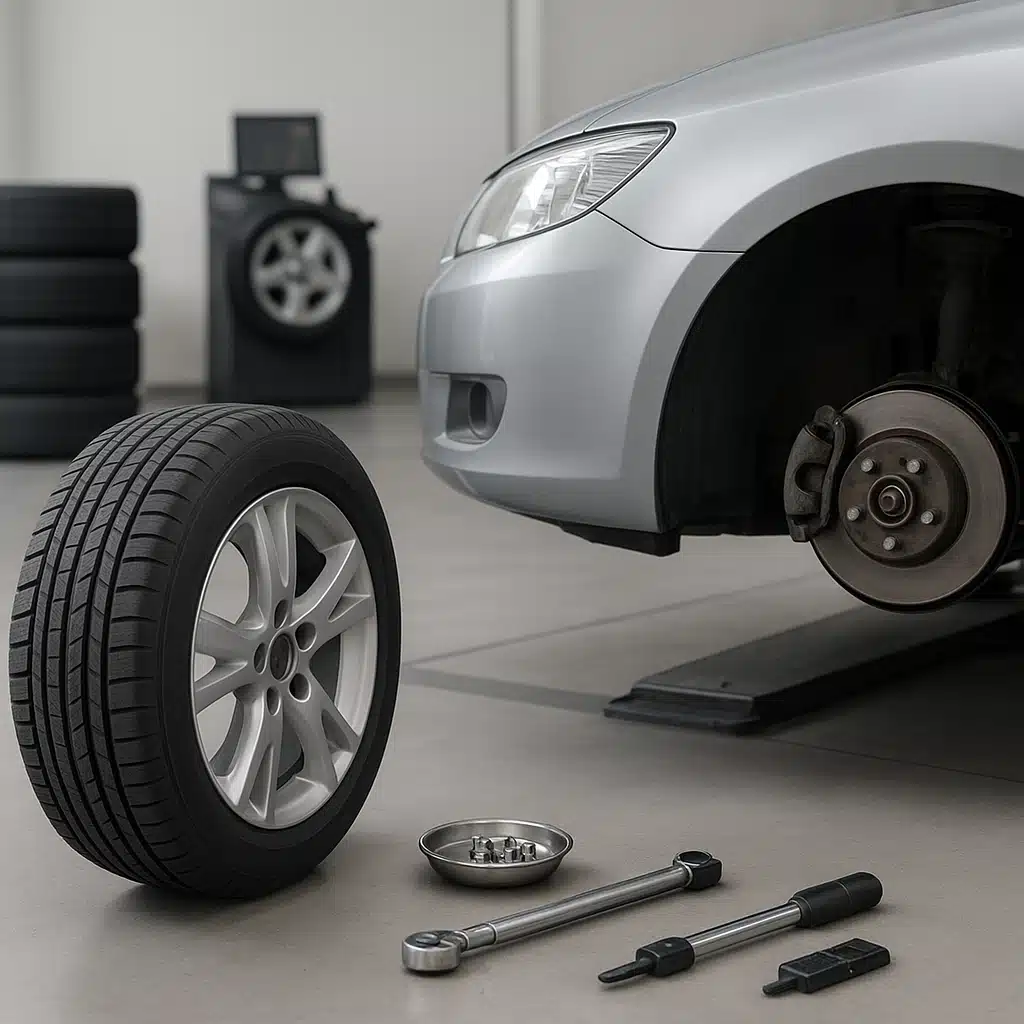
“Getting new tires” means replacing one or more tires on your wheels. The shop removes the old tires, installs the new ones, fills them to the correct air pressure, and balances them so they roll smoothly. In many cases, the shop also checks the valve stems, tire condition, and the overall wheel and tire fitment.
Depending on the situation, “getting new tires” can also include extra work like a wheel alignment, replacing damaged wheels, or setting up tire pressure sensors (TPMS). The more extra steps involved, the more time you will spend at the shop.
Why people do it
Drivers replace tires for a few common reasons:
- Tread is worn down and grip is poor in rain or snow.
- A tire has damage like a sidewall bulge, a bad puncture, or dry cracking.
- The tires are old and rubber is hard, even if tread still looks OK.
- They want a different tire type for their driving, like quiet highway tires or winter tires.
- They changed wheel size or fitment, so the old tires no longer match.
Picking the right tire can also affect timing. If your size is common, it may be in stock the same day. If it is rare, it may need shipping. If you are still deciding, a quick look at how to choose car tires can help you narrow it down before you call the shop.
Things to know before starting
Before you book an appointment or show up, it helps to know what can increase or reduce the time.
Your tire size and load rating
The shop needs the exact size and proper load index and speed rating. These are printed on the tire sidewall. If the shop has to double-check fitment or order a special rating, it adds time. If you also changed wheels, offset or clearance issues can also slow things down. If you are working with non-stock wheels, understanding Wheel offset explained can prevent fitment surprises that lead to delays.
In-stock versus special order
If tires are in stock at the shop or local warehouse, you might get them the same day. If not, shipping can take from one day to over a week. This depends on your location, the tire size, and how busy the supplier is.
Appointment timing and shop workload
A weekday morning appointment often moves faster than a weekend walk-in. Some shops schedule by time. Others take cars in order. If you arrive during peak hours, your car may sit before work begins.
Condition of your wheels and lug nuts
Stuck lug nuts, stripped studs, locking wheel nuts with a missing key, or damaged wheels all add time. Corrosion can make removal harder. If the shop needs to replace studs or nuts, the job can go from quick to complex.
Extra services you may need
Common add-ons include:
- Wheel alignment after installing tires
- TPMS sensor service or relearn
- New valve stems
- Road force balancing (for vibration issues)
These can be good ideas, but they change the timeline. Alignment is a common one that adds time because it requires separate equipment and setup.
Step-by-step explanation
Below is how the process usually goes, and about how long each part takes. Times are typical for a standard passenger car with four tires.
1. Confirm tire specs and availability: 5 to 20 minutes
The staff confirms size, load rating, and speed rating. They also confirm if tires are in stock. If your tires are already at the shop and you have an appointment, this step is quick. If you are choosing between options, it takes longer.
2. Vehicle check-in and wheel inspection: 5 to 15 minutes
The tech checks the wheels for bends, cracks, and obvious damage. They may note uneven wear patterns. If your old tires show issues like inner-edge wear, it may point to an alignment problem or suspension wear. Knowing basic suspension terms can help you understand what the shop is telling you, like in Car suspension basics.
3. Remove wheels from the car: 10 to 20 minutes
The car goes on a lift. The wheels are removed. This step only takes a long time if lug nuts are stuck, over-tightened, or damaged.
4. Remove old tires and mount new tires: 20 to 45 minutes
The old tires come off the wheels using a tire machine. The new tires are installed, seated, and inflated. If the wheels have TPMS sensors, the tech works carefully to avoid damage. Low-profile tires or stiff sidewalls can take longer.
5. Balance each wheel: 20 to 40 minutes
Balancing adds small weights so the tire and wheel spin evenly. This step matters for comfort and safety. If you have a vibration problem and the shop uses road force balancing, it may add extra time, but it can help find difficult balance issues.
6. Reinstall wheels and torque lug nuts: 10 to 20 minutes
The wheels go back on the car. Lug nuts are tightened in a pattern and torqued to spec. A careful torque step helps prevent warped brake rotors and makes later removal easier.
7. Set tire pressure and TPMS setup: 5 to 20 minutes
The shop sets tire pressure to the vehicle’s door-jamb sticker specs, not the tire sidewall max. Some vehicles need a TPMS reset or relearn procedure. On some cars this is quick. On others it takes longer or needs a scan tool.
8. Optional alignment: 45 to 90 minutes
If you also get an alignment, plan for at least another hour. The shop may suggest it if your old tires wore unevenly, if you hit a big pothole, or if you installed suspension parts. Skipping alignment when it is needed can ruin new tires fast, which can also make reasons tires are expensive feel even more painful later.
Total time at the shop: Common ranges
- Fast visit with appointment and in-stock tires: 45 to 90 minutes
- Busy day or walk-in: 1.5 to 3 hours
- With alignment: 2 to 4 hours
- Special order tires: 1 to 10 days before installation time
Common mistakes to avoid
- Waiting until tread is almost gone: This can force a rushed choice and reduce safety in wet weather.
- Ordering the wrong size: One digit off can cause rubbing, warnings, or handling problems.
- Replacing only one tire on an axle without checking the other side: Mismatched tread and tire type can affect braking and stability.
- Skipping balancing: It can lead to steering wheel shake and faster wear.
- Ignoring uneven wear: If the old tires wore unevenly, the problem can come back on the new set.
- Forgetting the wheel lock key: Missing keys can delay the job or lead to extra labor to remove locks.
Safety and legal considerations
Tires are a safety part, so a few points matter more than speed.
- Use tire specs that meet your vehicle requirements: Load rating and speed rating should match the car’s needs.
- Keep tread above legal limits: Many places use 2/32 inch as the minimum, but grip in rain drops earlier than that.
- Match tires on the same axle: Different sizes or types can hurt stability and can confuse traction and ABS systems.
- Avoid driving on a damaged tire: Sidewall bubbles, cords showing, or large cuts are not safe to “wait out” until an appointment.
If you drive an AWD vehicle, tire matching is even more important. Different tire diameters can stress the drivetrain. If you want a simple overview of AWD basics, AWD or FWD explained helps clarify why tire differences matter.
Final practical advice
If you want the fastest tire replacement, book an appointment, confirm the tires are physically at the shop, and show up with your wheel lock key. Plan on 1 to 2 hours for a normal install, and add at least an hour if you also want alignment.
After installation, recheck tire pressure when the tires are cold, and follow any TPMS reset steps your vehicle needs. Also, re-torque lug nuts after about 50 to 100 miles if your shop recommends it. That small step can prevent problems later.
If you are trying to get new tires quickly because something feels wrong while driving, slow down and do a quick visual check first. A bulge, a large cut, or cords showing means you may need a tow or a spare before you head to the shop.


