


This post may contain affiliate links. Please read our disclosure and privacy policy for more information.
A car that surges while cruising at a steady speed can feel like it cannot “hold” a constant pace. The engine may lightly rise and fall in power even though your foot stays still. This usually points to a fuel, air, or ignition control problem that shows up most when the engine is under light load.
What This Problem Feels Like
Surging at steady speed is a repeating, gentle push and release. Many drivers describe it as a small “wave” in power. It often happens around 30 to 60 mph, or at a steady rpm on the highway.
You may notice one or more of these signs:
- The tachometer moves up and down slightly while your foot stays steady.
- The car cannot maintain speed on level ground without you constantly adjusting the pedal.
- Surging is worse when the engine is warm.
- It happens most in a higher gear at light throttle.
- You may feel a mild shudder, but not a violent shake.
Sometimes the check engine light is on. Other times there are no warning lights at all.
Is It Safe to Drive?
Light surging that stays mild and predictable is often not an immediate emergency, but it is not something to ignore. The biggest risk is that the problem gets worse and starts happening during merging or passing.
It is usually safe to drive a short distance to a shop if:
- The surging is mild and does not suddenly cut power.
- The check engine light is not flashing.
- The car still responds normally when you press the accelerator.
- There is no fuel smell and no overheating.
Do not keep driving if the car bucks hard, loses power suddenly, or feels like it might stall. Also stop driving if the check engine light flashes, because that can mean an active misfire that may damage the catalytic converter.
Common Causes
Surging at steady speed usually happens when the engine control system keeps “chasing” the correct air-fuel mixture. The most common causes are listed first.
Dirty or failing mass airflow sensor (MAF)
The MAF measures how much air enters the engine. If it reads wrong, the engine computer adds or removes fuel at the wrong time. At steady cruise, even a small error can cause a repeating lean-rich swing that feels like surging.
This can happen after an air filter issue, dust buildup, or an aftermarket oiled filter that leaves residue on the sensor.
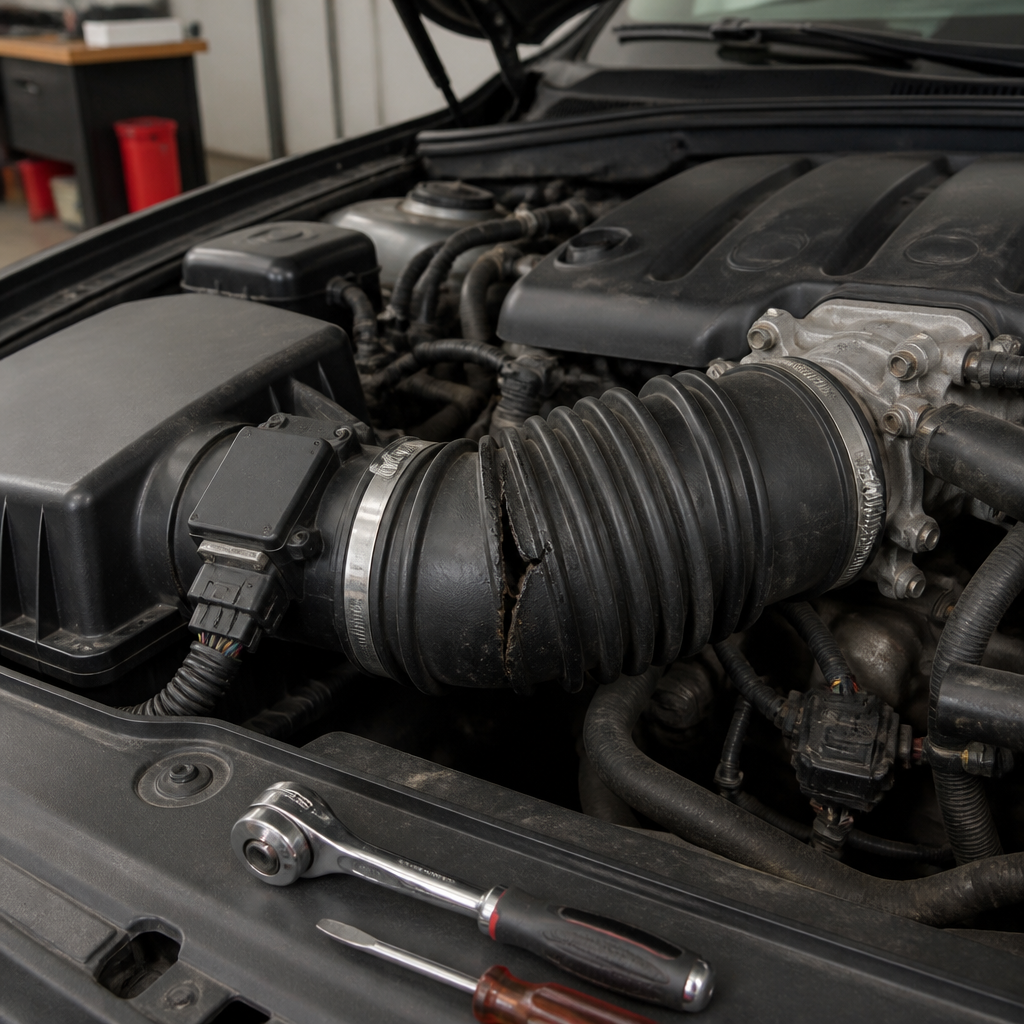
Vacuum leak (unmetered air entering the engine)
A cracked hose, loose intake boot, or leaking gasket can pull extra air into the engine that the computer did not measure. The computer then tries to correct fuel trim. At light throttle cruise, that correction can “hunt” and feel like a steady surge.
Vacuum leaks often cause a slightly rough idle too, but some leaks only show up under certain conditions and can be easy to miss.
Worn spark plugs or weak ignition parts
At steady cruising, the engine fires thousands of times per minute. If spark plugs are worn or the coil is weak, you can get a light misfire that comes and goes. That can feel like a small surge or repeated hesitation.
If the issue is more obvious when you try to go uphill, it may overlap with symptoms like uphill engine hesitation causes, but steady-speed surging is often milder and more rhythmic.
Fuel delivery problems (pressure, filter restriction, weak pump)
If fuel pressure is not stable, the mixture can swing lean and rich. A partially restricted fuel filter (on vehicles that still have a serviceable one) or a weak fuel pump can cause inconsistent fueling that shows up at cruise.
This cause is more likely if the surging is worse at higher speeds, under load, or after the vehicle has been running for a while.
Dirty throttle body or throttle position issues
Modern throttle bodies control airflow precisely. Carbon buildup can cause the throttle plate to stick slightly, making tiny changes in airflow. That can translate into small changes in power at steady pedal position.
On some vehicles, a throttle position sensor or accelerator pedal sensor can also send a noisy signal. The computer sees a changing “requested throttle” even though your foot is steady.
Oxygen sensor (O2) feedback problems
At steady cruise, the engine runs in closed loop, meaning it adjusts fuel based on oxygen sensor feedback. A slow or biased O2 sensor can cause the computer to correct too late or too much, which can create a repeating surge.
This is more common with higher mileage sensors and may not always set a fault code right away.
EGR valve stuck slightly open (some vehicles)
On engines equipped with EGR, exhaust is fed back into the intake under certain conditions. If the EGR valve sticks open when it should not, it can dilute the mixture and cause unstable combustion. That can feel like a steady-speed surge or light bucking.
Quick Checks You Can Do at Home
You can do a few basic checks without special tools. If anything feels unsafe or you are not comfortable, stop and book a diagnosis.
Note exactly when it happens
- Speed and gear: Does it happen at 40 mph in top gear, or at any speed?
- Engine temperature: Only after warm-up, or also cold?
- Road load: Flat road only, or also on mild grades?
This information helps a mechanic narrow the cause quickly.
Look for loose or cracked intake hoses
With the engine off and cool, inspect the large rubber intake tube between the air box and the engine. Look for:
- Cracks, splits, or soft collapsed areas
- Loose clamps
- Disconnected small vacuum lines
Do not reach near belts or fans with the engine running.
Check the air filter and air box
A severely dirty or incorrectly seated air filter can disturb airflow readings. Make sure the filter is seated properly and the air box is closed tight. If you use an oiled filter, residue can contaminate a MAF sensor over time.
Check for warning lights and stored codes
If the check engine light is on, scan for codes. Even a basic scan tool can reveal helpful clues like lean condition codes or misfire counters. Write the codes down before clearing anything.
Basic battery and charging health (only if you also see electrical oddities)
Voltage problems can cause sensor readings and throttle control to act up on some vehicles. If you notice dimming lights or odd electrical behavior at the same time as surging, you can do a simple test your car alternator at home. If charging voltage is unstable, the engine computer may not behave consistently.
When This Becomes Serious
Surging moves from annoying to serious when it becomes unpredictable or starts affecting your ability to control speed smoothly.
Get the car checked right away if:
- The surging turns into hard bucking or jerking.
- The engine feels like it is cutting out or stumbling repeatedly.
- The check engine light flashes.
- The car loses power while merging or climbing.
- You smell fuel or notice black smoke.
If the car begins to shake strongly under throttle, that can point to a stronger misfire. That symptom lines up more with shaking when accelerating fixes than with mild cruising surge, and it should not be ignored.
How a Mechanic Fixes It
A professional diagnosis focuses on finding what is making the air-fuel mixture or spark unstable at light load. Most shops will start with a road test to duplicate the surge and capture live data.
Common professional steps include:
- Scanning for codes and checking freeze-frame data from when the fault happened.
- Watching live data at cruise: fuel trims, MAF readings, O2 sensor switching, misfire counts, throttle angle, and load.
- Smoke testing the intake system to find vacuum leaks.
- Checking ignition condition: plug wear, coil output, and looking for misfire patterns.
- Testing fuel pressure and fuel pressure stability under the exact conditions where it surges.
- Inspecting and cleaning the throttle body if deposits are affecting airflow control.
Once the root cause is confirmed, the fix may be as simple as replacing worn spark plugs, repairing a vacuum leak, cleaning or replacing a sensor, or restoring steady fuel pressure. The key is confirming the cause first, because many of these problems feel similar from the driver’s seat.
Common Mistakes to Avoid
- Replacing parts based on guesses: Surging can be caused by air leaks, sensors, fuel pressure, or ignition. Random parts swapping can get expensive fast.
- Ignoring basic intake issues: A loose clamp or cracked intake boot can create a big drivability problem with no obvious noise.
- Cleaning sensors the wrong way: Some sensors are delicate. Using the wrong cleaner or touching the sensing element can ruin it.
- Clearing codes too early: Stored codes and freeze-frame data help pinpoint the condition that caused the surge.
- Driving for weeks with a flashing check engine light: A sustained misfire can overheat and damage the catalytic converter.
Related Problems to Watch For
Surging at steady speed sometimes sits near other drivability symptoms. These do not always happen together, but they can share causes.
- Slow response when you try to pass: If the car also feels weak when you press the pedal, see Common causes of slow acceleration.
- Power drop right after refueling: That pattern can point toward EVAP or fuel vapor issues. The symptom is covered in Post-refuel car power loss.
- Knocking sounds under load: That is a different concern than normal surging and needs quick attention.
Final Thoughts
Surging while cruising at a steady speed usually means the engine cannot hold a stable air-fuel mix or spark at light throttle. Start by noting when it happens and checking for obvious intake leaks or loose hoses with the engine off. If the check engine light is on, scan it and keep the code information.
If the surging becomes harsh, the light flashes, or the car feels like it may stall, stop driving and have it diagnosed. A short, focused inspection with live data is usually the fastest way to pinpoint the real cause and get smooth cruising back.


