


This post may contain affiliate links. Please read our disclosure and privacy policy for more information.
An engine that shakes at idle and sets a P0301 code is telling you something specific: Cylinder 1 is not firing consistently. At idle, the engine has the least momentum, so a single-cylinder misfire is easy to feel. Fixing the root cause early can prevent damage to the catalytic converter and other parts.
What This Problem Feels Like
Most drivers notice a rough, shaky idle at stoplights or when the car is parked in Drive with the brake held. The vibration often feels like a light to heavy shudder through the steering wheel, seat, or floor.
You may also notice:
- The engine sounds uneven, like a “putt-putt” rhythm
- The RPM needle wobbles instead of holding steady
- The vehicle shakes more with the A/C on or with headlights and fans running
- A flashing or steady Check Engine Light
P0301 means the computer detected a misfire on cylinder 1. Some cars call it “Cylinder 1 Misfire Detected.” The shake at idle is the symptom. The code points to where to focus: Cylinder 1 and the systems that feed it spark, fuel, and air.
Is It Safe to Drive?
If the engine is only slightly rough and the Check Engine Light is steady, short, gentle driving to a repair shop is usually possible. Keep speeds moderate and avoid hard acceleration.
If the Check Engine Light is flashing, treat it as urgent. A flashing light commonly means the misfire is severe enough to send raw fuel into the exhaust. That can overheat and damage the catalytic converter quickly.
Do not keep driving if:
- The light is flashing
- The engine is shaking hard or feels like it may stall
- You smell strong fuel from the exhaust
- The car has very low power and struggles to move
When in doubt, stop driving and have it towed. That choice can save expensive exhaust and engine parts.
Common Causes
These are the most common causes of a P0301 with shaking at idle, listed from more common to less common. The exact order varies by vehicle and mileage, but spark-related issues are often at the top.
Worn or fouled spark plug (cylinder 1)
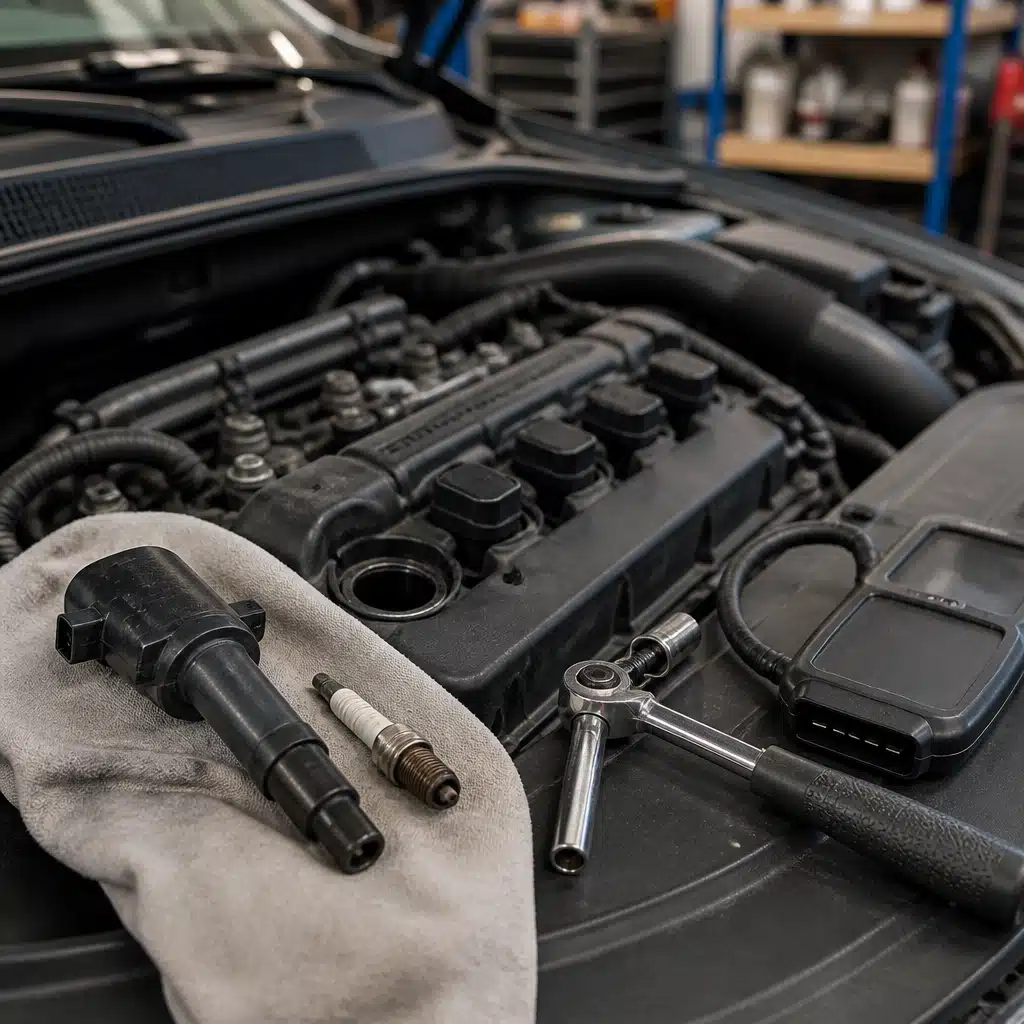
A spark plug can wear out, crack, or get coated with carbon or oil. At idle, it takes less to cause a weak spark to fail. A plug that looks fine can still break down under load.
Bad ignition coil or coil boot (cylinder 1)
On coil-on-plug systems, each cylinder has its own coil. If cylinder 1’s coil is weak, it may misfire most at idle, then seem “better” with a little throttle, or it may worsen as the coil heats up.
Fuel injector problem (cylinder 1)
A clogged injector can deliver too little fuel, creating a lean misfire. A leaking injector can do the opposite, flooding that cylinder. Either condition can shake the engine at idle and set P0301.
Vacuum leak near cylinder 1
If unmetered air enters near the intake runner feeding cylinder 1, that cylinder can run leaner than the others. Common leak points include intake manifold gasket areas, vacuum hoses, and PCV system connections near that side of the engine.
Compression problem in cylinder 1
Low compression from a worn valve, burnt valve, head gasket issue, or piston ring problem can cause a constant misfire that doesn’t respond to normal tune-up parts. This is less common than ignition issues, but it must be considered if basic fixes don’t change anything.
Wiring or connector issue to coil or injector
Corrosion, loose pins, oil contamination in connectors, or rubbed-through wiring can interrupt power or signal to the coil or injector. These faults can be intermittent and may act up more with engine vibration at idle.
Engine computer or driver circuit fault (rare)
PCM issues are uncommon, but a failed coil driver or injector driver can cause a cylinder-specific misfire. This is usually checked only after everything else tests good.
For a broader picture of misfire patterns and how they behave, Engine feels rough causes can help you understand what the engine computer is reacting to.
Quick Checks You Can Do at Home
These checks are meant to be low-risk and simple. Do not work around a hot engine if you are not comfortable, and keep hands and clothing away from belts and fans.
Confirm the basics on the scan tool
If you have a scanner, verify P0301 is present and note whether the light is flashing or steady. If your scanner shows misfire counters, watch cylinder 1 at idle. A clear cylinder 1 count climbing at idle supports the symptom you feel.
Look for obvious vacuum leaks
With the engine off, inspect hoses and plastic lines near the intake. Look for split ends, disconnected lines, or a PCV hose that has collapsed. Also check for loose clamps around the intake tube.
Do not spray flammable cleaners around the engine to “find” a leak. That is a fire risk.
Check the ignition coil and plug area for simple problems
With the engine cool and off, look around cylinder 1 coil area for:
- Oil in the spark plug well (a valve cover gasket leak can soak the coil boot)
- Cracked or swollen coil boot
- Broken coil connector lock tab
If you find oil in the plug well, the misfire may not go away until that leak is fixed and the plug and boot are cleaned or replaced as needed.
Listen for changes when electrical load changes
A misfire that gets noticeably worse when you turn the A/C on can still be a basic ignition or injector issue. Idle load just makes the weak cylinder show itself more. This is a clue, not a diagnosis.
Check for other symptoms that point back to the misfire
If you also feel shaking when you start moving or under light acceleration, that can still be the same cylinder 1 problem becoming more noticeable. If you want context on that specific feel, car shakes when accelerating covers how a misfire can carry beyond idle.
When This Becomes Serious
A cylinder 1 misfire is not something to ignore, even if the car still drives. The longer it runs that way, the higher the chance of secondary damage.
It becomes serious when:
- The Check Engine Light flashes at any point
- The misfire is constant, not occasional
- The car stalls at stoplights or struggles to restart
- You smell sulfur or rotten eggs from the exhaust (possible catalyst overheating)
- The engine oil smells like fuel (possible fuel wash-down from repeated misfires)
A persistent misfire can overheat the catalytic converter. It can also dilute engine oil if unburned fuel keeps getting into the cylinder, which can speed up engine wear.
How a Mechanic Fixes It
A professional diagnosis for P0301 usually follows a practical path: Verify the misfire, isolate whether it is spark, fuel, air, or mechanical, then confirm the repair.
Verify the misfire and conditions
The shop will check freeze-frame data to see when the misfire happened, such as at idle, under load, cold start, or warm engine. They may watch live misfire counts to confirm cylinder 1 is the main offender.
Ignition system testing
Many fixes start here because it is common and straightforward to confirm. The technician may inspect and test the spark plug and coil for cylinder 1, and in some cases swap components with another cylinder to see if the misfire follows the part. If it does, the bad part is identified.
Fuel injector and fuel delivery checks
If spark checks out, the injector for cylinder 1 is tested. A shop may use a scan tool to command the injector, measure resistance, or check injector balance depending on the vehicle. If the injector is clogged, cleaning or replacement may be needed. If it is leaking, replacement is typical.
Air leaks and intake sealing
If the data suggests a lean condition, the technician will look for vacuum leaks and intake gasket problems. Smoke testing is a common professional method because it is safer and more accurate than spraying flammables.
Mechanical condition tests
If ignition and fueling look good, compression and leak-down testing may be used to check the health of cylinder 1. Low compression points to an internal engine problem that parts swapping will not fix.
Confirm the repair
After the fix, a good shop will clear codes, road test, and confirm misfire counts stay at zero or near zero. They may also verify the catalyst is not overheating and the monitors can run normally.
Common Mistakes to Avoid
- Replacing parts at random: P0301 tells you the cylinder, not the exact failed part.
- Continuing to drive with a flashing Check Engine Light: This can destroy the catalytic converter.
- Ignoring oil in the spark plug well: A new coil or plug can fail again if it gets soaked.
- Mixing up cylinder numbering: Cylinder 1 location varies by engine layout. A mechanic confirms it from service info, not guesses.
- Clearing the code and hoping it stays away: The shake at idle is real feedback. If it still shakes, the problem is still present.
Related Problems to Watch For
A cylinder 1 misfire at idle can come with a few nearby symptoms. These do not mean you have a different problem, but they can appear because the engine is not running evenly.
- Hesitation or stumble when you tip into the throttle: If it feels worse on hills, see engine hesitates accelerating uphill.
- General loss of power: A single-cylinder misfire can make the car feel weak, especially as load increases. car loses power during acceleration explains how that can feel from the driver’s seat.
- Ticking noise at idle: Sometimes you hear a tick along with the rough idle. That can be unrelated, but it is worth noting for the shop. Ticking noise at idle covers common sources.
If any of these get worse at the same time the misfire worsens, mention it to the mechanic. Pattern and timing help narrow the cause.
Final Thoughts
An engine that shakes at idle with a P0301 code is usually a cylinder 1 spark, fuel, or air problem. Start by treating a flashing Check Engine Light as a stop-driving warning. If the light is steady, keep driving to a minimum and avoid heavy throttle.
Your best next move is simple: Confirm the code, do a quick visual check for loose hoses and oil around the cylinder 1 coil area, then schedule diagnosis. Fixing the misfire early protects the catalytic converter and helps the engine run smooth again.


