


This post may contain affiliate links. Please read our disclosure and privacy policy for more information.
DIY Car AC Filter Cleaning At Home for Beginners
If your car AC smells musty, feels weak, or makes you sneeze, the cabin air filter might be dirty. This filter cleans the air that comes through the vents. It catches dust, leaves, pollen, and road grime. Over time, it can clog up.
Cleaning it at home is simple on many cars. It can also save money. But some filters should not be cleaned. In this guide, I will show you how to check your filter type, clean it the safe way, and know when to replace it instead.
Tools and items needed
- Owner’s manual (or glove box filter location info)
- Flashlight
- Clean microfiber towels
- Vacuum with a soft brush attachment
- Soft paint brush or soft toothbrush
- Compressed air (optional but helpful)
- Mild soap and warm water (only for washable filters)
- Nitrile gloves (optional)
- Small screwdriver (only if your access panel uses screws)
If you like simple beginner DIY jobs, DIY battery terminal cleaning is another easy task that makes a big difference.
Safety or legal notes
- Turn the car off and remove the key before working around the glove box area.
- If your car has a passenger airbag switch or wiring near the glove box, do not tug or pull on wires.
- Do not spray strong cleaners or fragrance sprays into the vents. Some can irritate your lungs and leave residue on the evaporator.
- Do not wash a standard paper cabin filter. It can fall apart and send fibers into the HVAC box.
Numbered installation steps
1) Confirm where your cabin air filter is
Most cabin air filters are behind the glove box. Some are under the dash, near the center console, or at the base of the windshield under the cowl.
Quick clue: Open the glove box and look for a small rectangular access door on the back wall or a long plastic cover. If you cannot find it, check your owner’s manual for “cabin air filter.”
2) Remove items from the glove box
Take out manuals, pens, and anything loose. You do not want items falling behind the dash.
3) Lower the glove box (common method)
Many glove boxes drop down with no tools.
- Open the glove box.
- Look for a small damper arm on one side. Gently unclip it if needed.
- Squeeze the glove box sides inward to clear the stoppers.
- Let the glove box swing down slowly.
If your car uses a few screws, remove them and set them aside in a cup.
4) Open the filter access cover
You will usually see a narrow cover with tabs. Press the tabs and pull the cover straight off. Use a flashlight so you can see what you are doing.
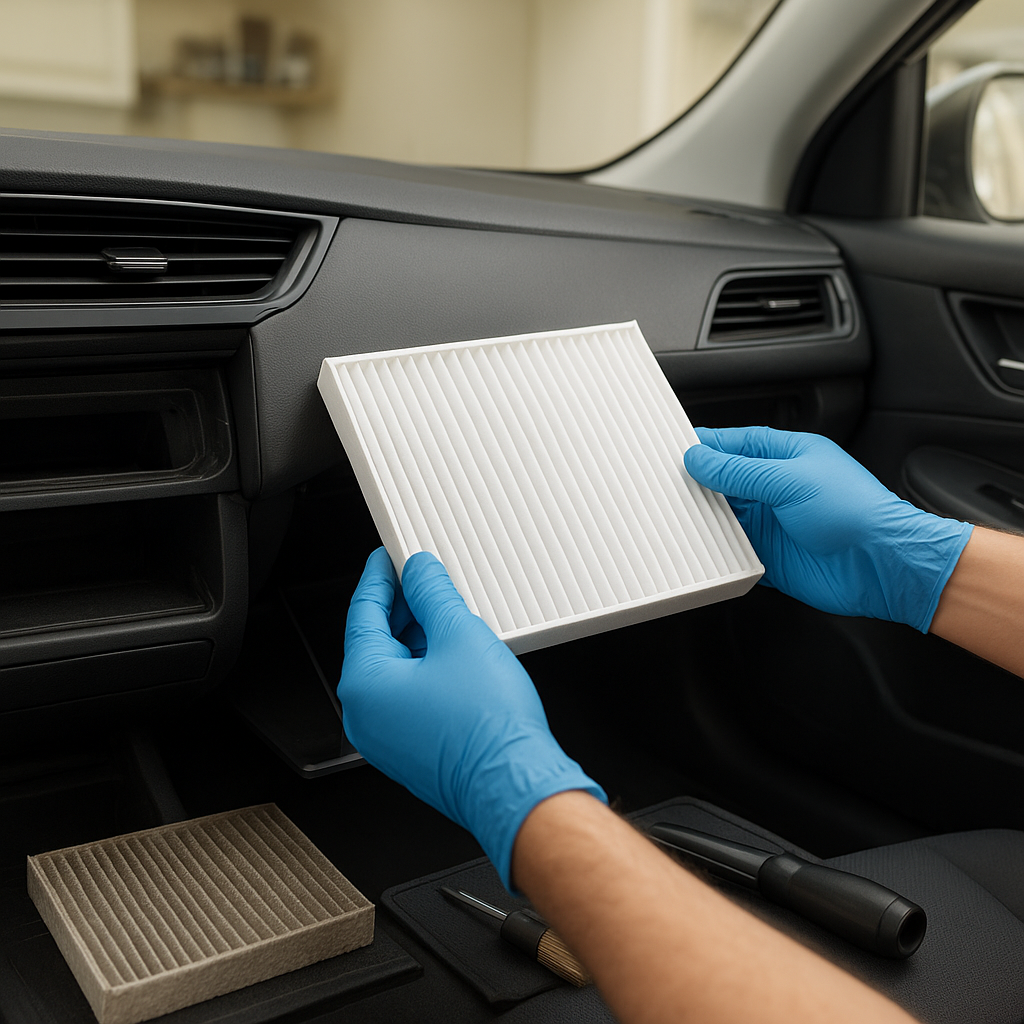
5) Slide the cabin air filter out
Pull the filter out slowly. Keep it level. Leaves and dust may spill out if you yank it.
Look at the side of the filter frame for an airflow arrow. Take a photo with your phone. This helps you put it back the same way.
6) Identify the filter type: Paper, charcoal, or washable
- Paper (most common): White or light gray pleats. Feels like stiff paper. This type is usually replace-only. Light cleaning is OK, but washing is not.
- Charcoal/activated carbon: Often darker gray or black. Helps with odors. Usually replace-only. Gentle vacuuming is OK.
- Washable/reusable: Often has a plastic frame and a mesh or foam element. Packaging or markings may say “washable.” This type can be cleaned with water.
If you are not sure, treat it like a paper filter. That is the safest choice.
7) Dry clean the filter first (works for most filters)
This is the safer method and the one beginners should start with.
- Take the filter outside.
- Tap it gently on the ground to knock loose debris out.
- Use a soft brush to loosen packed dust between pleats.
- Vacuum the dirty side with a soft brush attachment.
If using compressed air: Blow from the clean side toward the dirty side. Use short bursts. Keep the nozzle a few inches away. Too much pressure can tear pleats.
8) Only wash it if it is a washable filter
If your filter is labeled washable or you know it is a reusable type, you can clean it with water.
- Rinse with cool to lukewarm water.
- Use a tiny amount of mild soap if needed.
- Rinse until the water runs clear.
- Shake off water and let it air-dry fully.
Do not reinstall any filter that is still wet. Moisture can lead to moldy smells and foggy windows.
9) Clean the filter housing area
Before reinstalling, check the filter slot. Leaves often collect inside.
- Vacuum the opening carefully.
- Wipe reachable surfaces with a dry microfiber towel.
Do not push debris deeper into the HVAC box.
10) Reinstall the filter in the correct direction
Slide the filter back in with the airflow arrow pointing the same direction as before. If you forgot, the arrow usually points in the direction of airflow toward the blower motor. On many cars, that means downward. On some, it means sideways. Your photo helps here.
11) Refit the access cover and glove box
- Snap the filter cover back on.
- Lift the glove box back up.
- Reinstall stops and reconnect the damper arm if you removed it.
- Put your items back inside.
12) Test the AC
Start the car and turn the fan to medium-high for 30 seconds. You should notice steadier airflow. If there was a dusty smell, it may improve right away, but odors can also come from a damp evaporator.
If you are chasing odd HVAC behavior like engine fan keeps running, fix that too. Cooling system issues can affect overall AC performance on some cars.
Common mistakes
- Washing a paper filter: It can swell, tear, and block airflow even more.
- Installing it backward: Airflow drops, and the filter loads up faster.
- Using high-pressure air too close: This can rip pleats or separate glued seams.
- Ignoring the housing: Leaves in the box can cause noise and bad smells later.
- Reinstalling damp filters: This can cause mildew and a sour odor.
Maintenance tips
- Check it every 6 months: Do it more often if you drive in dust, heavy traffic, or park under trees.
- Replace on a schedule: Many cars need a new cabin filter every 12,000 to 15,000 miles. If it is very dark, warped, or smelly, replace it.
- Use recirculation in heavy dust: It can slow down how fast the filter clogs.
- Run the fan before shutting off: A minute with AC off (fan on) can help dry the evaporator and reduce musty smells.
If you do other simple interior upkeep, DIY interior bulb replacement pairs well with a cabin filter check since both are usually near the glove box or cabin trim.
Is it worth it?
Yes, in most cases. Cleaning a cabin air filter at home takes about 10 to 30 minutes once you know the location. It can improve airflow and reduce dust in the cabin.
That said, cleaning is not always the best long-term answer. If your filter is a standard paper or charcoal type, cleaning is a short fix. Replacing it is usually better, especially if it has been in the car for over a year or it smells bad.
Think of it like other routine items. Some parts can be refreshed, and some are meant to be replaced. Tires are a good example of that mindset, and why tires are expensive explains why certain components cost more and why condition matters.
Conclusion
Cleaning your car AC cabin filter is a beginner-friendly DIY job. Find the filter, pull it out carefully, and start with dry cleaning. Only wash a filter if it is made to be washable. Clean the housing, reinstall the filter in the right direction, and test the fan.
If airflow is still weak or the filter looks worn out, replace it. A clean cabin filter makes your AC work better and keeps the air inside your car fresher.


