


This post may contain affiliate links. Please read our disclosure and privacy policy for more information.
SUVs are popular because they feel strong, sit high, and carry people and cargo well. But many new owners are surprised by what it costs to keep an SUV in good shape. Maintenance is not just oil changes. It is tires, brakes, fluids, filters, and the extra wear that comes with more weight and, sometimes, AWD.
What the concept is
SUV maintenance costs are the normal, expected costs to service the vehicle over time. This includes routine maintenance (like oil changes and tire rotations) and wear items (like brake pads and batteries). It also includes age-related items, like coolant service, spark plugs on gas engines, and suspension parts.
Maintenance is different from repairs. Maintenance is planned work you do on schedule. Repairs happen when something breaks or fails. Good maintenance helps reduce repair risk, but it cannot remove it completely.
Why people do it
People track and manage SUV maintenance costs for a few simple reasons:
- To avoid surprise bills: When you know the common services, you can budget.
- To protect reliability: Many breakdowns start as small neglected items.
- To keep fuel economy steady: Low tire pressure, dirty filters, and worn parts can raise fuel use.
- To keep resale value: A clear service history often helps at trade-in or private sale.
Things to know before starting
Before you estimate what an SUV will cost to maintain, focus on the variables that change the price.
SUV size and weight matter
Heavier SUVs often use larger tires and larger brakes. That can make routine wear items cost more than on a small car. A compact crossover usually costs less than a full-size SUV to maintain.
AWD can add service items
Many SUVs are AWD. AWD can add fluid services (for a rear differential, transfer case, or AWD coupling) and can increase tire replacement costs if tires must stay closely matched. If you are comparing drivetrains, use an AWD vs FWD guide mindset: More parts can mean more service needs.
Driving style and roads change wear
Stop-and-go driving wears brakes faster. Rough roads wear suspension parts faster. Hot climates can age batteries sooner. Towing adds heat and stress to fluids and brakes.
Dealer vs independent shop vs DIY
Labor rates vary a lot. Dealers often cost more but may have brand-specific tools and software updates. Independent shops may cost less. DIY can save money on simple tasks, like DIY battery terminal cleaning, but you still need the right tools and safe habits.
What “popular models cost” really means
There is no single price for any model. What you can do is understand typical cost ranges and what drives them. Below are common categories and what many owners see over time.
- Compact SUVs (examples: RAV4, CR-V, Rogue, CX-5): Often lower routine costs because tires and brakes are usually smaller and engines are simpler.
- Midsize SUVs (examples: Highlander, Pilot, Explorer, Grand Cherokee): Often higher tire and brake costs, and some have more complex AWD systems.
- 3-row SUVs: Often cost more mainly due to weight, larger tires, and more frequent brake wear in city driving. If you are shopping for space, knowing the running costs matters as much as cabin room, like when comparing Best 7-seater SUVs.
- Luxury SUVs (examples: BMW X5, Audi Q7, Mercedes GLE, Lexus RX): Can have similar basic maintenance items, but parts and labor often cost more, and some use run-flat tires or air suspension.
Step-by-step explanation
Use these steps to estimate and control SUV maintenance costs. You can do this for any model you own or plan to buy.
1. Start with the factory schedule
Open the owner’s manual maintenance section. Write down the service intervals for:
- Engine oil and filter
- Engine air filter and cabin air filter
- Brake fluid
- Coolant
- Spark plugs (gas engines)
- Transmission fluid (automatic, CVT, or DCT)
- AWD fluids (if equipped)
If you do not have the manual, many dealers can print the schedule for your VIN.
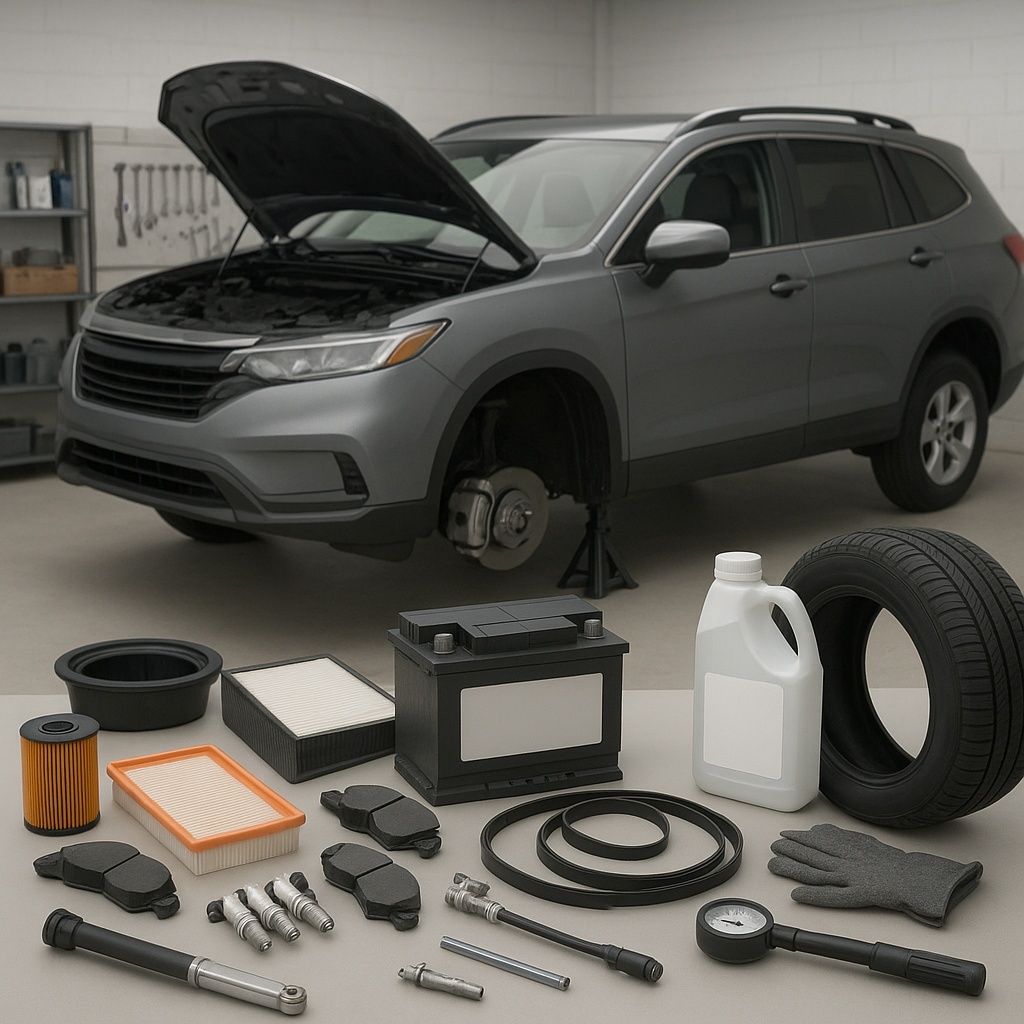
2. Build a “wear items” list
These parts do not have a perfect schedule because wear depends on driving.
- Tires: Commonly one of the biggest SUV costs. Larger wheels and higher load ratings cost more. If you want a simple way to shop smart, use how to choose car tires basics: Size, load index, speed rating, and your real driving needs.
- Brakes: Pads and rotors wear faster with heavier vehicles and city driving.
- Battery: Often 3 to 6 years, but heat and short trips can shorten life.
- Wiper blades and bulbs: Small costs, but frequent.
- Suspension and alignment: Shocks/struts and control arm bushings wear with miles and rough roads.
3. Price the big recurring services first
Call two local shops and ask for pricing on the top repeat items: Oil change, tire rotation, brake fluid service, and transmission service. Ask what fluid type is used, because some SUVs require specific fluids.
For “popular model” comparisons, this step is where differences show up. A compact SUV with standard oil and a simple automatic can be cheaper than a turbo SUV that needs special oil, extra labor, or more frequent services.
4. Estimate tire and brake frequency
Use your driving to estimate how often you will replace tires and brakes:
- Mostly highway: Tires often last longer, brakes often last longer.
- Mostly city: Brakes often wear faster, and tires can wear unevenly if rotations are skipped.
- Towing or heavy loads: Brakes and tires may wear sooner, and fluid services may be needed more often.
If you are wondering how long the installation visit takes, not the tire life, How long for new tires explains what happens at the shop and why some visits take longer.
5. Watch for “model-specific cost multipliers”
Some popular SUVs cost more because of design choices, not because they are “bad.” Look for these:
- Turbo engines: Can be sensitive to oil quality and interval discipline.
- Direct injection: May need intake valve cleaning at higher miles on some engines.
- Big wheels (20-inch and up): Tires can cost more and may ride harsher, which can stress suspension parts.
- Air suspension or adaptive dampers: Great comfort, but parts can be expensive if they fail.
- CVT transmissions: Often need correct fluid and correct service method.
6. Keep a simple log and act early
Track dates, mileage, and what was done. Then act when small signs show up:
- New vibration at speed: Often tire balance or uneven wear
- Longer stopping distance or squeal: Often brake wear
- Sweet smell or low coolant: Check for leaks early because coolant level dropping causes can turn into overheating if ignored
Common mistakes to avoid
- Skipping tire rotations: This can shorten tire life and force earlier replacement.
- Ignoring alignment after new tires: Misalignment can ruin new tires fast.
- Using the wrong fluids: Some transmissions and AWD units need exact fluid types.
- Only fixing problems after a warning light: Many wear issues happen before lights come on.
- Mixing tire brands or tread depths on some AWD systems: This can stress drivetrain parts.
Safety and legal considerations
Maintenance is tied to safety. Worn tires and weak brakes raise crash risk. If your SUV has driver-assist features, some repairs and alignments may need sensor checks or calibrations. In some areas, bald tires, non-working lights, or failed emissions items can cause inspection failure or tickets.
When lifting the SUV for inspection or DIY work, use a rated jack and jack stands on solid ground. Never go under a vehicle supported only by a jack.
Final practical advice
If you want predictable SUV maintenance costs, focus on the few items that drive most budgets: Tires, brakes, fluids, and catching leaks early. Follow the factory schedule, rotate tires on time, and fix small problems before they become big repairs. When comparing popular SUVs, look less at the badge and more at tire size, drivetrain type, and how complex the suspension and powertrain are. Those details shape what you will pay year after year.


