


This post may contain affiliate links. Please read our disclosure and privacy policy for more information.
An engine that shakes at idle with a P0304 code almost always means one thing: Cylinder 4 is not firing the way it should. At idle, the engine has the least momentum, so even a small misfire can feel like a big shake. The good news is that many P0304 causes are straightforward to confirm and fix once they are pinpointed.
What This Problem Feels Like
Most drivers notice a rough, uneven idle at a stoplight or while parked in Drive. The steering wheel, seat, or dashboard may vibrate more than usual. Some engines feel like they are “skipping” every few seconds.
You may also notice one or more of these related signs:
- A flashing or steady check engine light
- A slight stumble when pulling away from a stop
- A dull popping sound from the exhaust at idle
- A fuel smell from the tailpipe (sometimes)
- Poor fuel economy
P0304 specifically points to a misfire detected on cylinder 4. It does not automatically tell you which part failed. It only tells you which cylinder is being affected.
Is It Safe to Drive?
If the engine is only mildly rough at idle and the check engine light is steady (not flashing), short and gentle driving is sometimes possible. Still, it is best to keep trips brief and avoid hard acceleration until it is diagnosed.
Do not keep driving if the check engine light is flashing. A flashing light usually means the misfire is severe enough to damage the catalytic converter. That can turn a manageable repair into a much bigger one.
Driving is also not a good idea if the engine barely stays running, shakes violently, smells strongly of fuel, or feels like it might stall in traffic. In those cases, have it towed or inspected where it sits.
Common Causes
These causes are listed from most common to less common. A P0304 misfire at idle is often ignition-related, but fuel and air issues can do it too.
Worn or fouled spark plug in cylinder 4
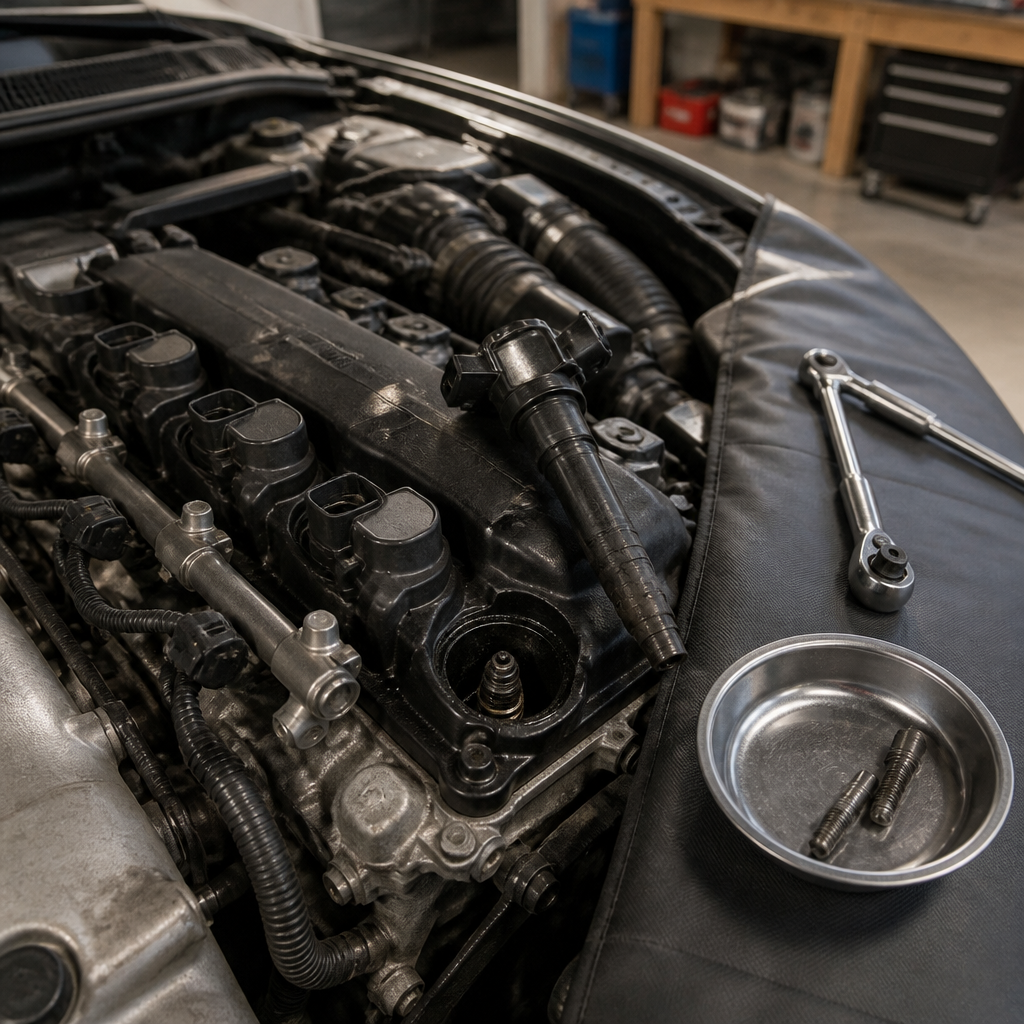
A spark plug can wear out, crack, or get coated in carbon or oil. At idle, the spark is weaker than under load, so a borderline plug often shows up as a shake mainly at idle. If the plug is oil-fouled, the real problem may be a leak into the cylinder, but the misfire symptom still starts with the plug not firing cleanly.
Failing ignition coil (or coil boot) on cylinder 4
On coil-on-plug systems, each cylinder has its own coil. A weak coil can misfire more at idle, or it can get worse as it warms up. Cracked coil boots can also leak spark to ground, especially if moisture is present.
Fuel injector on cylinder 4 clogged, weak, or electrically failing
If the injector does not deliver the right amount of fuel, cylinder 4 runs too lean or does not contribute normally. Some injectors clog slowly over time. Others have an electrical fault that shows up when hot. Idle is where an injector imbalance is easiest to feel.
Vacuum leak near cylinder 4 (intake gasket or vacuum hose issue)
A vacuum leak can lean out one cylinder more than the others, especially if the leak is close to that intake runner. This is a common reason a misfire is worse at idle and seems to improve slightly with RPM.
Low compression on cylinder 4 (valve, ring, or head gasket issue)
If cylinder 4 cannot seal properly, it cannot build enough pressure to burn the mixture consistently. Compression-related misfires often feel steady and do not respond much to swapping ignition parts. They can be worse at idle and may come with hard starting or a rhythmic “putt-putt” from the exhaust.
Wiring or connector problem for coil or injector
A loose connector, broken wire, corrosion, or pin fit issue can interrupt the coil or injector signal. This can create an on-and-off misfire that is hard to predict. Sometimes it changes when the engine moves at idle.
ECM/driver issue (rare)
It is uncommon, but a failed control driver inside the engine computer can stop a coil or injector from being commanded correctly. This is usually considered after the basics have been confirmed and wiring checks out.
Quick Checks You Can Do at Home
These checks are meant to be safe and simple. They can help you gather useful clues, but they are not a substitute for proper diagnosis.
Check if the warning light is flashing
If it is flashing, stop driving and plan for a tow or immediate repair. A flashing light changes the risk level.
Confirm the code and look for related codes
If you have a basic scan tool, confirm P0304. Also note any fuel trim codes, injector circuit codes, or a random misfire code. A single-cylinder code (P0304) keeps the focus on cylinder 4.
Listen for obvious vacuum leaks
With the hood open and the engine idling, listen for a sharp hissing sound. Check for a loose vacuum hose or a hose that has collapsed or split. Do not put your hands near belts or fans while the engine is running.
Look for signs of water or oil in the spark plug area
If your engine has coils on top of the plugs, a valve cover gasket leak can fill a plug well with oil. That oil can damage coil boots and cause misfires. Water intrusion after an engine wash can do something similar. If you see pooled oil, that is a strong clue.
Check the basics of battery and charging if the idle is unstable
Low system voltage can make ignition and injector control less stable, especially at idle. If the idle is rough and you also notice slow cranking or dim lights, it is worth verifying battery health with a test car battery with multimeter.
If you plan to inspect the throttle body, keep it limited to inspection only
A dirty throttle body can contribute to a rough idle, but it usually does not trigger a single-cylinder misfire by itself. If the throttle plate area looks heavily caked, that can worsen shake at idle. If you decide to address it later, use a safe method like Clean your throttle body and avoid forcing the throttle plate on electronic throttle bodies.
When This Becomes Serious
P0304 becomes urgent when the misfire is strong, frequent, or getting worse quickly. The big risks are catalytic converter damage, overheating the exhaust, and stalling in an unsafe place.
Take it seriously if you notice any of the following:
- Check engine light flashing
- The engine shakes hard enough that it feels like it will stall at stops
- Loss of power that makes merging or crossing traffic risky
- Strong raw fuel smell from the exhaust
- The misfire gets worse as the engine warms up
If the car starts to lose power under load along with the idle shake, that points to a misfire that is no longer limited to just a light idle stumble. If that is happening, symptoms can overlap with car loses power during acceleration, but the key in your case is that the scan data is calling out cylinder 4.
How a Mechanic Fixes It
A professional diagnosis for P0304 usually follows a simple logic: Confirm spark, fuel, and compression on cylinder 4, then verify there is no air leak affecting that cylinder.
Verification and freeze-frame review
The mechanic will confirm P0304 and check scan data from the moment the code set. This helps show if the misfire is worst at idle, cold start, under load, or when hot.
Ignition system checks first
Most shops start with the spark plug and coil for cylinder 4. They may inspect plug condition, check for oil contamination, look for coil boot damage, and confirm spark performance. On many engines, swapping the coil with another cylinder to see if the misfire follows is a quick way to narrow it down, but the shop will decide the safest approach based on access and design.
Fuel injector testing
If ignition checks out, the next step is normally injector testing. That may include listening for injector operation, checking injector resistance, verifying power and ground control, and comparing injector balance across cylinders.
Vacuum leak and intake sealing checks
A smoke test is a common professional method to find vacuum leaks. If the leak is near cylinder 4’s intake runner, it can create a lean misfire mainly at idle.
Compression and leak-down testing
If spark and fuel look normal and the misfire stays on cylinder 4, a compression test helps confirm engine mechanical health. A leak-down test can help identify where compression is escaping, such as past valves, rings, or through a head gasket area.
Final confirmation
After repairs, the mechanic will clear codes, verify the idle is smooth, and confirm misfire counters stay at zero during idle and a road test.
Common Mistakes to Avoid
- Ignoring a flashing check engine light: This can quickly damage the catalytic converter.
- Replacing random parts without testing: P0304 points to a cylinder, not a specific part.
- Overlooking oil in the plug well: A valve cover gasket leak can ruin a new coil boot fast.
- Using the wrong spark plug type or gap: Even new plugs can misfire if they are incorrect.
- Clearing codes and hoping it goes away: The code often returns, and the root problem can worsen.
Related Problems to Watch For
It is normal for a cylinder-specific misfire to come with a few secondary symptoms. Keep an eye out for these, but stay focused on fixing the cylinder 4 cause first.
- Rough idle without a single-cylinder code: That points more toward a broader issue. For comparison, see Engine feels rough causes.
- Misfire moving to another cylinder code after parts changes: That can happen if a weak coil is swapped or if plugs are replaced incorrectly.
- Shaking that becomes more noticeable when you start moving: That can overlap with drivetrain or acceleration shake, but a confirmed P0304 still needs to be handled first. (A general reference is car shakes when accelerating.)
Final Thoughts
If your engine shakes at idle and the scan shows P0304, treat it as a cylinder 4 problem until proven otherwise. If the check engine light is flashing, stop driving and arrange service right away. If it is steady and the car runs fairly smoothly, keep driving to a minimum and schedule diagnosis soon.
The most common fixes involve the spark plug, ignition coil, or a fuel injector on cylinder 4. A good shop will confirm the cause with testing, not guessing. Once the root issue is repaired, the idle shake should disappear and the engine should feel normal again.


