


This post may contain affiliate links. Please read our disclosure and privacy policy for more information.
When a car suddenly loses power at highway speed, it gets your attention fast. The engine may still be running, but the car no longer responds normally to the gas pedal. This problem often comes from the engine not getting the right amount of fuel, air, or spark under heavy load.
What This Problem Feels Like
Most drivers describe it as a sudden drop in pull while cruising at 55 to 80 mph. You press the accelerator, but the car barely speeds up, or it slowly loses speed even though your foot is steady.
You may notice one or more of these signs at the same time:
- The car will not accelerate to pass, or it takes much longer than normal
- The engine feels “flat,” like it is working but not making power
- The transmission may downshift, but power still does not come back
- The check engine light may come on, flash, or come on later
- The car may go into a reduced-power mode and top out at a low speed
This can happen once and go away, or it can repeat at the same speed, on hills, or after a long drive.
Is It Safe to Drive?
It depends on how much power you lose and where you are. On a busy highway, even a brief power drop can be risky if you cannot keep up with traffic.
Do not keep driving if any of these happen:
- The check engine light is flashing
- The car shakes hard, misfires, or makes loud knocking sounds
- The car cannot maintain speed and you are getting boxed in by traffic
- Power steering or brake assist feels reduced
- You smell raw fuel, burning, or see smoke
If power drops but the engine runs smoothly and you can maintain speed, move to the right lane, increase following distance, and plan to exit. Avoid hard acceleration attempts until the cause is known.
Common Causes
These are listed from most common to less common. A sudden power loss at highway speed is often a “load problem,” meaning it shows up when the engine needs to work harder for sustained speed.
Fuel delivery problem (weak fuel pump or restricted fuel filter)
At highway speed the engine needs a steady, higher fuel flow. A weak fuel pump can keep up around town but fall behind at speed, especially on warm days or after a long drive. A clogged fuel filter can do the same thing.
Why it happens: Fuel pumps wear out, filters collect debris, and some vehicles have filters built into the pump module. Low fuel level can also make some weak pumps act worse because the fuel helps cool the pump.
Ignition misfire under load (spark plugs, coils, or wires)
A weak spark can show up most at highway speed because cylinder pressure is higher under load. The engine may run “okay” at idle, then lose power when you ask for more.
Why it happens: Worn spark plugs open up their gap, ignition coils weaken with heat, and moisture or oil in a spark plug well can cause spark to leak.
Airflow or sensor issue (MAF sensor, intake leak, or throttle problem)
If the engine computer gets bad airflow information, it may command the wrong fuel amount. That can cause a sudden loss of power and sometimes a reduced-power mode.
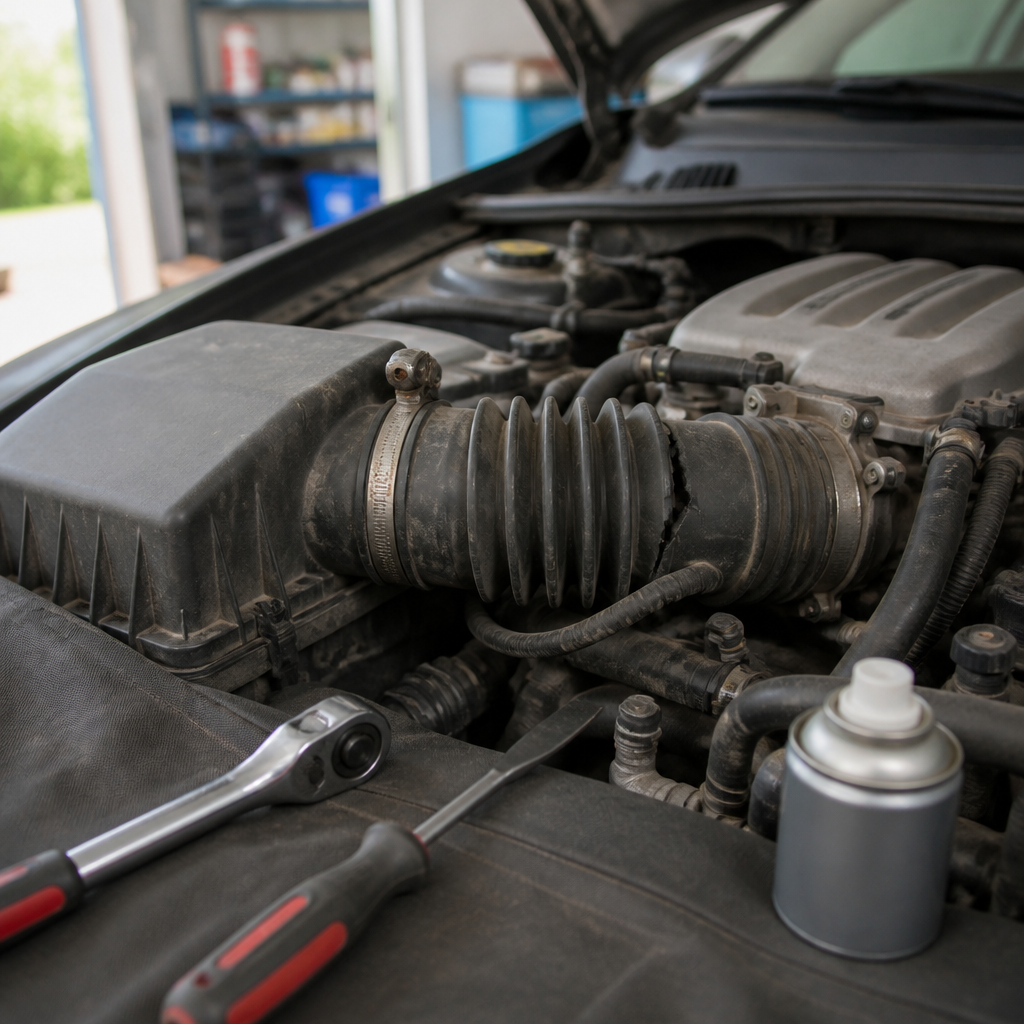
Why it happens: Dirt or oil film on the mass airflow (MAF) sensor, a cracked intake boot, or a sticky electronic throttle body can all cause trouble. Some cars will set a fault and limit throttle opening to protect the engine.
Exhaust restriction (plugged catalytic converter)
A restricted exhaust often feels like the engine is “choking.” It may drive fairly normal at low speeds, then lose power badly at highway speed because exhaust cannot flow out fast enough.
Why it happens: A converter can melt internally after long-term misfires, oil burning, or coolant burning. It can also fail with age. This is one cause that can get worse quickly.
Turbo or boost control problem (turbocharged engines)
If your vehicle uses a turbo, a boost leak or faulty boost control can cause a sudden drop in power at speed. You may hear a whoosh, hiss, or notice the car feels normal until you ask for power.
Why it happens: Split intercooler hoses, loose clamps, a failing boost control solenoid, or a sticking wastegate can limit boost.
Transmission or torque converter issue (less common, but possible)
Sometimes the engine is making power but it is not getting to the wheels. A slipping transmission can feel like power loss, often paired with rising RPM without matching acceleration.
Why it happens: Low fluid, overheating, internal wear, or a control problem can cause slip or wrong gear behavior. This is less common than fuel or ignition issues, but it matters for safety.
If the power loss seems tied to acceleration rather than steady cruising, it may overlap with problems like car loses power during acceleration, but a highway-only drop often points to a load-related fuel, ignition, or exhaust issue.
Quick Checks You Can Do at Home
These checks are meant to be safe and simple. If anything requires getting under the car, working near a hot engine, or dealing with fuel, stop and have a shop handle it.
Look at the dash and note exactly what happened
- Did the check engine light come on, and was it flashing?
- Did the temperature gauge run hotter than normal?
- Did it feel like a single jerk or an ongoing loss of power?
Those details help narrow down whether it is misfire, overheating, or a control system limit.
Check for obvious intake problems
With the engine off and cool, inspect the air intake tubing from the air box to the engine. Look for loose clamps, cracked rubber, or a hose that slipped off. Also check the air filter housing is closed properly. A big intake leak can cause sudden drivability problems.
Listen and smell after a drive
After you park safely, listen for a harsh hissing sound under the hood that could suggest a large air leak. Notice any strong sulfur or “rotten egg” smell from the exhaust, which can show up with converter problems. If you smell raw fuel, do not keep driving.
Scan for codes if you have a scan tool
A basic OBD2 scanner can point you in the right direction. Codes related to misfire (often P0300 range), airflow (MAF), fuel trim, or catalyst efficiency can help a lot. Write down the code numbers and freeze-frame data if your scanner shows it.
Check battery terminals and basic charging symptoms
Low system voltage can cause odd behavior in modern cars, including throttle and sensor problems. With the engine off, look for loose or corroded battery terminals. If you suspect a charging issue, test your car alternator and address weak charging before chasing other faults.
When This Becomes Serious
This problem becomes urgent when it is repeatable, getting worse, or tied to warning lights and harsh running.
Treat it as serious if:
- The check engine light flashes at highway speed (active misfire can damage the catalytic converter)
- The engine starts running rough right as the power drops
- The car will not go over a low speed, even with the pedal down
- The power loss is paired with overheating, smoke, or burning smells
- You hear rattling from the exhaust area, which can suggest internal converter damage
If the engine is also surging back and forth while you try to hold a steady speed, that is a different feel than a clean power drop. In that case, symptoms may match car surges at steady speed.
How a Mechanic Fixes It
A shop will focus on proving what is missing during the power loss: Fuel, spark, air, or exhaust flow. The goal is to test, not guess.
- Road test with scan data: The tech monitors fuel trims, misfire counters, throttle request, boost (if equipped), and sensor signals during the event.
- Check for stored and pending codes: Even if the light is off, pending codes and freeze-frame data can show what changed at highway speed.
- Fuel pressure and volume testing: This can confirm a weak pump or restriction. Some problems only show under load, so the test matters.
- Ignition inspection: The shop may inspect spark plugs for wear, cracks, or oil fouling, then test coils or wiring if misfire data points there.
- Air and intake diagnosis: Smoke testing can find intake leaks. MAF sensor readings are checked for being out of range.
- Exhaust backpressure testing: If restriction is suspected, the tech checks converter flow with proper tools and temperature readings.
Once the cause is confirmed, the fix is usually a targeted replacement or repair, followed by verification on a road test to confirm full power at speed.
Common Mistakes to Avoid
- Ignoring a flashing check engine light: Continuing to drive can quickly damage the catalytic converter.
- Replacing parts based on guesses: For example, swapping sensors without data often wastes time and can introduce new problems.
- Cleaning sensors the wrong way: Spraying the wrong cleaner into the intake or onto a MAF sensor can ruin it. If you are not sure, leave it alone.
- Driving hard to “clear it out”: If the cause is fuel, misfire, or exhaust restriction, hard driving can make it worse.
- Overlooking simple intake hose issues: A loose clamp or split boot can mimic bigger failures.
Related Problems to Watch For
Sometimes a highway power loss is preceded by smaller hints. If you notice these, mention them to the shop because they help connect the dots:
- Gradually worsening pickup over weeks, like Car feels slow to accelerate
- Power drop that is worse on grades, which can feel like power loss climbing hills
- Shaking or vibration during acceleration, which may go along with misfires like car shakes when accelerating
These are not separate diagnoses by themselves, but they can point toward fuel delivery, ignition misfire, or airflow issues that show up hardest at highway load.
Final Thoughts
If your car suddenly loses power at highway speed, treat it as a safety issue first. Move to the right lane, give yourself space, and exit when you can. If the check engine light flashes, the engine runs rough, or the car cannot maintain speed, stop driving and arrange a tow.
If it happens again, write down the speed, outside temperature, fuel level, and whether the engine was fully warm. Then have the car scanned and tested under load. A clear diagnosis is the fastest path back to safe, steady highway driving.


